

Reported by: Oahimire Omone Precious | Edited by: Oravbiere Osayomore Promise.
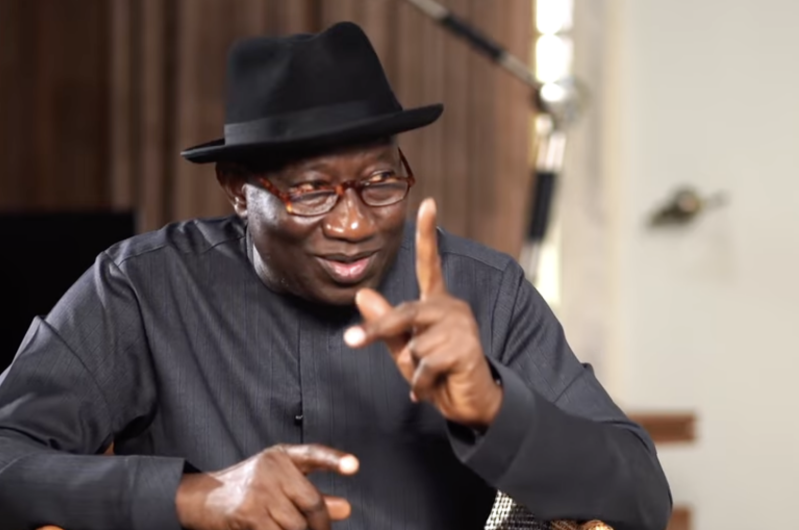
As Goodluck Jonathan inches closer to a potential 2027 presidential bid, a series of court rulings stretching back more than a decade have consistently affirmed that his assumption of office following the death of President Umaru Musa Yar'Adua does not count as an elected term. On May 11, 2026, the Federal High Court in Abuja will resume hearing a fresh suit seeking to disqualify Jonathan, but legal precedents from 2013, 2015, and 2022 have already established that the former president has only been elected once—in 2011—and therefore remains constitutionally eligible to run again.
The first major legal challenge came ahead of the 2015 presidential election. In a suit marked FCT/HC/CV/2449/2012, a plaintiff named Cyriacus Njoku approached an FCT High Court in Abuja seeking to stop Jonathan from contesting another election after his 2011 victory. Njoku argued that Jonathan's first oath of office on May 6, 2010, when he succeeded Yar'Adua, should count as a presidential term. According to Njoku, Jonathan's second oath in 2011 meant he had already exhausted the constitutional limit.
However, on March 1, 2013, Justice Mudashiru Oniyangi of the Abuja High Court delivered a landmark judgment clearing Jonathan to seek re‑election. The court held that Section 137(1)(b) of the 1999 Constitution, which disqualifies a person who has been "elected" president at two previous elections, could not apply to Jonathan because he had only won one election. Justice Oniyangi ruled that Jonathan was neither a presidential aspirant in the 2007 election nor sworn in as president in 2007. The court also held that Jonathan's 2010 oath constituted a constitutional succession following Yar'Adua's death and did not amount to an election. In his judgment, Justice Oniyangi stated, "The distinguishing factor is that after the election of Yar'Adua, there was no election or bye‑election upon which Jonathan became president. He was merely asked to assume the position. I will like to borrow the word that was used by the legislature then, doctrine of necessity."
Aggrieved by this decision, Njoku proceeded to the Court of Appeal. On March 3, 2015, a five‑member panel of the appellate court unanimously affirmed the judgment of the FCT High Court. Justice Datijo Yahaya, who delivered the lead judgment, held that the word "election" in Section 137(1)(b) of the 1999 Constitution, when given its ordinary grammatical meaning, "connotes a process where voting is employed, to choose a person for a political office." The court noted that the process of primaries, nomination, voting, collating and announcement of results did not take place when Jonathan stepped into the shoes of Yar'Adua on May 6, 2010. The appellate court further held that Jonathan could not be said to have taken the oath of office as president twice, as he only took over the office of the president in 2011 by mere constitutional provisions. "He (Jonathan) has not been elected twice. He only completed the unexpired tenure of the late President Yar'Adua. His tenure started on May 29, 2011," the court ruled, dismissing Njoku's appeal and awarding N50,000 costs against the appellant.
Following the Fourth Alteration to the Constitution in 2018, which introduced Section 137(3) barring persons who complete another president's tenure from being elected more than once, new questions arose about Jonathan's eligibility. In 2022, a fresh suit was filed by Andy Solomon and Idibiye Solomon before the Federal High Court in Yenagoa, seeking to disqualify Jonathan from the APC presidential primary. On May 27, 2022, Justice Isa Dashen ruled that the constitutional amendment did not retroactively apply to Jonathan's case because he assumed office before the amendment. The court declared that Jonathan was eligible to contest the 2023 presidential election, and that judgment has never been appealed or overturned. Legal analyst Denge Josef Onoh later told journalists in Yenagoa that this ruling "laid the issue to rest once and for all," adding, "The Federal High Court decision has not been appealed or overturned within the constitutionally prescribed period. By law, that judgment stands as final. Any further challenge would be barred by res judicata."
Despite these precedents, a new suit marked FHC/ABJ/CS/2102/2025 has been filed before the Federal High Court in Abuja by lawyer Johnmary Jideobi, seeking to stop Jonathan from contesting the 2027 presidential election. The plaintiff argues that Jonathan, having completed the unexpired term of Yar'Adua in 2010 and later serving a full elected term after the 2011 election, has exhausted the constitutional limit of two tenures as president. Among the reliefs sought are an order of perpetual injunction restraining Jonathan from presenting himself to any political party as a candidate, and an order barring the Independent National Electoral Commission (INEC) from accepting or publishing his name as a presidential candidate.
Jonathan, through his lead counsel Chief Chris Uche, SAN, has filed a notice of preliminary objection, counter‑affidavit, and written address, urging the court to dismiss the suit for being incompetent, lacking in merit, and constituting a gross abuse of court process. The former president argues that the issues raised have already been judicially settled by the subsisting 2022 judgment of the Federal High Court in Yenagoa. He also contends that the plaintiff has no locus standi to initiate the suit, as he has not shown how Jonathan's participation affects him. On May 8, 2026, Justice Peter Lifu adjourned the matter to May 11 for hearing of both the preliminary objection and the substantive suit, after counsel to the plaintiff requested time to respond to Jonathan's legal processes. The judge also ordered that hearing notices be served on INEC and the Attorney‑General of the Federation, who were not represented in court.
The legal battle over Jonathan's eligibility has attracted significant political attention. Constitutional lawyer Kayode Oladele has argued that Section 137(3) of the Constitution, introduced by the Fourth Alteration Act No. 16 of 2018, clearly bars Jonathan from contesting again. According to Oladele, Jonathan's succession to power in May 2010 following Yar'Adua's death places him within the category contemplated by Section 137(3), and by completing Yar'Adua's tenure and subsequently winning the 2011 presidential election, he has exhausted the single additional electoral opportunity permitted under the Constitution. However, Onoh and other supporters of Jonathan maintain that the 2022 Yenagoa judgment remains binding and that the 2018 amendment cannot operate retroactively. As the court prepares to hear the matter, the question of Jonathan's eligibility for 2027 hinges on whether the judiciary will uphold decades of precedent or chart a new course in interpreting the two‑term limit.
📩 Stone Reporters News | 🌍 stonereportersnews.com
✉️ info@stonereportersnews.com | 📘 Facebook: Stone Reporters News | 🐦 X (Twitter): @StoneReportNew | 📸 Instagram: @stonereportersnews
Add comment
Comments