

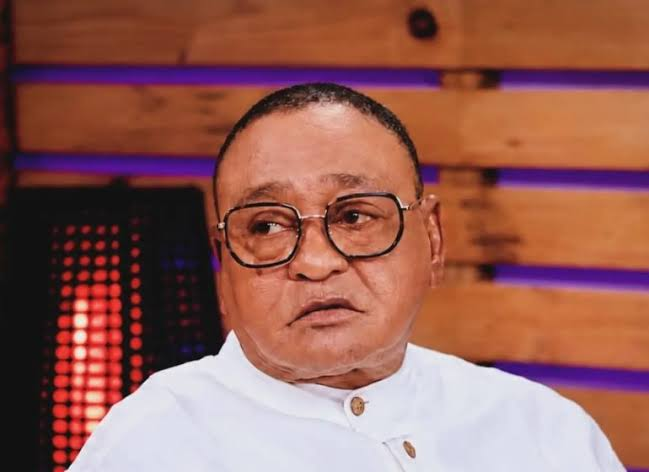
Veteran Nollywood actor and filmmaker Jide Kosoko has disclosed that he is facing financial difficulties after his historical film, Eleko: Oba Esugbayi, failed to recover its production cost of more than ₦300 million following its cinema release.
Kosoko made the revelation during an interview with African A-List, published on October 17, 2026. His comments attracted renewed attention on Thursday, October 22, as he explained how the film's disappointing financial performance left him struggling to meet expectations from investors.
The actor said the production was financed largely through investments from individuals who expected financial returns, rather than money he personally provided.
“My film ‘Eleko: Oba Esugbayi’ that recently came out and we took to the cinemas, cost us over N300 million. Do I have 300 million?” Kosoko said.
He explained that the investors had committed their money to the project with the expectation that cinema earnings would recover the production expenses and generate returns.
However, the film did not perform well enough commercially to recover the investment.
“Different things happened and we did not earn our money back. The little that was earned was split,” he said.
Kosoko subsequently described himself as carrying a debt burden following the project's financial outcome.
The historical drama, released in Nigerian cinemas in March 2026, tells the story of Oba Esugbayi Eleko, the Lagos monarch remembered for his resistance to British colonial authorities in the early twentieth century.
The production featured several prominent Nollywood actors, including Femi Branch, Femi Adebayo, Saidi Balogun, Dele Odule and Yinka Quadri.
Despite its substantial production budget and established cast, the film reportedly generated approximately ₦18.3 million during its opening weekend.
That figure represented only the initial cinema earnings and does not establish the film's total revenue throughout its theatrical run.
Kosoko did not publicly provide a complete breakdown of the project's final box-office earnings, distribution expenses or outstanding financial obligations in the interview.
He also clarified that his remarks about debt did not necessarily mean that cast and crew members had gone unpaid. Rather, the film had failed to deliver the financial returns anticipated by its backers.
The actor acknowledged the significant investments made by cinema operators, pointing to the financial arrangements involved in theatrical film distribution.
His disclosure comes amid wider discussions about the commercial challenges facing Nigerian filmmakers, particularly the difficulty of recovering large production budgets through cinema ticket sales.
Fellow Nollywood actor and filmmaker Ramsey Nouah recently expressed similar concerns, arguing that cinema releases do not always guarantee profitability, even when producers invest heavily in production, marketing and promotion.
Kosoko's experience highlights the financial risks associated with investor-backed film projects, where commercial performance can fall short of expectations despite substantial spending.
Stone Reporters News
stonereportersnews.com
info@stonereportersnews.com | Facebook: Stone Reporters News | X: @StoneReportNew | Instagram: @stonereportersnews
Add comment
Comments