

Reported by: Oahimire Omone Precious | Edited by: Oravbiere Osayomore Promise.
The Federal Government has intensified efforts to broaden the adoption of clean and affordable transportation across northern Nigeria through a new expansion phase of its Presidential Initiative on Compressed Natural Gas and Electric Vehicles, with Katsina State identified as a key hub for deployment.
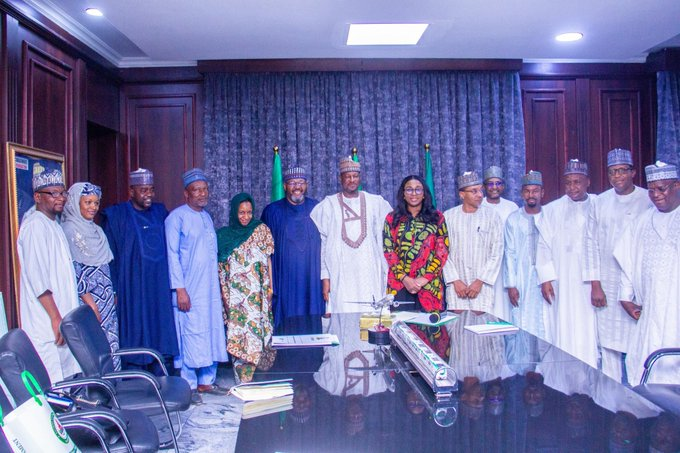
Katsina’s inclusion follows a high-level engagement between federal officials overseeing the initiative and representatives of the state government, focused on accelerating infrastructure rollout for Compressed Natural Gas usage and electric mobility systems.
Under the proposed framework, federal authorities plan to support the establishment of CNG refuelling stations, vehicle conversion centres, electric vehicle charging infrastructure, and a dedicated clean energy transport corridor along strategic routes in the northern region.
The programme is also expected to include structured training for young people as certified technicians, aimed at strengthening local capacity in emerging clean energy technologies and creating employment opportunities within the sector.
Officials said the initiative aligns with Nigeria’s broader energy transition agenda, which seeks to reduce dependence on fossil fuels while promoting sustainable transport solutions in response to rising energy costs and environmental concerns.
The expansion into Katsina is also seen as part of efforts to strengthen regional equity in infrastructure development, ensuring that northern states are not left behind in the national rollout of clean mobility projects.
Stakeholders involved in the programme have emphasised that successful implementation will depend on collaboration between federal and state governments, private sector partners, and local communities across deployment zones.
They also noted that the initiative is designed to improve transportation efficiency, reduce fuel-related financial pressures on citizens, and support long-term environmental sustainability as Nigeria gradually shifts towards cleaner energy systems.
Nigeria’s push toward compressed natural gas adoption gained momentum following recent policy shifts aimed at diversifying the country’s transport energy mix, particularly after adjustments in fuel pricing mechanisms that increased public interest in alternative fuel sources.
The Presidential Initiative on Compressed Natural Gas and Electric Vehicles was introduced to accelerate infrastructure development, encourage private sector participation, and reduce transportation costs by promoting cleaner fuel alternatives across urban and rural routes.
In northern Nigeria, transportation challenges have been compounded by long travel distances, limited access to modern fuel infrastructure, and rising operational costs for commercial drivers, making alternative energy solutions increasingly relevant.
Katsina State, located in the northwestern region, has been identified as a strategic location for clean energy expansion due to its connectivity with major transport corridors linking several northern states and neighboring countries.
Officials involved in the project have highlighted the importance of building local technical capacity, particularly among young people, to ensure sustainability and reduce dependence on external expertise for maintenance and operations.
Private sector stakeholders are expected to play a significant role in financing and operating parts of the infrastructure network, including charging stations and conversion centres, under public-private partnership arrangements.
Weeks and months ahead will likely focus on coordination mechanisms between federal ministries, state authorities, and implementing partners to ensure that planned infrastructure projects are delivered in phases and aligned with national energy transition goals.
Authorities also indicated that regulatory frameworks are being reviewed to support safe adoption of compressed natural gas and electric mobility systems, including standards for vehicle conversion and station safety compliance.
Analysts have pointed out that the introduction of alternative fuel infrastructure may gradually influence transportation pricing structures, particularly for commercial operators who depend heavily on fuel-intensive logistics networks.
Community engagement is also expected to form a core part of implementation, with sensitisation programmes aimed at increasing public awareness of clean energy transport options and their long-term benefits.
Despite optimism surrounding the initiative, experts note that challenges such as funding requirements, infrastructure maintenance, and technology adoption gaps may influence the pace of deployment across different regions.
The expansion of clean transport infrastructure in northern Nigeria is also viewed within broader regional development planning, particularly as transport corridors in the region connect domestic markets with trans-Saharan trade routes.
International partners and development agencies have previously supported similar energy transition efforts in Nigeria, particularly in areas related to renewable energy expansion and urban mobility reform.
Employment generation remains a central expected outcome of the initiative, with emphasis placed on equipping young people with technical skills relevant to emerging clean energy technologies and transport systems.
The overall strategy reflects a gradual transition approach that balances immediate transport cost relief objectives with longer-term environmental and infrastructural transformation goals across the country.
Monitoring and evaluation frameworks are expected to be established to track progress, assess infrastructure performance, and ensure accountability in the implementation of clean transport projects.
The success of the initiative is also likely to depend on the attractiveness of the investment climate for private sector actors willing to participate in infrastructure development.
Taken together, the initiative represents a significant step in Nigeria’s evolving transport energy landscape, as policymakers seek to integrate economic relief measures with sustainable development priorities in the face of changing global energy dynamics.
Government officials have underscored the need for sustained intergovernmental coordination, noting that effective delivery will require consistent policy alignment across federal and state levels as well as cooperation with private operators.
While the programme is progressing, stakeholders acknowledge potential risks including infrastructure delays, financing constraints, and uneven adoption rates across different regions, all of which could affect overall implementation timelines.
The long-term vision driving the policy is to establish a more resilient and diversified transport energy system capable of supporting economic growth while reducing environmental impact and improving access to affordable mobility solutions nationwide.
As implementation advances, attention is expected to remain on practical delivery outcomes, particularly the timely installation of infrastructure components and the smooth integration of electric and gas-powered transport systems into existing mobility networks. Stakeholders maintain that sustained cooperation, transparent governance, and continued investment will be critical in translating policy objectives into measurable improvements for commuters, logistics operators, and broader economic activity across both urban centres and rural communities nationwide.
Federal authorities reaffirm commitment to continued expansion across all regions.
📩 Stone Reporters News | 🌍 stonereportersnews.com
✉️ info@stonereportersnews.com | 📘 Facebook: Stone Reporters News | 🐦 X (Twitter): @StoneReportNew | 📸 Instagram: @stonereportersnews
Add comment
Comments