

Reported by: Ijeoma G | Edited by: Oravbiere Osayomore Promise.
Armed kidnappers have demanded a ransom of ₦30 million for the release of a man abducted along a highway route between Bauchi State and Kaduna State, in a case that has further highlighted persistent insecurity along major intercity roads in northern Nigeria.
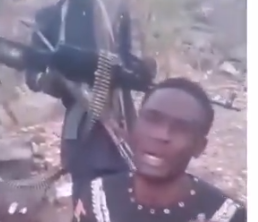
The victim was reportedly seized about four days ago while travelling from Magama town in Bauchi State en route to Zaria in Kaduna State. A video that surfaced days after the abduction shows the victim speaking under duress, appealing for help and urging his family to meet the kidnappers’ financial demand in order to secure his release.
The emergence of the video has sparked alarm among residents and observers familiar with the region, where kidnapping for ransom has become a recurring security challenge affecting commuters, traders and rural dwellers.
Although the authenticity of the footage has not been independently verified, such recordings are commonly used by criminal groups to pressure families and accelerate ransom negotiations.
Security sources and prior reporting on similar incidents indicate that the Bauchi–Kaduna corridor and adjoining highways have repeatedly witnessed abductions carried out by armed groups operating from forested and remote areas.
These groups often target vulnerable travelers on less patrolled stretches of road, taking advantage of limited security presence and difficult terrain.
Kidnapping for ransom has evolved into a widespread criminal enterprise across Nigeria, particularly in the North-West and North-Central regions, where armed bandit groups have intensified attacks in recent years.
In several past cases within Bauchi State and neighbouring regions, abductors have demanded large sums before releasing victims after days or weeks in captivity.
The latest demand for ₦30 million aligns with a broader pattern of escalating ransom expectations by criminal groups operating across northern Nigeria.
While official confirmation from police authorities in Bauchi and Kaduna States is still awaited, residents along the affected corridor have expressed renewed concern over the safety of road travel.
Many communities in the region have previously reported similar incidents prompting calls for increased patrols surveillance operations and coordinated security responses along major highways.
The Bauchi–Zaria route is a key transport artery connecting commercial and educational centres in northern Nigeria frequently used by students traders and long-distance travelers.
However insecurity along such corridors has forced many commuters to alter travel schedules avoid night journeys or rely on convoy systems where available.
The circulation of ransom videos has also become a common tactic used by kidnappers to exert psychological pressure on victims’ families.
These videos typically circulated through mobile messaging platforms are intended to demonstrate control over hostages and increase urgency in negotiations.
Community members familiar with similar cases say families are often left in distress balancing fear for the victim’s life with the financial burden of ransom demands.
Negotiations are often conducted quietly sometimes involving intermediaries while authorities attempt rescue or tracking operations.
Kidnapping has been widely documented as one of Nigeria’s most persistent security challenges in the 21st century affecting both rural and urban areas.
It is often linked to broader issues of armed banditry weak rural policing structures and economic hardship which have contributed to the expansion of criminal networks across multiple states.
As of the time of filing this report there has been no official statement confirming the identity of the victim or providing details of ongoing rescue efforts.
Families and community members are continuing to appeal for assistance while awaiting possible contact from security agencies or intermediaries involved in negotiations.
Security stakeholders are expected to intensify monitoring of highway routes in response to the incident as concerns grow over the safety of intercity travel across parts of northern Nigeria.
Analysts continue to stress the importance of improved intelligence gathering rapid response capabilities and stronger coordination between local communities and law enforcement agencies to disrupt kidnapping operations.
Authorities have also previously urged citizens to promptly report suspicious movements and avoid confrontation with armed groups emphasizing that coordinated security response remains the most effective approach to tackling kidnapping incidents.
The situation remains fluid with further updates expected as investigations continue and efforts to secure the victim’s release progress.
Law enforcement agencies in Nigeria have consistently identified kidnapping for ransom as one of the most challenging security threats due to its fluid operational structure and the difficulty of tracking perpetrators who often operate in dispersed rural networks.
In many affected regions security agencies have increased patrols along major highways and deployed specialized tactical units aimed at disrupting criminal hideouts located in forested areas bordering key transport routes.
The psychological impact of ransom videos on families is often severe as victims are displayed under duress creating urgency and emotional pressure that complicates decision making processes during negotiations.
Experts in security studies note that economic hardship unemployment and weak rural infrastructure continue to contribute to the expansion of kidnapping networks across northern Nigeria creating conditions that facilitate recruitment and logistical support for criminal groups.
Community leaders have called for strengthened collaboration between residents traditional institutions and security agencies to improve early warning systems and enhance rapid response mechanisms in rural and semi-urban areas affected by recurring abductions.
Transport operators in northern Nigeria have also reported increased operational costs due to rising insecurity as many passengers avoid certain routes or demand additional security assurances before travelling.
Authorities emphasize investment in surveillance technology and coordination to reduce kidnapping and restore confidence levels.
📩 Stone Reporters News | 🌍 stonereportersnews.com
✉️ info@stonereportersnews.com | 📘 Facebook: Stone Reporters News | 🐦 X (Twitter): @StoneReportNew | 📸 Instagram: @stonereportersnews
Add comment
Comments