

Reported by: Ijeoma G | Edited by: Oravbiere Osayomore Promise.
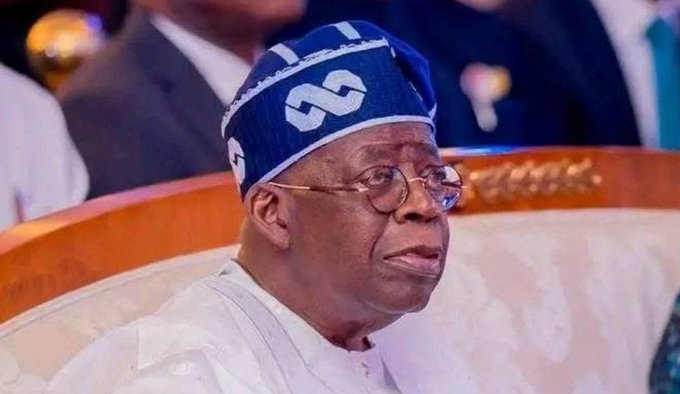
President Bola Ahmed Tinubu has attributed Nigeria’s longstanding economic hardship and widespread poverty to outdated tax structures inherited from the colonial era, arguing that systemic inefficiencies embedded in the old framework significantly undermined national prosperity and weakened economic growth over decades.
Speaking in Abuja during the commissioning of a new headquarters for the Nigeria Revenue Service, the president said the country’s historical tax regime was marked by fragmentation, multiplicity of taxes, and inconsistencies that collectively imposed burdens on citizens while failing to generate sustainable revenue for development. The remarks were conveyed in an official statement issued by his Special Adviser on Information and Strategy, Bayo Onanuga.
Tinubu maintained that the inherited tax system, largely rooted in colonial administrative practices, created structural imbalances that disproportionately affected ordinary Nigerians. According to him, the lack of coherence and coordination among tax authorities at different levels of government led to inefficiencies, discouraged investment, and limited the government’s ability to provide essential services.
The president’s comments come amid ongoing efforts by his administration to overhaul Nigeria’s fiscal architecture through a set of comprehensive tax reforms scheduled to take full effect in 2026. These reforms, which have generated both support and criticism, are designed to simplify the tax system, expand the revenue base, and promote economic inclusivity.
Tinubu emphasized that the new tax framework is structured to be people-centered and investment-friendly, with particular attention to protecting low-income earners and supporting small businesses. He argued that unlike the previous regime, which he described as punitive and disjointed, the new system seeks to align taxation with broader economic development goals and social equity.
The administration has repeatedly framed the reforms as a critical step toward repositioning Nigeria’s economy, especially in light of longstanding concerns about the country’s low tax-to-GDP ratio, which has limited government capacity to fund infrastructure and social services. Analysts have noted that Nigeria’s tax revenue performance has historically lagged behind comparable economies, contributing to chronic fiscal deficits and reliance on borrowing.
Tinubu’s broader economic agenda has included a series of bold and controversial measures since he assumed office in 2023, including the removal of fuel subsidies and the unification of foreign exchange rates. While these policies were intended to stabilize the economy and attract investment, they also triggered significant increases in the cost of living, leading to public discontent and heightened scrutiny of government policies.
In this context, the tax reforms are being presented as part of a “once-in-a-generation” fiscal reset aimed at creating a more efficient and equitable system. Government officials have argued that the reforms will reduce the burden on the poor by introducing progressive tax measures and eliminating redundant levies that have long plagued small businesses and informal sector operators.
However, the reform process has not been without controversy. Opposition figures and policy analysts have raised concerns about potential inconsistencies and ambiguities in the new tax laws, with some alleging that certain provisions could grant excessive powers to tax authorities. There have also been fears that the reforms, if not properly implemented, could exacerbate existing economic pressures on households already grappling with inflation and declining purchasing power.
Despite these concerns, Tinubu has remained steadfast in defending the reforms, insisting that they are essential for long-term economic stability and growth. He has called on Nigerians, businesses, and stakeholders to support the implementation process, describing it as a necessary transition toward a more sustainable fiscal future.
The president also highlighted the role of institutional reforms in ensuring the success of the new tax system. He pointed to ongoing efforts to modernize tax administration, including the use of digital technologies to improve compliance, reduce leakages, and enhance transparency. These measures, he said, are aimed at building public trust and ensuring that tax revenues are effectively utilized for national development.
Economic experts have noted that one of the key challenges facing the reforms will be restoring confidence in government institutions. In a country where many citizens perceive limited returns on taxes paid, the success of the new system will depend not only on policy design but also on visible improvements in public service delivery.
Tinubu acknowledged these concerns, stressing that the government is committed to ensuring that the benefits of the reforms are felt across all sectors of society. He reiterated that the ultimate goal is to create an environment where taxation is seen not as a burden but as a shared investment in national progress.
The president’s remarks also reflect a broader narrative within his administration that seeks to reframe Nigeria’s economic challenges as the result of structural and historical factors rather than recent policy decisions alone. By attributing poverty in part to colonial-era systems, the government is positioning its reforms as corrective measures aimed at addressing deep-rooted inefficiencies.
At the same time, critics argue that while historical factors may have contributed to current challenges, contemporary policy choices play a significant role in shaping economic outcomes. They have called for greater transparency, stakeholder engagement, and safeguards to ensure that the reforms achieve their intended objectives without unintended consequences.
As Nigeria moves toward the full implementation of the new tax regime, the coming months are expected to be critical in determining its impact on the economy and the lives of ordinary citizens. The government faces the dual task of maintaining public support while delivering tangible results that justify the sweeping changes being introduced.
For many Nigerians, the debate over tax reforms is closely tied to broader questions about governance, accountability, and the social contract between the state and its citizens. Whether the new system will succeed in reversing decades of economic challenges remains to be seen, but it is clear that the stakes are high.
Tinubu’s assertion that old tax laws contributed to poverty underscores the urgency of reform, but it also places significant responsibility on his administration to ensure that the new framework delivers on its promises of prosperity, inclusivity, and sustainable growth.
📩 Stone Reporters News | 🌍 stonereportersnews.com
✉️ info@stonereportersnews.com | 📘 Facebook: Stone Reporters News | 🐦 X (Twitter): @StoneReportNew | 📸 Instagram: @stonereportersnews
Add comment
Comments