

Reported by: Ijeoma G | Edited by: Oravbiere Osayomore Promise.
Nigeria has taken a significant step toward revitalising its industrial base after signing a $1 billion Memorandum of Understanding with India-based Rashmi Metaliks Group, a move authorities describe as a major milestone in the country’s effort to rebuild its steel sector and reduce reliance on imports.
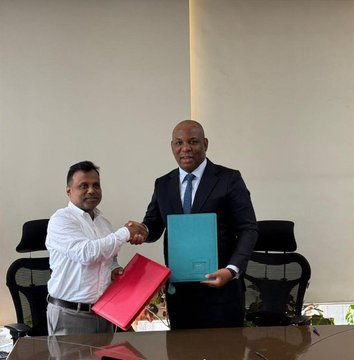
The agreement was formalised in Kolkata, India, on April 14, 2026, during an official visit led by the Minister of Steel Development, Prince Shuaibu Abubakar Audu. The deal, expected to span three years, is part of a broader strategy by the federal government to attract foreign direct investment and reposition Nigeria as a major steel-producing nation.
According to officials, the partnership with Rashmi Metaliks is designed to inject fresh capital, technology, and expertise into Nigeria’s steel value chain, which has struggled for decades despite the country’s vast natural resources. The minister described the agreement as a landmark investment drive, emphasising that it reflects growing global confidence in Nigeria’s economic reforms under President Bola Ahmed Tinubu.
The signing followed a detailed inspection tour of Rashmi Metaliks’ integrated steel plant in Kolkata, where the Nigerian delegation assessed the company’s production capabilities. The facility operates across several key segments of steel manufacturing, including direct reduced iron, pig iron, billets, and finished ductile iron pipes, an integrated model Nigerian authorities hope to replicate domestically.
Government officials say the investment will support Nigeria’s transition from a raw materials exporter to a value-added industrial economy. With more than three billion tonnes of iron ore reserves, some with iron content as high as 67 percent, the country is widely considered to have the resources necessary to sustain a robust steel industry.
Nigeria’s domestic demand for steel is currently estimated at about $10 billion annually, a gap largely filled through imports. The government believes that boosting local production through partnerships such as the Rashmi deal will significantly reduce foreign exchange outflows while strengthening domestic manufacturing capacity.
Officials also highlighted the potential for job creation, noting that the investment is expected to generate employment opportunities across mining, manufacturing, and related sectors. The project is further aligned with the administration’s broader economic agenda, which prioritises industrialisation, infrastructure development, and economic diversification.
The deal adds to a growing pipeline of investments in Nigeria’s steel sector, which has reportedly attracted over $2.2 billion in foreign direct investment under the current administration. These include a $400 million steel plant under development in Ogun State, a $300 million integrated steel project in Kaduna State, and a $500 million mini-liquefied natural gas initiative in Ajaokuta aimed at improving energy supply for steel production.
Analysts note that energy availability has historically been a major constraint for Nigeria’s steel industry, with inconsistent power supply affecting production efficiency. The integration of gas infrastructure projects alongside industrial investments is therefore seen as a critical component of the government’s strategy to create a sustainable steel ecosystem.
The federal government has set ambitious targets for the sector, including plans to achieve crude steel production of approximately 10 million tonnes annually by 2030. Officials say this would position Nigeria as a leading steel hub in Africa and support downstream industries such as construction, automotive manufacturing, and infrastructure development.
In addition to economic benefits, the agreement is also expected to deepen bilateral relations between Nigeria and India, particularly in the areas of mining, manufacturing, and technology transfer. The Nigerian delegation’s visit included high-level engagements with Indian officials and industry leaders, with further discussions planned to explore additional areas of collaboration.
Vice Chairman of Rashmi Metaliks Group, Sunil Kumar Patwari, expressed confidence in the partnership, noting that the company is committed to delivering on the projects outlined in the memorandum of understanding. He also acknowledged the Nigerian government’s efforts to attract credible investors and create an enabling business environment.
For Nigeria, the steel sector has long been viewed as a critical but underdeveloped component of its industrial economy. Previous attempts to establish large-scale steel production, including the Ajaokuta Steel Complex, have faced delays and operational challenges. The current administration is seeking to revive the sector through private-sector partnerships, policy reforms, and targeted investments.
Minister Audu stressed that the government is committed to providing policy stability, fiscal incentives, and regulatory support to ensure the success of the new investment. He also used the opportunity to invite additional international investors to explore opportunities within Nigeria’s steel value chain, particularly in areas such as electric-arc furnace technology and integrated steel production.
The agreement with Rashmi Metaliks is widely seen as a test case for Nigeria’s renewed industrial strategy. While the scale of the investment signals strong investor interest, its success will depend on effective implementation, infrastructure support, and sustained policy consistency.
Economic observers caution that while memoranda of understanding represent important first steps, the real impact will be measured by the execution of projects on the ground. If successfully implemented, however, the deal could mark a turning point in Nigeria’s long-standing ambition to become self-sufficient in steel production and a competitive player in the global industrial landscape.
As Nigeria continues to pursue its industrialisation agenda, the $1 billion steel investment deal underscores the government’s determination to leverage international partnerships in unlocking the country’s economic potential. Whether the initiative delivers on its promise will be closely watched in the coming years, both domestically and by global investors seeking opportunities in Africa’s largest economy.
📩 Stone Reporters News | 🌍 stonereportersnews.com
✉️ info@stonereportersnews.com | 📘 Facebook: Stone Reporters News | 🐦 X (Twitter): @StoneReportNew | 📸 Instagram: @stonereportersnews
Add comment
Comments