

Reported by: Oahimire Omone Precious | Edited by: Oravbiere Osayomore Promise.
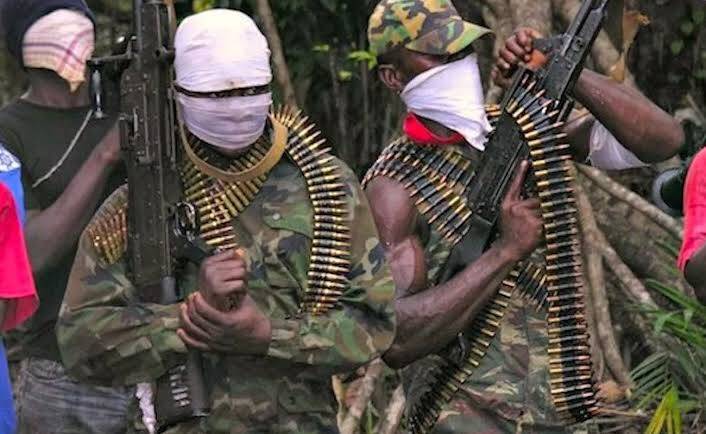
The chairman of the Christian Association of Nigeria for the Sabon Gari Yilpo unit in Plateau State has levelled a devastating allegation against the Nigerian military, claiming that soldiers deliberately aided Fulani militias during a deadly attack on his community instead of protecting residents. Pastor Timothy Luka, who is also a prominent leader in the Mangu Local Government Area community, accused troops from the Sector 2 Command of OPEP of providing cover for heavily armed attackers who shot over 15 people, killed at least one person, and caused widespread terror. The attack, which unfolded over several hours on Friday, May 1, 2026, represents the most serious accusation of military complicity in the region since the federal government launched its renewed offensive against banditry in the North West and North Central zones. In a statement issued on Sunday, May 3, the cleric said he was speaking from direct experience, not hearsay, insisting he witnessed the gunmen at close range and heard them speaking Fulfulde, the language of the Fulani people. “I am standing here to testify about what happened, not what I was told, but what happened in my presence. There was a special attack from the Fulani terrorists. The Nigeria army escorted them to unalive our youths,” Luka declared in his statement, which quickly circulated on social media and drew widespread condemnation from civil society groups.
The violence in Yilpo did not begin on May 1. Pastor Luka explained that tensions had been building for days. On Thursday, April 30, 2026, a group of young miners from the community was returning from a tin mining site along the Aloghom-Yilpo-Mwansat college axis when they were ambushed. In that initial attack, one youth identified as Kyenshak Inusa was killed, two others sustained gunshot wounds, and one person was abducted. Community members immediately alerted security agencies, warning that a larger attack was imminent. According to youth leader Nandom Ishaku, those warnings were ignored. “We quickly alerted security operatives and warned that there would be an imminent attack, but the security officials did not take the alert seriously. And now, we have lost a vibrant youth,” Ishaku told reporters. The killing of Kyenshak Inusa was the spark. But the inferno came the following day, when the militias returned in force. “On Friday, 1st May 2026, the Fulani militias came to Yilpo again. This time around they came to wipe out the community,” Pastor Luka said. As local youths mobilised to defend themselves, the soldiers finally arrived. But instead of engaging the attackers, the clergyman alleged, the military turned its weapons against the residents. “The youth mobilised themselves to defend the whole community, but the soldiers from the Sector 2 Command of OPEP in Mangu later came and gave them cover, shooting at the defenseless residents again,” Luka added. He detailed that the assault lasted over seven hours, with no initial security response, and that when help eventually came, it was the wrong kind.
The cleric’s accusation goes beyond an isolated incident of negligence. He alleges a deliberate pattern in which soldiers protect the same people they are supposed to fight. “Any time the militias attack the local communities and the youths decide to stand up and defend themselves, soldiers would be dispatched to intervene and protect the attackers,” he said. This claim of systematic collusion was echoed by other religious leaders in the area, including a Catholic priest, Reverend Father Joseph Wulemgbe, who accused soldiers of using an armoured tank to demolish the home of a church evangelist with the man and his children still inside. “I am here to let people know of the incident that happened yesterday. We realised all of a sudden that there were gunshots. They were harmless. He was inside with his children. We don’t know what happened, but the armoured tank came here and decided to hit the building three times,” Father Wulemgbe said in a video interview. The damage to the building was visible and extensive. In a separate but parallel incident, the Nigeria Customs Service also faced similar allegations of complicity in Mangu, with youth spokesperson Bulus Dabit condemning what he described as an “armed Fulani militia invasion” and accusing customs officials of “aiding and abetting” attacks on the town of Pankshin.
The casualty figures from the Yilpo violence remain contested, but eyewitness accounts are chillingly consistent. Pastor Luka provided a specific list of victims who sustained gunshot wounds: Nanfwang Sunday, 28; Nanribet Emmanuel, 33; Fwangmun Joshua, 32; Nandom Peter, 28; Wakili Luka, 27; Nandom Ishaku, 25; Inusa Ishaya, 26; Bitrus Micheal, 35; Monday Bulus, 36; and Daniel Nanfwang, 30. All were receiving treatment in hospitals in Jos and Mangu. Over 15 people were shot in total. The community is now traumatised and enraged, with Pastor Luka warning that further restraint is no longer possible. “We want to make it known that we would no longer hesitate to retaliate whenever we’re being attacked, because our lives are valuable to us just as anyone’s life is valuable to him,” he said. The statement was a clear threat of a spiral of reprisal attacks, a dynamic that has turned Plateau State into a killing field over the past decade.
The Federation of Gan Allah Fulani Development Association, popularly known as GAFDAN, has pushed back forcefully against the allegations. In a statement issued shortly after the attack, the group claimed that the violence was not perpetrated by Fulani militias but by Mwaghavul youths who had blocked the Mangu-Jos road and set structures on fire. Pastor Luka dismissed this as a complete fabrication. “Despite attempts by Fulani groups like GAFDAN claiming that the assailants were not Fulani people but Mwaghavul youths, I can categorically and unequivocally confirm that the attackers were Fulani bandits. I saw them at close range. Many others saw them as well and heard them speaking their language. So I wonder why they will say those who attacked us were not Fulani people,” he fired back.
As of Monday, May 4, the Nigerian Army and the Defence Headquarters had not issued an official response to the latest allegations by Pastor Luka. However, in previous similar cases involving the CAN chairman for Mangu LGA, Reverend Timothy Daluk, the military has typically denied any wrongdoing and blamed the accusations on propaganda designed to demoralise troops. Following the Easter Monday attack in 2024, the Defence Headquarters insisted that operations were conducted with “the highest level of professionalism.” But the sheer number of victims named by Pastor Luka, coupled with video evidence of demolished buildings and accounts from a Catholic priest and local youth leaders, may make this denial more difficult to sustain. In the absence of an official military statement, the people of Yilpo, Sabon Gari, and surrounding communities are left with only their wounds, their destroyed homes, and a deepening conviction that the state has abandoned them to their fate. The question on everyone’s lips in Mangu is no longer whether the killers will strike again, but whether the soldiers will be there to help them when they do.
📩 Stone Reporters News | 🌍 stonereportersnews.com
✉️ info@stonereportersnews.com | 📘 Facebook: Stone Reporters News | 🐦 X (Twitter): @StoneReportNew | 📸 Instagram: @stonereportersnews
Add comment
Comments