

Reported by: Ijeoma G | Edited by: Oravbiere Osayomore Promise.
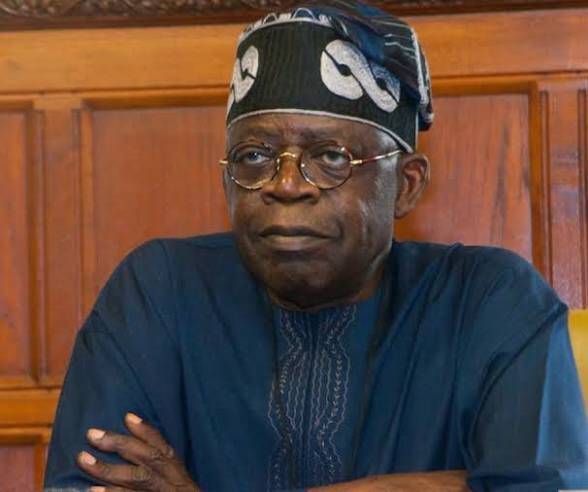
The administration of President Bola Ahmed Tinubu is seeking a fresh $1.25 billion (approximately ₦1.7 trillion) loan from the World Bank, a move that would push Nigeria’s total public debt past the ₦160 trillion mark and raise total World Bank approvals under Tinubu to roughly $10.6 billion. The facility, titled “Nigeria Actions for Investment and Jobs Acceleration,” has reached an advanced stage in the lender’s approval process and is scheduled for a final vote by the World Bank’s Board of Executive Directors on June 26, 2026 . At the prevailing exchange rate of N1,361.4 to the dollar, the loan translates to about N1.70 trillion .
If fully disbursed, the new borrowing would raise Nigeria’s external debt from N74.43 trillion ($51.86 billion) at the end of 2025 to approximately N76.13 trillion ($53.11 billion), while total public debt would climb from N159.28 trillion to about N160.98 trillion ($112.22 billion) . The facility would rank as the second‑largest single World Bank loan secured under President Tinubu, behind only the $1.5 billion RESET (Reforms for Economic Stabilisation to Enable Transformation) Development Policy Financing approved in June 2024 .
The loan is a Development Policy Financing operation designed to support Nigeria’s shift from macroeconomic stabilisation to inclusive growth and job creation . According to World Bank documents, the facility will support reforms across three pillars: expanding access to finance, digital services, and electricity; strengthening competitiveness through tax, trade, and agricultural reforms; and supporting the government’s economic stabilisation agenda . The Federal Ministry of Finance will serve as the implementing agency, working alongside the Central Bank of Nigeria, the Securities and Exchange Commission, the Nigerian Electricity Regulatory Commission, and the National Agricultural Seed Council, among others .
The World Bank has flagged the operation’s risk profile as “high,” citing political and governance pressures ahead of the 2027 general election, which could delay or reverse sensitive reforms . According to the Independent National Electoral Commission’s revised timetable, the presidential election is scheduled for January 16, 2027, placing the June 26 loan approval date approximately six months and 21 days before the vote . The World Bank noted that “political and governance risks are elevated ahead of the 2027 elections” and that pressures could affect implementation .
Between June 2023 and May 2026, the World Bank has approved approximately $9.35 billion in loans and credits for Nigeria across sectors including power, education, healthcare, agriculture, social protection, renewable energy, and economic reform support . Major packages include the $2.25 billion RESET and ARMOR reform financing (June 2024), $1.57 billion for HOPE and SPIN programmes (September 2024), and $1.08 billion for education and resilience programmes (March 2025) . Nigeria’s total debt to the World Bank as of December 2025 stood at $19.89 billion, representing 38.36 percent of the nation’s external debt stock .
The loan request has drawn sharp reactions from economists and opposition figures. Development economist Dr Aliyu Ilias questioned the increasing dependence on foreign borrowing, warning that debt servicing costs could crowd out critical public spending . Former Vice President Atiku Abubakar’s camp has also criticised the government’s borrowing strategy, describing it as “reckless” and warning of long‑term fiscal consequences . Critics have pointed to the timing of the loan, which falls months before the 2027 election, as evidence of election‑year spending pressures that could undermine fiscal discipline .
A late twist has emerged in the negotiations. Just days before the loan advanced to the decision‑meeting stage, the Accountant‑General of the Federation, Shamseldeen Ogunjimi, warned that Nigeria might “walk away” from World Bank loan arrangements if approval and disbursement delays persist for more than six months . “If approvals take more than six months, the Nigerian Government may no longer honour such arrangements,” Ogunjimi told a World Bank delegation in Abuja, stressing that the facilities carry repayment obligations and are not grants . The warning highlighted growing frustration within the Nigerian government over the lender’s bureaucratic timelines .
The World Bank, however, has indicated that disbursements typically occur in instalments and are tied to specific policy and reform conditions . Mansir Nasir, the Bank’s Senior External Affairs Officer, noted that funds depend on the government’s compliance with agreed benchmarks . The loan is now at the “decision meeting” stage of the World Bank’s project cycle, a near‑final internal clearance before formal board consideration . A World Bank document confirmed that the review “did authorise the team to appraise and negotiate,” indicating that the project has successfully passed earlier internal checks .
If approved, the $1.25 billion facility would bring total World Bank approvals under the Tinubu administration to approximately $10.6 billion, cementing the government’s reliance on multilateral financing to sustain its reform agenda .
📩 Stone Reporters News | 🌍 stonereportersnews.com
✉️ info@stonereportersnews.com | 📘 Facebook: Stone Reporters News | 🐦 X (Twitter): @StoneReportNew | 📸 Instagram: @stonereportersnews
Add comment
Comments