

Reported by: Ijeoma G | Edited by: Oravbiere Osayomore Promise.
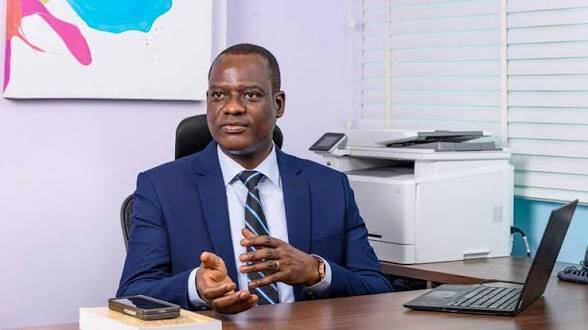
The Minister of Finance and Coordinating Minister of the Economy, Taiwo Oyedele, has issued a firm warning that Nigeria must urgently break its cycle of heavy reliance on borrowing to finance national development, insisting that the country must instead build a sustainable fiscal system anchored on effective tax reforms and domestic revenue generation. Oyedele made the declaration on Tuesday, May 12, 2026, in Abuja while delivering the lead plenary address at the 28th Annual Tax Conference of the Chartered Institute of Taxation of Nigeria, themed “Tax Reforms and Global Relevance: Positioning Nigeria’s Tax System for a Sustainable Future.”
“Nigeria cannot continue to finance development primarily through borrowing,” Oyedele declared. “We must build a fiscal system capable of sustainably supporting critical infrastructure, quality education, affordable healthcare, security, and social protection.” He stressed that sustainability involves more than just raising revenue; it also requires promoting economic growth, reducing inequality, protecting vulnerable groups, and encouraging productivity across the economy.
The minister’s remarks came barely 24 hours after reports emerged that the Federal Government had intensified engagement with the World Bank over a fresh $1.25 billion loan facility, titled Nigeria Actions for Investment and Jobs Acceleration. The proposed loan has already reached an advanced stage in the World Bank’s approval process and is scheduled for a final board vote on June 26, 2026. If approved, it would rank as the second‑largest single World Bank loan secured under President Bola Tinubu, behind only the $1.5 billion RESET Development Policy Financing approved in June 2024. The timing of the loan request, coming approximately six months before the January 2027 presidential election, has sharpened scrutiny of the government’s borrowing appetite and its broader fiscal strategy.
Oyedele explained that the government’s ongoing tax reforms were designed to build a globally competitive, socially equitable and fiscally sustainable tax system capable of supporting long‑term economic growth. He identified longstanding structural weaknesses in Nigeria’s tax administration, including multiple taxation, fragmented administration, weak compliance, informality, rising compliance costs for businesses, and overdependence on a narrow revenue base, as the key impediments that made reform unavoidable. “Businesses faced overlapping demands, unpredictable enforcement, and rising compliance costs. Citizens often perceived the tax system as unfair because the burden was unevenly distributed,” he said, adding that these distortions have discouraged investment and eroded public trust.
Under the new tax framework, Oyedele disclosed that minimum wage earners have been exempted from personal income tax, while relief measures have been introduced to ease the burden on low‑ and middle‑income households to strengthen inclusion and reduce inequality. On corporate taxation, he said the government is proposing reductions in companies’ income tax rates to improve Nigeria’s attractiveness as an investment destination and stimulate enterprise growth. Regarding Value Added Tax, the minister stated that the government is modernising the framework by expanding input VAT credits and clarifying exemptions for essential goods and services, a move that reduces cost buildup within the economy, improves efficiency across the value chain, and helps moderate inflation.
Addressing the issue of multiple taxes and levies, Oyedele revealed that the Federal Government is collaborating with subnational governments to harmonise taxes and reduce compliance costs, noting that 15 states have already enacted tax harmonisation laws. He stressed that technology would play a central role in future tax administration, with initiatives such as VAT fiscalisation, the National Single Window and Rev360 expected to improve efficiency, transparency and ease of compliance. “Our objective is clear: grow the economy, and revenue will follow. Support enterprise, encourage expansion, and decent jobs will be created,” the minister stated.
However, Oyedele acknowledged that significant challenges remain, including weak institutional capacity, difficulties integrating the informal sector, and low public trust. The minister reaffirmed the government’s commitment to transparency and taxpayer protection through the establishment of the Office of the Tax Ombud and improved dispute resolution mechanisms. “A globally relevant tax system is not one that merely collects revenue. It is one that supports competitiveness, encourages enterprise, protects citizens, attracts investment, and strengthens national development. That is the future we are building,” he said. Also speaking at the conference, Vice‑President Kashim Shettima defended the administration’s tax reforms, describing them as pro‑people and pro‑business policies aimed at lifting millions of Nigerians out of poverty and repositioning the economy for sustainable growth.
The minister’s warning on borrowing comes amid heightened scrutiny of Nigeria’s debt profile. As of December 31, 2025, the country’s total public debt stood at approximately $110.93 billion (about N159.21 trillion). In March 2026, the National Assembly approved a separate $6 billion external loan request from President Tinubu, pushing the total public debt stock to an estimated $116.93 billion. Additionally, the government plans to spend over N15 trillion on debt servicing in the 2026 budget, representing nearly half of the projected revenue target. While the debt‑to‑GDP ratio remains manageable at approximately 36 percent, well within international benchmarks such as the IMF’s 55–70 percent threshold for emerging markets, the cost of debt servicing absorbs a significant share of government revenue and limits fiscal flexibility.
President Tinubu, speaking at the Africa/France summit earlier, also addressed Nigeria’s debt burden, revealing that the country would spend about $11.6 billion on debt service in 2026. He argued that unfair global financial architecture is forcing Nigeria to de‑industrialise, stating, “Every single dollar that leaves our treasury to pay punitive interest rates is a dollar that did not go into our steel sector, our textile mills, our agro‑processing plants, or our digital industries.” He insisted that Nigeria will continue to borrow responsibly but demanded a financial system that intentionally enables Africa to industrialise.
📩 Stone Reporters News | 🌍 stonereportersnews.com
✉️ info@stonereportersnews.com | 📘 Facebook: Stone Reporters News | 🐦 X (Twitter): @StoneReportNew | 📸 Instagram: @stonereportersnews
Add comment
Comments