

Reported by: Ijeoma G | Edited by: Oravbiere Osayomore Promise.
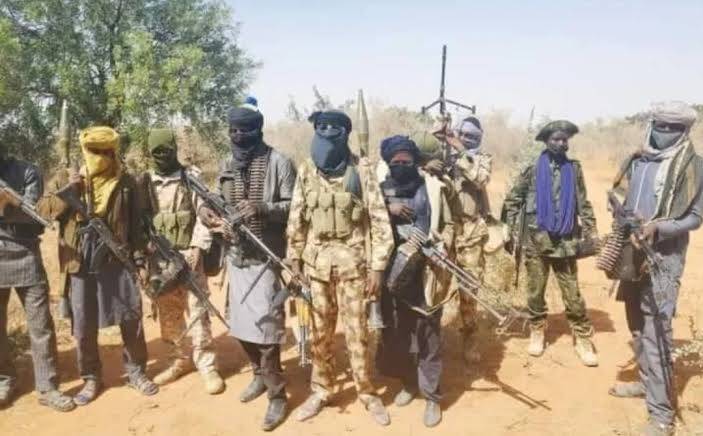
The heavily forested boundaries of Kankia Local Government Area have become the theatre of an open-air prison, where farming communities are subjected to a reign of terror reminiscent of a pre-colonial tax system implemented by force. This harsh reality came into sharp focus just weeks ago, in early April 2026, when suspected bandits did not just attack but issued a formal, chilling ultimatum to residents of several villages, including Magama and Walawa. According to a letter that circulated among the terrified communities, the armed groups demanded a specific, staggering bounty of 700 cattle and 1,000 sheep, giving residents a strict six-day deadline to comply or face a violent attack. The letter threatened to unleash an assault on the “whole town,” a threat that triggered a mass exodus of people fleeing their homes to escape the impending violence. The letter, which named the villages of Sukuntuni, Unguwar Tsamiya, Magama, Walawa, and Tudun Wulli, highlighted the brazen and systematic nature of the extortion, with reports indicating that armed men were moving freely on motorcycles through the area as a show of force.
The latest reported attacks on Kafinsoli, Magam, and Walawa, which residents say occurred last night, follow an established pattern of devastating insurgent tactics. Even as the community awaited the expiration of the six-day ultimatum, security forces had attempted to regain the initiative. On May 2, 2026, operatives managed to foil an attack on Matinjin village in the same Kankia LGA, forcing several bandits to flee with gunshot injuries and recovering eight operational motorcycles. The respite, however, was tragically short-lived. In a clear act of reprisal for the security forces' interception, the bandits regrouped just hours later, launching a devastating revenge attack on Gwalgoro Village in the Gyaza/Kunduru Ward. That assault, which took place around midday on May 3, was described by authorities as a “cowardly act of terror,” leaving 11 civilians dead and deepening the community’s trauma.
This cycle of attack and retaliation has shattered the illusion of safety. The Katsina State Commissioner for Internal Security and Home Affairs, Nasir Mu'azu, confirmed the deadly reprisal, noting that while the initial May 2 operation successfully repelled the assault and recovered rustled cattle and eight motorcycles, the criminals simply regrouped to exact their bloody revenge. The attacks on Kafinsoli, Magam, and Walawa are thus not isolated incidents but symptoms of a security architecture that is struggling to protect civilians from a well-armed and adaptive enemy. The bandits are reportedly emboldened, with a resident, Malam Lawal Yakubu, recounting how bandits rustled cattle in one area and returned days later to launch another raid. This method, combined with the issuance of formal “tax” letters, creates a climate of psychological warfare where the community is trapped between paying extortion or facing death.
The human cost is already catastrophically high and extends far beyond the cattle count. In the week preceding the latest attacks on Kankia, a deadly pattern emerged. A separate attack on Sunday, May 3, in the Kankia area left 11 villagers dead, marking one of the most lethal single incidents in recent weeks. The violence has been described as a “reprisal attack,” underscoring how the conflict has become a vicious cycle. The state government’s efforts to combat the crisis have been hampered by the sheer audacity and mobility of the criminal groups, who, according to intelligence reports, are known to operate in large convoys, sometimes mobilizing approximately 1,700 animals and riding on dozens of motorcycles. The inability of the state to intercept these large convoys moving in broad daylight, as seen in previous operations, is the question that is now haunting every home in Kankia.
The psychological toll of the Kankia attacks is immense. Even the military’s successful operations have often proven to be a prelude to severe retaliation. After troops neutralized several bandits in an earlier operation, the remaining criminals returned with a vengeance, escalating their attacks on civilians. The fear is now so profound that a traditional ruler in the area confirmed that the people of Kafinsoli, Magam, and Walawa remain in a state of high alert, with many already displaced and sleeping outside their homes. The threat of violence hangs in the air, and the sound of a single motorcycle engine can send a village running for cover.
The question that residents are now asking security forces is not why they are failing, but why the response remains so tragically reactive. For months, the Katsina State Command has reported foiling attacks and recovering rustled livestock, but the underlying fact remains that the bandits are still able to mobilise hundreds of men on motorcycles, penetrate deep into farming communities, and rustle cattle without facing a preemptive strike. Until that tactical equation changes, the names Kafinsoli, Magam, and Walawa will join the growing list of Nigerian communities that have been etched into the national consciousness not by their culture, but by the blood of their people.
📩 Stone Reporters News | 🌍 stonereportersnews.com
✉️ info@stonereportersnews.com | 📘 Facebook: Stone Reporters News | 🐦 X (Twitter): @StoneReportNew | 📸 Instagram: @stonereportersnews
Add comment
Comments