

Reported by: Ijeoma G | Edited by: Oravbiere Osayomore Promise.
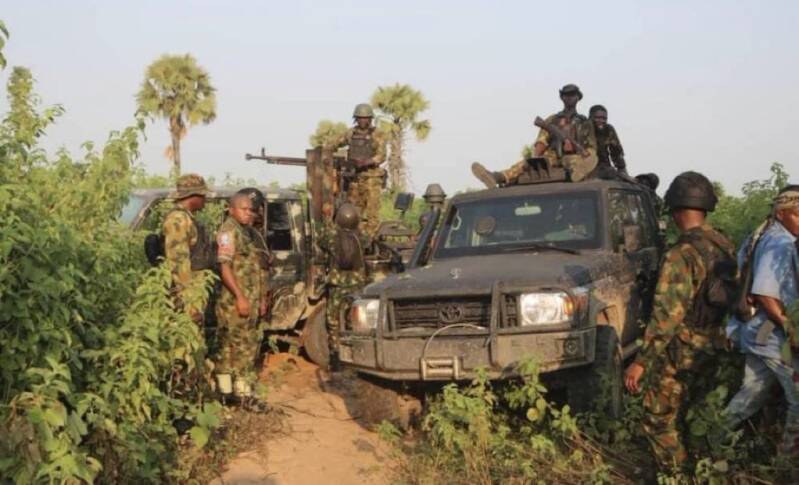
The Nigerian Army has officially announced the deployment of its troops to the Republic of Benin as part of a major escalation in regional security cooperation aimed at combating terrorism, cross‑border banditry and transnational organised crime across West Africa. Lieutenant‑General Waidi Shaibu, the Chief of Army Staff, made the disclosure on Monday, May 18, 2026, while declaring open the Chief of Army Staff Annual Conference in Abuja. The deployment, which has been in the works for months, follows a formal request from the Beninese government and the endorsement of the Nigerian Senate, which approved the mission in December 2025 as part of a regional peace‑stabilisation effort under the auspices of the Economic Community of West African States (ECOWAS). Shaibu stated that the deployment underscores Nigeria’s commitment to strengthening intelligence sharing, strategic partnerships and coordinated security mechanisms designed to deny criminal and terrorist groups freedom of action within Nigeria and neighbouring countries.
The decision to send troops across the western border comes at a time when the security landscape of the West African sub‑region has become increasingly volatile. The border region between Benin, Niger and Nigeria has emerged as a new epicentre of jihadist violence, with groups such as Jama’at Nusrat al‑Islam wal‑Muslimin (JNIM) and Islamic State Sahel Province (ISSP) expanding their operations southwards. According to data from the Armed Conflict Location and Event Data Project (ACLED), attacks by these groups across the region increased by 86% between 2024 and 2025, while civilian fatalities jumped by over 260% to more than 1,000. The affected area includes Benin’s northeastern Alibori and Borgou departments and Nigeria’s Kebbi, Kwara, Niger and Sokoto states. The porous border, weak state presence and the presence of vast, ungoverned forests have created a sanctuary for terrorists, bandits and arms traffickers, turning the tri‑border area into a launchpad for deadly assaults.
General Shaibu, addressing senior officers at the conference, explained that the deployment is not merely a symbolic gesture but a fully resourced military mission. He revealed that the Nigerian Army has prioritised equipment modernisation, infrastructure expansion and combat support services to boost operational efficiency and troop welfare. He noted that the induction of modern platforms, the refurbishment of ageing equipment, improved maintenance practices and indigenous repair initiatives have significantly enhanced troops’ mobility, firepower, surveillance capabilities and operational sustainability. The welfare of the deployed soldiers has also been a key focus, with the army intensifying the construction of accommodation, improving healthcare delivery, ensuring prompt medical evacuations and enhancing skill‑based allowances for personnel.
The military chief stressed that commanders at all levels must remain adaptive, mission‑focused and fully committed to inter‑agency and multinational cooperation in ongoing and future operations. “The deployment to the Republic of Benin underscores Nigeria’s resolve to strengthen regional security architecture and improve multinational responses to security challenges in the sub‑region,” Shaibu said. He also commended President Bola Ahmed Tinubu for his sustained support to the Nigerian Army through strategic interventions aimed at improving troop welfare, operational capabilities and infrastructure. This deployment builds on an earlier emergency intervention in December 2025, when Nigerian Air Force fighter jets and ground troops were rushed to Benin to help quash a coup attempt. That operation, which was requested by Benin’s President Patrice Talon and authorised by ECOWAS, successfully stabilised the country and prevented an unconstitutional seizure of power.
The timing of the deployment is also significant in the context of Sahelian geopolitics. The decision by military junta leaders in Burkina Faso, Mali and Niger to break away from ECOWAS and form their own security and economic bloc, known as the Alliance of Sahel States, has severely undermined regional counter‑terrorism cooperation. The rupture has left coastal West African nations increasingly exposed to the southward drift of extremist violence. Nigeria and Benin have therefore been forced to deepen their bilateral security ties to fill the void left by the collapse of the G5 Sahel Joint Force. The planned joint operation includes coordinated border patrols, intelligence sharing and increased monitoring of cross‑border flows. According to Héni Nsaibia, senior West Africa analyst at ACLED, the recent strengthening of military cooperation between Benin and Nigeria is a “step in the right direction” for tackling the rise in violence. However, analysts warn that the threat is evolving rapidly, with terrorist groups now exploiting ethnic tensions and using remote forests as staging grounds, making sustained, long‑term commitment essential.
Back in Abuja, General Shaibu used the conference to issue a broader call to his officers. He urged participants to remain innovative and solution‑driven in addressing evolving security challenges and preparing the Nigerian Army for future operational realities. He expressed confidence that the outcomes of the conference would produce actionable strategies to further strengthen the army’s capacity. The Chief of Army Staff also reaffirmed that the Nigerian Army would continue to strengthen civil‑military cooperation initiatives aimed at promoting peace, addressing humanitarian challenges and supporting socio‑economic development in host communities. As the troops take up their positions on Beninese soil, the operation represents a significant test of Nigeria’s ability to project power beyond its borders and a crucial attempt to build a firewall against the southward creep of Sahelian terror.
📩 Stone Reporters News | 🌍 stonereportersnews.com
✉️ info@stonereportersnews.com | 📘 Facebook: Stone Reporters News | 🐦 X (Twitter): @StoneReportNew | 📸 Instagram: @stonereportersnews
Add comment
Comments