

Reported by: Oahimire Omone Precious | Edited by: Oravbiere Osayomore Promise.
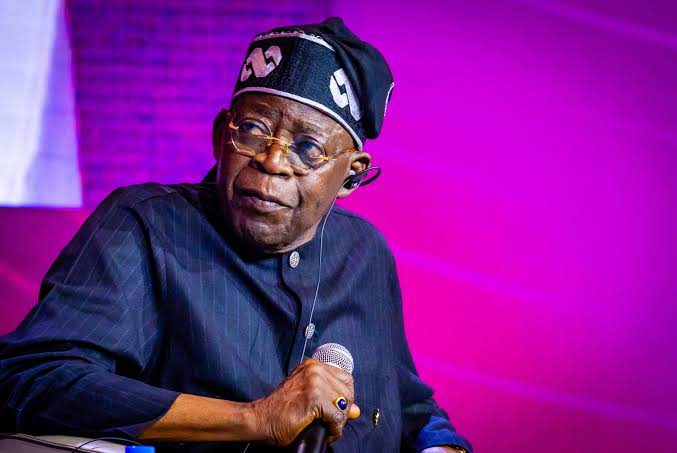
President Bola Ahmed Tinubu has alleged that powerful interests profiting from Nigeria’s now‑scrapped fuel subsidy regime and the country’s former multiple exchange‑rate system are “wishing him dead” in retaliation for the sweeping economic reforms his administration introduced after he took office in May 2023. The President made the declaration on Wednesday, May 20, 2026, through a representative at a book launch and award ceremony organized by the National Democratic Coalition (NADECO) in Lagos, an event that coincided with the pro‑democracy group’s 32nd anniversary.
Olusegun Osoba, a former governor of Ogun State who stood in for Tinubu at the occasion, delivered the President’s message to a gathering that included Nobel Laureate Professor Wole Soyinka, the Olubadan of Ibadanland Senator Rasheed Ladoja, legal icon Dr Olisa Agbakoba (SAN), and several other prominent Nigerians. “He said those cabals who are doing round‑tripping will wish him dead any time, but he is determined that if that is the only thing he would do, he would make sure he rearranges the economy,” Osoba quoted the President as saying. “No matter what, he is determined to face it. So that’s the message from Mr. President.”
Tinubu’s remarks zeroed in on two of his administration’s signature policy shifts: the complete removal of the petrol subsidy, which was announced on his first day in office in May 2023, and the unification of Nigeria’s multiple exchange‑rate windows into a single, market‑determined regime. According to the President, those who grew rich from decades of subsidy payments and from arbitraging the gap between official and parallel exchange rates are now working to destabilize the country. “As for security, he says, I should let you know, that he is aware that there is a deliberate attempt to disrupt the peace of this country by people whom he knew he had offended by canceling multiple exchange rates and by canceling oil subsidies,” Osoba told the audience at the Muson Centre in Onikan, Lagos.
The event was a dual celebration: the public presentation of Chief Ayo Opadokun’s book, The NADECO Story, which chronicles the pro‑democracy struggle against military rule between 1994 and 1998, and the conferment of awards on individuals and media organizations that played key roles in the fight to restore civil rule. Tinubu, a NADECO activist himself during the Abacha years, used the platform to reaffirm his commitment to the democratic values the coalition fought for, while also delivering a blunt assessment of the forces he believes are arrayed against his government.
He identified the economy and security as the two overriding challenges of his presidency. On the economic front, he pointed to the narrowing gap between the official exchange rate and parallel market rates as evidence that his reforms are beginning to bear fruit. “You all can see now that the security situation is now moving gradually into the South‑West zone,” Osoba said, quoting the President. “So the first major thing he is facing now is the economy, and you all can see that the difference between the parallel market and official market exchange rate is virtually zero now. The Naira, which they thought would be N2,000 to 1 dollar, is now 1,380 or thereabouts.”
The President’s claim about the naira’s stability is supported by recent official data. In early May 2026, an analysis by Africa Confidential noted that Tinubu had “taken on two of the most politically charged economic policies” by merging exchange rates and ending the subsidy. By the first quarter of 2026, Nigeria’s foreign reserves had climbed to approximately $49.4 billion, according to a statement by Hope Uzodimma, Chairman of the Progressives Governors Forum, representing about 13 months of import cover. The Nigerian government also reported that the savings from subsidy removal had freed up roughly $10 billion annually, though critics have argued that those gains have been largely absorbed by rising debt‑servicing costs.
Tinubu’s accusation that the subsidy and exchange‑rate cabals are behind the country’s security challenges is not entirely new. He had previously linked economic saboteurs to violent crime, but the language used on Wednesday — “they will wish me dead” — was markedly more personal and confrontational. The statement comes just months after a foiled coup attempt in late 2025, which investigators said included plans to assassinate the President and other top officials. Six defendants are currently facing trial on charges of treason and terrorism in connection with that plot, and a former Minister of State for Petroleum Resources, Timipre Sylva, has been named as a participant still at large.
Despite the combative tone, Tinubu also struck a conciliatory note toward his pro‑democracy comrades. He acknowledged that his electoral victories would have been impossible without the sacrifices of NADECO members and promised to address what he called “political issues” raised by the coalition if he is re‑elected in 2027. “Many of the things that you people have been asking me to do, when he gets his second term, he is going to start implementing some of the political issues,” Osoba relayed.
The event also featured a strong defence of Nigeria’s democratic project. Professor Wole Soyinka, who chaired the occasion, praised the book’s author and warned that the gains of the struggle against military rule must not be squandered. Chief Opadokun, in his welcome address, recalled the dark days of General Sani Abacha’s dictatorship, when “human rights were suppressed, democratic institutions were dismantled, and voices of dissent were met with intimidation, detention, and, in some cases, ultimate sacrifice.” NADECO used the platform to honour several media houses — including Vanguard, The Guardian, and Punch — for their role in resisting military censorship and keeping the pro‑democracy message alive.
The book launch, originally planned to mark the 32nd anniversary of NADECO’s founding, thus became an unexpected forum for the President to address a nation grappling with high inflation, persistent insecurity, and growing public frustration. His admission that “security is now moving gradually into the South‑West zone” acknowledges a reality that residents of Oyo, Ogun, and Ekiti states have been living with for months, as bandit attacks and abductions have spread beyond their traditional theatres in the North‑West and North‑Central.
For millions of Nigerians, however, the most striking moment of the evening was Tinubu’s blunt declaration: that the same cabals who once bled the nation dry through subsidy payments and exchange‑rate arbitrage are now hoping for his death. Whether that claim is hyperbole or a genuine warning, it underscores the depth of the political resistance the President says he faces. As one NADECO veteran remarked after the ceremony, “In the 1990s we fought to end military rule. Today, it seems we are fighting to keep democracy alive from economic predators.”
📩 Stone Reporters News | 🌍 stonereportersnews.com
✉️ info@stonereportersnews.com | 📘 Facebook: Stone Reporters News | 🐦 X (Twitter): @StoneReportNew | 📸 Instagram: @stonereportersnews
Add comment
Comments