

Reported by: Ijeoma G | Edited by: Gabriel Osa
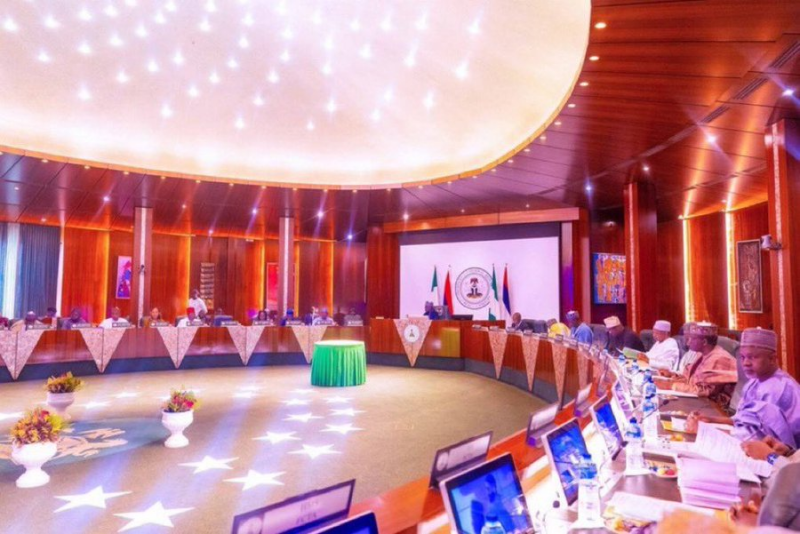
Nigeria’s Federal Government has announced a major policy shift in the country’s higher education system, imposing a multi-year ban on the establishment of new universities, polytechnics and colleges of education. The decision, approved by the Federal Executive Council during a meeting chaired by President Bola Ahmed Tinubu at the Presidential Villa in Abuja, is intended to address what officials describe as the uncontrolled expansion of tertiary institutions and the resulting strain on academic standards, infrastructure and funding across the country’s education sector.
The policy was disclosed by the Minister of Education, Dr. Tunji Alausa, after the council meeting, where he explained that the moratorium would allow the government to concentrate on strengthening existing institutions rather than approving new ones. According to the minister, Nigeria has experienced a rapid increase in the number of tertiary institutions over the past two decades, but many of these institutions struggle with insufficient infrastructure, inadequate staffing levels, and declining academic standards.
Officials say the expansion has led to duplication of institutions and programmes, while financial and human resources have become increasingly stretched. Government authorities argue that without a pause in the creation of new institutions, the quality of education could deteriorate further and undermine the global credibility of Nigerian academic qualifications.
Education officials highlighted the growing imbalance between the number of tertiary institutions and their actual student populations. According to figures cited by the Ministry of Education, several institutions across the country operate far below their capacity, with some universities recording extremely low admission demand in national entrance examinations. Data from the government indicates that nearly two hundred universities received fewer than one hundred applications in a recent admission cycle, while dozens of colleges of education recorded no applicants at all.
Authorities say such statistics demonstrate that the challenge facing Nigeria’s higher education sector is not merely a shortage of institutions but inefficiencies in the management and utilisation of existing facilities. In some cases, universities have more staff members than enrolled students, a situation that education policymakers describe as unsustainable for a developing economy already grappling with funding constraints.
Government officials believe that redirecting investment toward improving existing institutions will deliver better outcomes for students and the broader economy. Plans include upgrading infrastructure such as lecture halls, laboratories, and student accommodation, while also increasing the recruitment and training of academic staff. Officials say this approach will allow institutions to expand their admission capacities without sacrificing educational standards.
The decision has also been framed as part of a broader effort to reform Nigeria’s tertiary education system and ensure that graduates remain competitive in an increasingly globalised labour market. According to the Minister of Education, Nigeria risks damaging the international reputation of its universities if expansion continues without adequate quality assurance measures. He warned that unchecked growth could lead to further declines in academic quality and ultimately affect the employability of Nigerian graduates both locally and abroad.
Despite the moratorium, the government clarified that some pending applications for private universities that had already undergone advanced stages of evaluation were approved. Officials said these approvals were necessary because many investors had already spent significant amounts of money building campuses and preparing facilities while waiting for regulatory clearance. Authorities also indicated that reforms were being introduced to streamline approval processes within the National Universities Commission, which regulates university licensing in Nigeria.
The government’s decision reflects mounting concerns among education experts about the long-term sustainability of Nigeria’s higher education expansion. Since the early 2000s, the country has witnessed a surge in new universities established by federal and state governments as well as private investors. While this expansion increased access to higher education for millions of students, critics argue that the pace of growth often outstripped the capacity of regulators to maintain consistent standards.
Nigeria now has a large and diverse tertiary education network that includes federal universities, state universities, private universities, polytechnics and colleges of education spread across the country’s thirty-six states and the Federal Capital Territory. However, funding challenges remain a persistent problem, particularly for public institutions that rely heavily on government allocations.
Education analysts say that the moratorium could encourage a shift toward improving the quality of teaching and research rather than focusing solely on expanding the number of institutions. By investing in infrastructure, faculty development and academic research, policymakers hope existing universities will become stronger centres of learning capable of accommodating more students while maintaining higher academic standards.
The policy is also expected to stimulate debate among stakeholders within the education sector. Advocates of expansion argue that Nigeria’s rapidly growing population, particularly its youth demographic, still requires additional higher education opportunities. Critics of the ban may therefore contend that limiting the establishment of new institutions could worsen the already intense competition for admission spaces in Nigerian universities.
However, government officials insist that the current approach seeks to balance access with quality. They argue that increasing the capacity of existing institutions through better funding, improved facilities and enhanced governance structures could provide more sustainable solutions to Nigeria’s education challenges than simply creating new universities.
Stone Reporters note that the policy marks one of the most significant education reforms introduced by the Tinubu administration since it assumed office. Whether the moratorium succeeds in strengthening the country’s tertiary education system will depend largely on how effectively the government implements complementary reforms aimed at upgrading infrastructure, improving faculty capacity and ensuring that Nigerian institutions remain competitive on the global academic stage.
📩 Stone Reporters News | 🌍 stonereportersnews.com
✉️ info@stonereportersnews.com | 📘 Facebook: Stone Reporters | 🐦 X (Twitter): @StoneReportNew | 📸 Instagram: @stonereportersnews
Add comment
Comments