

Reported by: Ijeoma G | Edited by: Gabriel Osa
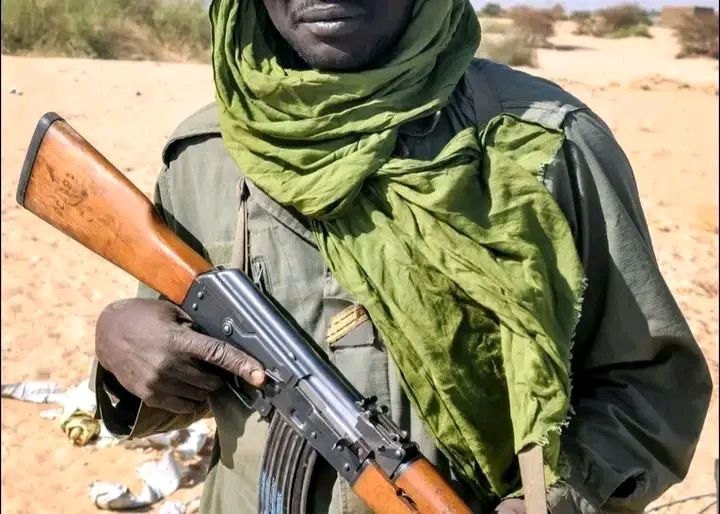
Militant fighters from the Islamic State West Africa Province (ISWAP) have publicly claimed responsibility for a violent assault on the village of Kirshinga in Adamawa State, northeast Nigeria, admitting in propaganda messages that they burned houses and killed civilians during the operation. While independent verification of every detail remains limited, multiple online reports and extremist communications indicate the attack was part of a broader campaign of violence targeting Christian settlements in the region.
According to claims circulating on social media and affiliated channels, ISWAP said its fighters burned at least 10 homes in Kirshinga and killed 27 residents whom the group described as “Christian enemies” because they refused to convert to Islam or pay what the militants termed a jizyah protection tax. The group’s statement reportedly framed those deaths as a “fair deal,” language reflected in the organisation’s usual justification for targeting civilians based on religious identity.
The alleged attack on Kirshinga occurred in late February 2026, and ISWAP’s claim followed a pattern of similar offensives in Adamawa and neighbouring northeastern states where the group and aligned extremist factions have been active for years. These claims have not been publicly confirmed by Nigerian security authorities, and official casualty figures remain unclear. Nigerian security forces frequently downplay the religious motivations asserted by militant propaganda, while analysts note that militants exploit local vulnerabilities regardless of specific identities.
Independent reporting on the Kirshinga incident is currently limited, but the militant group’s claim aligns with documented ISWAP operations throughout Adamawa, Borno and Yobe states, where rural farming communities have repeatedly been assaulted by jihadist fighters. In early March 2026, human rights and church-linked organisations documented a series of coordinated attacks across Adamawa, including assaults on predominantly Christian villages in the Madagali area, which lies close to the Cameroon border and Sambisa Forest — a longstanding militant stronghold. In those attacks, militants killed residents, burned churches and homes, and abducted villagers, asserting they would “spare the blood” of those who complied with their demands to convert to Islam or pay jizyah.
The broader context of violence in northeastern Nigeria reflects a strategic shift by ISWAP and its allies, who have expanded operations beyond combat with government forces to include attacks against civilian populations. These operations often aim to undermine state authority, intimidate communities, and extract economic gains through extortion or ransom demands. Attacks targeting Christian communities have drawn particular international concern due to the religious framing in some militant statements and the high civilian toll.
The Kirshinga claim is consistent with these tactics, though verifying the exact number of houses burned and civilians killed is complicated by limited independent access to the affected area, ongoing security operations, and displacement of survivors. Local residents in other affected villages have reported that militants often arrive in large, organised armed groups, use incendiary devices or petrol to set buildings on fire, and deliberately target people based on religion, ethnicity, or perceived opposition to their ideological objectives.
Adamawa State has seen multiple militant incursions throughout the past year, including deadly attacks on outlying communities that have killed dozens of civilians, burned homes and churches, and forced mass displacement. In some documented incidents in late 2025 and early 2026, gunmen attacked villages in Madagali Local Government Area, killing 18 residents in one assault and seven in another, burning dozens of homes, and looting property. Survivors described chaos as attackers moved from house to house, firing at civilians and forcing others to flee into forest areas.
The persistent violence has prompted criticism of the Federal Government’s counter-insurgency strategy. Analysts and community leaders argue that the slow response times of security forces, the rugged and dense terrain of northeastern forests, and the ability of militants to blend with local cattle herders and criminal networks have made rural communities increasingly vulnerable to repeated raids. Frequent attacks on isolated villages have led to mass displacement, breakdowns in farming activities, and heightened fear among civilians who lack consistent protection.
Religious leaders, civil society organisations and international observers have condemned ISWAP’s claims and the alleged rationale of punishing civilians for refusing to convert or pay jizyah. Islamic scholars and human rights advocates argue that such justifications misuse religious concepts and violate both national and international humanitarian law. They also note that religious framing in militant propaganda may be intended to deepen divisions, attract recruits, or provoke sectarian tensions rather than reflect genuine theological discourse.
Nigerian security agencies have repeatedly stated they are conducting operations in Adamawa and surrounding states to track down militant groups responsible for attacks, recover displaced civilians, and restore security. Military patrols, air strikes and intelligence-led missions are ongoing, but the challenging geography and mobility of armed groups have continued to hinder efforts to eliminate insurgent strongholds.
For residents of Kirshinga and neighbouring communities, the militant claim of responsibility signals a deepening crisis with immediate humanitarian consequences. Many families displaced by the assault remain in temporary shelters or have fled to larger towns seeking protection. Local organisations are appealing for food, medical aid, counselling and support for traumatised survivors, while urging increased security presence to prevent further attacks.
Stone Reporters note that the assertion by militants that civilians were targeted for refusing conversion or jizyah reflects extremist propaganda language that has been used in other attacks across northeastern Nigeria. Independent verification of specific claims is often difficult in real time due to restricted access, volatile security conditions, and displacement of survivors.
📩 Stone Reporters News | 🌍 stonereportersnews.com
✉️ info@stonereportersnews.com | 📘 Facebook: Stone Reporters | 🐦 X (Twitter): @StoneReportNew | 📸 Instagram: @stonereportersnews
Add comment
Comments