

Reported by: Ijeoma G | Edited by: Oravbiere Osayomore Promise.
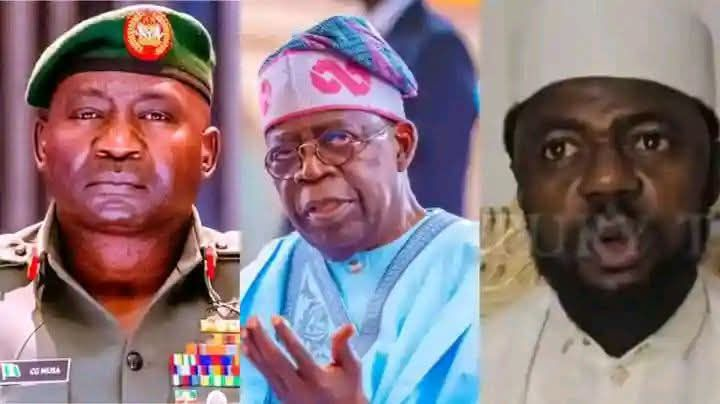
The pressure campaign began with a widely circulated statement from several prominent Arewa youth groups. These organisations said they were compelled to appeal directly to President Bola Ahmed Tinubu for the dismissal of Gen. Musa, citing what they see as failures in leadership amid a worsening security environment across multiple geopolitical zones, particularly in the North‑East and North‑West. The statement underscored that many young people from the region had rallied behind the president during the 2023 elections and therefore expected more decisive outcomes on security. They warned that if leadership change was not effected, public perception of the administration’s commitment to peace and stability could be irreparably damaged.
The youth groups framed their demand as a matter of governance accountability, insisting that the federal government must strengthen the nation’s security architecture to restore confidence among citizens who continue to endure daily threats of violence and criminality.
The call for Musa’s removal comes amid a period of heightened attacks by insurgent groups, bandits and criminal networks. Recent intelligence and media reports indicate an escalation of assaults targeting military bases and personnel in the North‑East, particularly in Borno State, where several senior officers, including commanding officers at the rank of Lieutenant Colonel, were reportedly killed in coordinated attacks. Additionally, numerous soldiers and civilians were taken hostage in those engagements, intensifying criticism of the government’s security response. In response to these incidents, Musa summoned all service chiefs to an emergency strategic meeting at the Ministry of Defence headquarters in Abuja, where he pledged a comprehensive review of existing operational plans to counter the escalating threats more effectively. He acknowledged military casualties but maintained that the military had inflicted significant losses on insurgents, saying that casualties were often higher on the side of the criminals. The meeting also included top officials from the National Intelligence Agency and other security sectors.
Gen. Musa has made repeated public statements urging disciplined reporting by the media and the public, calling on journalists to avoid spreading footage or commentary that could serve as propaganda for terrorist groups. He warned that individuals found aiding criminal elements with information or logistics would be treated as accomplices under national law. In these addresses, the Defence Minister reaffirmed the federal government’s commitment to restoring peace, emphasising that defeating insecurity requires collective effort, credible intelligence and support for the armed forces.
Despite these pledges, critics argue that such assurances have not translated into measurable improvements on the ground. A palpable sense of impatience is emerging, particularly among northern communities that have borne the brunt of violence for years. These frustrations are not limited to the youth groups alone; traditional leaders, civil society actors and political analysts in the region have also expressed concern that insecurity appears to be worsening despite ongoing military operations.
Security experts and analysts point to complex factors underlying the crisis, including the adaptability of insurgent networks, porous long borders facilitating arms trafficking, and challenges in synchronising intelligence and joint operations among security agencies. Gen. Musa himself has previously pointed to structural hurdles within Nigeria’s legal and judicial system, arguing that delays in prosecuting arrested suspects and weak punitive outcomes embolden criminal elements and erode troop morale. He has called for reforms to terrorism and organised crime statutes to fast‑track justice and impose more stringent penalties.
In an effort to strengthen coordination, Musa inaugurated a Monthly Operational Briefing framework within the Defence Ministry designed to enhance strategic collaboration among the Army, Navy and Air Force. The goal, ministry officials said, was to foster routine assessment of ongoing operations and realign tactical plans to address emerging threats more decisively.
Government officials have also highlighted positive contributions from state authorities. For example, the governor of Zamfara State recently donated armoured personnel carriers and high‑endurance surveillance drones to enhance troop capability in high‑risk areas. Such state‑led interventions are intended to bolster federal military efforts where resource constraints are evident.
Political dynamics have further complicated the issue. The predecessor to Gen. Musa, who resigned in December 2025 citing health concerns, faced criticism over controversial statements and perceived mismatches between rhetoric and operational outcomes. His departure led to Musa’s appointment, which was billed as a strategic effort to inject fresh energy into the federal government’s security response. However, with insecurity still pervasive and political debates simmering, voices calling for change have grown louder.
Voices among northern commentators and civic leaders note that the region contributed significantly to President Tinubu’s electoral victory, with a high percentage of votes stemming from northern states. They argue that such political support must be met with tangible improvements in security and governance outcomes. At recent gatherings of northern stakeholders, concerns around marginalisation, resource allocation and public safety have been expressed alongside calls for stronger engagement between the federal government and regional leaders.
Beyond the youth protests, there is evidence of broader dialogue within the political and security establishment about the best way forward. Supporters of the Defence Minister argue that leadership continuity and unity within the security apparatus are crucial amid ongoing operations, while opponents maintain that new leadership could provide fresh strategic impetus. The debate touches on larger questions about the role of political accountability, governance reforms and institutional capacity in tackling deep‑rooted insecurity.
📩 Stone Reporters News | 🌍 stonereportersnews.com
✉️ info@stonereportersnews.com | 📘 Facebook: Stone Reporters | 🐦 X (Twitter): @StoneReportNew | 📸 Instagram: @stonereportersnews
Add comment
Comments