

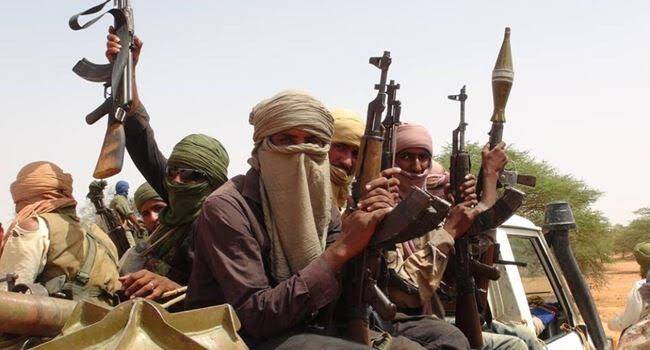
Bandits Abduct Two Women in Midnight Raid on Border Community Between Ekiti and Kogi States
A late-night attack by armed bandits on a rural settlement straddling the boundary between southwestern and north-central Nigeria has heightened fresh concerns over the spread of insecurity into previously less volatile areas, as residents report abductions, injuries, and growing fear among local populations.
The assault occurred in the early hours of April 1, 2026, at Tivi Camp, a small but strategic settlement located along the Akintola axis between and . The area, situated roughly 3.5 kilometers from both communities, serves as a vital link for residents who frequently traverse the Ekiti–Kogi border for farming, trading, and other daily activities.
Local accounts indicate that heavily armed attackers stormed the camp under the cover of darkness, catching residents off guard. During the raid, two women were forcibly taken by the assailants, while several others sustained injuries amid the chaos that followed. Eyewitnesses described scenes of panic as gunshots rang out, forcing villagers to flee into nearby bushes in a desperate attempt to escape harm.
The identities of the abducted victims had not been officially confirmed at the time of reporting, but sources within the community said the women were residents of the camp and were targeted during the attackers’ sweep of the settlement. Injured individuals are believed to have suffered gunshot wounds and physical trauma while attempting to evade the attackers, though the exact number of casualties remains unclear.
Tivi Camp, though modest in size, is widely known among residents of the surrounding areas due to its location along a frequently used rural route. Its proximity to both Ekiti and Kogi states has made it a point of convergence for farmers, traders, and transporters who rely on the corridor for economic and social interactions. However, this same accessibility has also exposed it to security vulnerabilities, particularly in recent months as criminal groups increasingly exploit remote border communities.
Residents say the attack underscores a worrying pattern of insecurity gradually encroaching on areas that were previously considered relatively safe compared to Nigeria’s more volatile regions. While parts of Kogi State, particularly in the west, have experienced sporadic incidents of banditry and kidnapping, Ekiti State has largely maintained a reputation for lower levels of violent crime. The latest incident, however, suggests a shifting dynamic that could threaten stability across the border region.
Community members have expressed frustration over what they describe as a lack of adequate security presence in the area. According to local sources, there were no immediate interventions from security agencies during or after the attack, leaving residents to contend with the aftermath largely on their own. The absence of an official statement from law enforcement authorities as of the time of reporting has further fueled anxiety and uncertainty.
Several residents who spoke anonymously for safety reasons said the attackers appeared to be well-coordinated and familiar with the terrain. They reportedly moved swiftly through the camp, targeting specific individuals before retreating into nearby forests that stretch across the state boundary. Such forests have long been cited by security experts as potential hideouts for criminal groups, given their difficult terrain and limited surveillance.
Calls for urgent government intervention have intensified in the wake of the attack, with community leaders urging both Ekiti and Kogi state authorities to strengthen security collaboration along their shared border. Residents argue that the transboundary nature of the area requires coordinated efforts between security agencies in both states to effectively address the threat.
Security analysts have often warned that gaps in jurisdictional coordination can be exploited by criminal elements, allowing them to operate across state lines with relative ease. In regions where law enforcement coverage is sparse, such vulnerabilities are further compounded by logistical challenges, including poor road networks and limited communication infrastructure.
The latest incident also raises broader concerns about rural security in Nigeria, where many communities remain exposed due to their isolation and limited access to rapid emergency response. In such settings, attacks often occur with little warning, and victims may face delays in receiving medical or security assistance.
For the families of those abducted, the immediate priority is the safe return of their loved ones. Kidnapping for ransom has become a recurring feature of bandit attacks in various parts of the country, and while it remains unclear whether the perpetrators in this case have made contact, residents fear that negotiations may soon follow. The emotional and financial toll of such incidents can be devastating for affected families, particularly in rural areas where resources are limited.
Meanwhile, injured victims are said to be receiving treatment locally, though the extent of medical care available in the area is uncertain. Community members have called for additional support, including medical supplies and personnel, to assist those recovering from the attack.
The silence from official channels has not gone unnoticed. Observers note that timely communication from security agencies is crucial in managing public perception and preventing the spread of misinformation. In the absence of verified updates, speculation can quickly take hold, further exacerbating fear and distrust among residents.
As daylight returned to the camp, the full scale of the attack began to emerge, with signs of disruption visible across the settlement. Abandoned homes, scattered belongings, and the lingering tension among residents paint a picture of a community grappling with the shock of violence.
For many, the incident serves as a stark reminder of the evolving nature of security challenges in Nigeria. What was once seen as a problem confined to specific regions is increasingly manifesting in new areas, raising questions about preparedness and response strategies at both state and national levels.
Authorities in both Ekiti and Kogi states are expected to respond as pressure mounts for decisive action. Residents are calling not only for the rescue of the abducted women but also for long-term measures to prevent future attacks. These include increased patrols, the establishment of security outposts, and improved intelligence gathering to detect and disrupt criminal activities before they escalate.
As investigations are anticipated to commence, the focus will likely turn to identifying the perpetrators and understanding the circumstances that enabled the attack. For now, however, the people of Tivi Camp and surrounding communities remain on edge, hoping for swift intervention and reassurance that their safety will be restored.
📩 Stone Reporters News | 🌍 stonereportersnews.com
✉️ info@stonereportersnews.com | 📘 Facebook: Stone Reporters News | 🐦 X (Twitter): @StoneReportNew | 📸 Instagram: @stonereportersnews
Add comment
Comments