

INEC Announces Nationwide Voter Revalidation Drive Starting April 13 Ahead of 2027 General Election
Nigeria’s electoral umpire has formally outlined plans to launch a comprehensive voter revalidation exercise across the country beginning April 13, 2026, a key step in updating the national voter register in preparation for the 2027 general elections. The Independent National Electoral Commission (INEC) is mobilising its infrastructure and personnel ahead of what officials describe as a crucial effort to strengthen the integrity of Nigeria’s electoral database and reinforce public confidence in the democratic process.
In a directive signed by Rose Oriaran-Anthony, the Commission’s secretary, resident electoral commissioners (RECs) nationwide have been instructed to commence preparatory activities for the revalidation exercise. These preparations include the sourcing and deployment of trained personnel, the commissioning and testing of INEC’s voter enrollment devices (IVEDs), and logistical arrangements to ensure a smooth rollout of the exercise across all states and the Federal Capital Territory. The letter underscores the urgency of the preparatory phase as the cornerstone of a successful and credible nationwide revalidation effort.
According to the timeline attached to the letter, the revalidation process will begin at the local government area (LGA) level from April 13 to May 2. It will then move to the registration area (RA) level from May 5 to May 11, followed by activities at the polling unit (PU) level from May 13 to May 19. A second phase at the LGA level is scheduled from May 20 to May 29. This phased approach reflects INEC’s strategy to systematically verify and update records at progressively granular levels, ensuring that registered voter information accurately reflects current demography and eligibility.
The revalidation drive is part of INEC’s broader efforts to address persistent anomalies in the voter register, including duplicate entries, underage registrations, entries of non-citizens and deceased persons, and incomplete or inaccurate voter details. Such issues have long drawn criticism and raised questions about the credibility of electoral registers in Nigeria, prompting the commission to take a proactive stance ahead of upcoming polls. The 2027 general election cycle, which will determine leadership at the presidency, national assembly, governorships and state assemblies, has placed renewed emphasis on the accuracy and reliability of voter data.
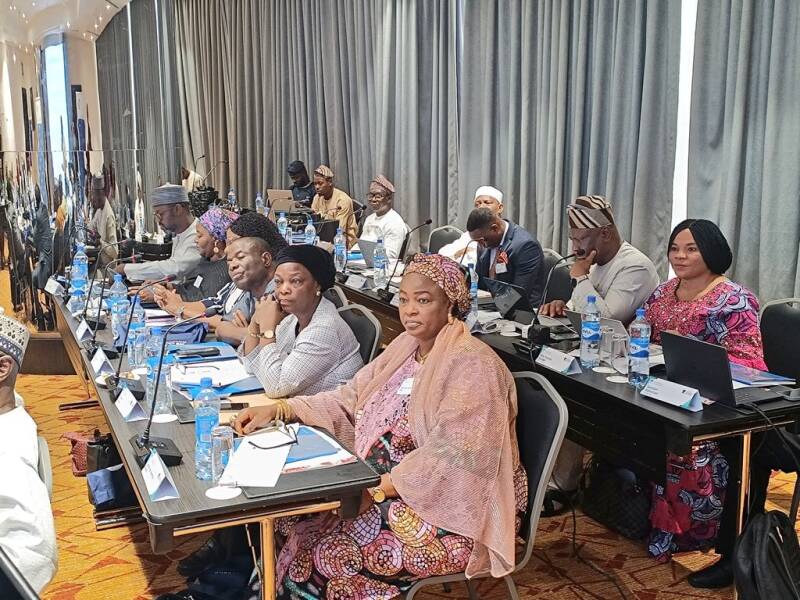
The voter revalidation initiative follows a series of preparatory measures by INEC, including a training-of-trainers (ToT) workshop held on March 30 at The Electoral Institute (TEI) in Abuja. The workshop brought together INEC master trainers and officials from the voter registry and information technology departments to enhance their understanding of the revalidation methodology, address potential operational challenges, and ensure readiness for the field exercise. Commission officials emphasised that the success of the revalidation drive largely depends on the efficiency and competence of trained personnel.
INEC Chairman Professor Joash Amupitan has previously highlighted the centrality of a credible voter register to free, fair and transparent elections. He noted that while the national register used in the 2023 general elections recorded over 93 million voters, various irregularities and outdated entries continue to undermine public trust and electoral outcomes. The revalidation exercise, he said, is critical to addressing such concerns and ensuring that voter rolls are up to date, inclusive, and reflective of Nigeria’s current electoral landscape.
Political analysts and civil society stakeholders have largely welcomed the revalidation initiative as a necessary reform in a democratic environment that has seen increasing calls for accountability and transparency. They argue that verifying voter records ahead of major elections not only curbs fraud and manipulation but also enhances citizen confidence in the electoral system. However, these stakeholders also caution that the exercise must be implemented meticulously to avoid disenfranchisement or administrative lapses that could inadvertently undermine participation.
In parts of the country, efforts to sensitise voters and encourage participation in revalidation activities have already begun. Recent reports indicate that INEC has stepped up voter education campaigns in several states, including major metropolitan areas, urging citizens to engage with the revalidation process and ensure their registered information is accurate. Campaigns are being conducted through community engagements, media briefings and public outreach sessions aimed at fostering awareness and facilitating informed participation.
As preparations intensify, there have also been reports of operational challenges in ongoing voter registration exercises in some regions, underscoring the importance of strategic planning and effective deployment of resources. For instance, residents in parts of Kano State have raised concerns about the absence of electoral officials at designated registration centres during continuous voter registration activities, a situation that has left many prospective voters unattended. Such issues highlight the logistical complexities inherent in nationwide electoral projects and the imperative for robust coordination and oversight.
The INEC revalidation drive comes against a backdrop of heightened political activity as Nigeria approaches what is expected to be one of the most closely watched election cycles in recent history. The commission’s actions are likely to play a decisive role in shaping the electoral environment by providing an updated and credible foundation upon which political parties, candidates, and the electorate can build their participation.
With millions of Nigerians eligible to vote, the emphasis on revalidation reflects a commitment to modernising electoral processes and enhancing the integrity of voter data. It also illustrates the commission’s acknowledgment that sustaining democratic progress requires periodic verification and improvement of the fundamental tools of electoral participation – foremost among them, an accurate and trustworthy voter register.
As the April 13 start date approaches, stakeholders across Nigeria will be monitoring the exercise closely, with expectations that it will contribute meaningfully to a fair and credible 2027 general election.
If successfully executed, the nationwide voter revalidation drive could serve as a model for electoral reforms in the region, demonstrating Nigeria’s resolve to strengthen democratic institutions and promote inclusive political participation at every level.
📩 Stone Reporters News | 🌍 stonereportersnews.com
✉️ info@stonereportersnews.com | 📘 Facebook: Stone Reporters News | 🐦 X (Twitter): @StoneReportNew | 📸 Instagram: @stonereportersnews
Add comment
Comments