

Reported by: Oahimire Omone Precious | Edited by: Oravbiere Osayomore Promise.
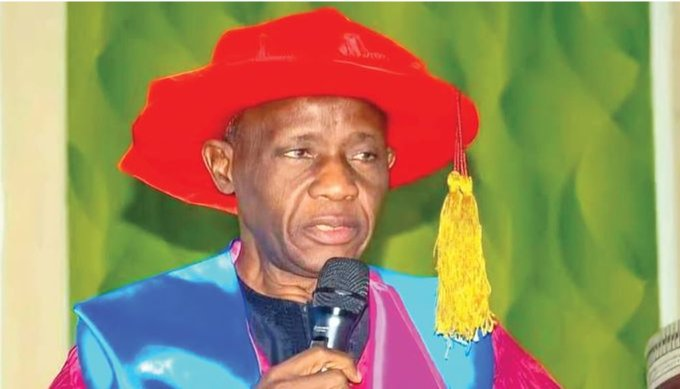
Nigeria’s football community has been plunged into mourning following the death of former Nigeria Football Federation president, Ibrahim Galadima, who passed away on Saturday at the age of 74, bringing an end to a decades-long career in sports administration that left a lasting imprint on the country’s football landscape.
The news of his death was confirmed by close associates and officials within the football establishment, with former Nigeria Football Federation general secretary Sani Toro among the first to publicly announce the development. According to multiple accounts, Galadima died in Kano, a city where he had deep personal and professional roots, and where he spent much of his life contributing to the growth of sports administration.
Tributes began pouring in almost immediately from across Nigeria’s sporting community, with the Nigeria Football Federation describing him as one of the country’s most respected administrators whose influence spanned several decades. The federation acknowledged his role in shaping football governance structures during a critical period of transition, noting that his leadership helped stabilize and reposition the sport at both national and international levels.
Galadima served as president of the then Nigeria Football Association, now known as the Nigeria Football Federation, from 2002 to 2006. His tenure coincided with a period of structural reforms within Nigerian football administration, as the sport grappled with governance challenges while striving to maintain competitiveness on the continental and global stage.
Before ascending to the highest office in Nigerian football, Galadima had already built an extensive résumé in sports leadership. He served as chairman of the Kano State Football Association and later as executive chairman of the Kano State Sports Council, roles that positioned him as a key figure in grassroots and regional sports development.
Beyond these roles, his contributions extended into broader national sports administration, including serving as first vice president of the Nigeria Olympic Committee and participating in federal-level initiatives such as committees overseeing stadium development projects. His involvement at multiple levels of governance underscored a career defined by both administrative experience and institutional influence.
Galadima was also closely associated with club football development in northern Nigeria. He played a significant role in the establishment of Kano Pillars Football Club, one of the country’s most prominent domestic teams, which later paid tribute to him as a founding figure whose efforts helped shape the club’s identity and legacy.
While his tenure as NFA president was marked by efforts to reform administration, it also coincided with challenges on the sporting front, including Nigeria’s failure to qualify for the 2006 FIFA World Cup. The development ultimately led to leadership changes within the federation shortly after his tenure ended, but analysts have continued to recognize his broader contributions to institutional development within Nigerian football.
Current Nigeria Football Federation president Ibrahim Musa Gusau described Galadima’s death as a profound loss to the sporting community, characterizing him as a mentor and guiding figure to many administrators who followed in his footsteps. In a statement, Gusau highlighted Galadima’s reputation for integrity, diligence, and leadership, noting that his influence extended far beyond his years in office.
“This is another one that hit us hard,” Gusau said in tribute, reflecting a broader sentiment within the football community that has recently witnessed the passing of several prominent figures. “He was a mentor to so many of us, the epitome of high dignity, diligence and integrity.”
The outpouring of condolences has not been limited to administrators. Clubs, former players, and stakeholders across different levels of Nigerian football have expressed grief, highlighting Galadima’s accessibility and commitment to nurturing talent and leadership within the sport. Many described him as a bridge between generations of football administrators, whose institutional memory and guidance played a crucial role in shaping the modern era of Nigerian football governance.
Galadima’s death also marks the passing of a figure deeply embedded in the evolution of Nigeria’s football administration, particularly during a period when the country sought to balance domestic reforms with international competitiveness. Under his leadership, Nigeria maintained its presence in major continental competitions and continued to engage actively with global football bodies, even as administrative challenges persisted.
Born in 1951, Galadima’s life spanned a transformative era in Nigerian sports, from the early post-independence years through decades of growth and institutional restructuring. His career trajectory—from state-level administration to national leadership—reflected a broader pattern within Nigerian sports governance, where regional influence often serves as a stepping stone to national prominence.
Reports indicate that funeral arrangements are being conducted in accordance with Islamic rites, with prayers scheduled to take place in Kano, underscoring his cultural and community ties to the region.
His death comes at a time when Nigerian football continues to grapple with structural challenges, including governance reforms, talent development, and international competitiveness. Observers say the loss of experienced administrators like Galadima further highlights the need for institutional continuity and mentorship within the sport.
As tributes continue to pour in, many within the football community have emphasized the importance of preserving his legacy through sustained commitment to the values he championed—integrity, diligence, and service. His career, spanning decades of involvement in sports administration, stands as a testament to the role individuals can play in shaping national institutions, even amid persistent challenges.
For many, Ibrahim Galadima will be remembered not only for the offices he held but for the influence he exerted behind the scenes, mentoring a generation of sports administrators and contributing to the development of football structures that continue to define the Nigerian game today.
📩 Stone Reporters News | 🌍 stonereportersnews.com
✉️ info@stonereportersnews.com | 📘 Facebook: Stone Reporters News | 🐦 X (Twitter): @StoneReportNew | 📸 Instagram: @stonereportersnews
Add comment
Comments