

Reported by: Oahimire Omone Precious | Edited by: Oravbiere Osayomore Promise.
The Norwegian government has announced sweeping legislation that would bar children under the age of 16 from accessing social media platforms, placing the burden of age verification squarely on technology companies in one of Europe’s most ambitious crackdowns on digital harm to minors. Prime Minister Jonas Gahr Støre, presenting the bill on 24 April 2026, said the measure was designed to ensure that “childhood where children get to be children” is not consumed by algorithms and screens. “Play, friendships, and everyday life must not be taken over by algorithms and screens,” Støre said in a statement. “This is an important measure to safeguard children’s digital lives.”
The proposed law, to be submitted to parliament by the end of 2026, represents a hardening of earlier proposals. A public consultation in June 2025 had recommended a minimum age of 15, but after reviewing more than 8,000 submissions, the minority Labour government raised the threshold to 16, aligning Norway with Australia’s world‑first ban that entered force in December 2025. The ban would take effect from 1 January of the year a child turns 16, meaning that an entire school cohort would gain access at the same time. The government reasoned that allowing all children born in a given year to use social media simultaneously would prevent the social exclusion and “creeping” peer pressure that arise when only some classmates have access.
Crucially, the legislation shifts the responsibility for enforcement away from children and parents onto the platforms themselves. “I expect technology companies to ensure that the age limit is respected,” said Digitalisation Minister Karianne Tung. “Children cannot be left with the responsibility for staying away from platforms they are not allowed to use. That responsibility rests with the companies providing these services. They must implement effective age verification and comply with the law from day one.” Platforms that fail to comply could face significant fines, with a previous consultation draft suggesting penalties of up to NOK 20 million.
The drive for the law is underpinned by stark statistics. According to Norway’s media regulator, 51% of nine‑ and ten‑year‑olds and 74% of 11‑ and 12‑year‑olds are active on social media despite current rules setting a minimum age of 13. Children and Families Minister Lene Vågslid said the aim is to protect young people from manipulative algorithms, targeted advertising, grooming by criminals, and the constant pressure of “addictive scrolling and a lack of physical activity.” Støre added that it is “unfair to expect a child’s brain to stand up to” systems designed by “some of the world’s best data experts.” Minister Vågslid described the proposal as “our generation’s tobacco law,” drawing a parallel with the historic public health campaign against smoking.
The Norwegian Data Protection Authority has raised concerns about the plan, warning that leaving age verification to private companies could undermine user privacy. “We believe, in principle, this cannot be left to technology companies. We do not trust that privacy will be adequately safeguarded,” said Tobias Judin, a section head at the authority. The government, however, argues that effective enforcement requires a coordinated European approach, and it has committed to working with the EU to develop shared age‑verification solutions. Norway’s existing digital identity infrastructure, BankID, is expected to play a role in the verification architecture.
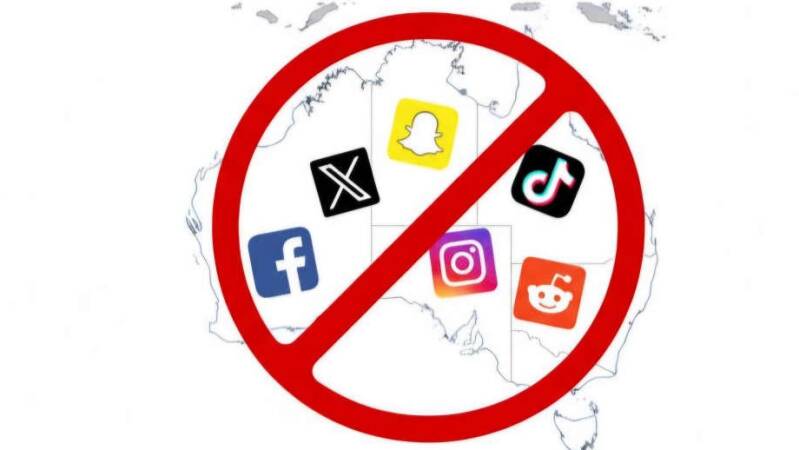
The ban would apply to services defined as social media platforms, where users create profiles, connect with others, and share content without editorial oversight. Platforms likely to be covered include TikTok, Instagram, Snapchat, Facebook, and YouTube. Exemptions are proposed for video games, e‑commerce sites, and closed communication groups used for educational or sports coordination purposes. The Norwegian app Spond, widely used for organising youth sports, was explicitly cited as an example of a service that would fall outside the ban.
The announcement adds Norway to a growing list of jurisdictions moving to restrict children’s access to social media. Australia enacted the world’s first under‑16 ban in December 2025 and has already deactivated or removed more than 4.7 million accounts belonging to under‑age users. France requires digital platforms to verify users’ ages and obtain parental consent for those under 15. Spain has introduced a bill to raise the minimum age for social media use to 16, and Denmark has announced plans for a ban on social media for users under 15. The European Commission also unveiled an age‑verification app in mid‑April 2026 as part of a wider drive to protect minors online.
If approved by the Storting, the law could take effect as early as 2027. While parental reactions have been broadly supportive – one mother described the legislation as a “very good first step” that would help parents resist pressure from their children – some young people are less enthusiastic. Eiril, a 12‑year‑old interviewed by Norwegian media, said she had been looking forward to using social media when she turned 13. “Now I have to wait another three years. It’s a bit annoying,” she said.
For the minority Labour government, the bill represents a calculated political bet. With an election scheduled for September 2027, the timing of the law’s passage and implementation is likely to become a campaign issue. The challenge of enforcement remains formidable; Australia’s experience shows that many under‑age users continue to circumvent restrictions. Nevertheless, Støre insisted that the principle is worth fighting for. “This is one of the most pressing social and cultural challenges of our time,” he said. “We are not prepared to leave childhood to the algorithm.”
📩 Stone Reporters News | 🌍 stonereportersnews.com
✉️ info@stonereportersnews.com | 📘 Facebook: Stone Reporters News | 🐦 X (Twitter): @StoneReportNew | 📸 Instagram: @stonereportersnews
Add comment
Comments