

Reported by: Ijeoma G | Edited by: Oravbiere Osayomore Promise.
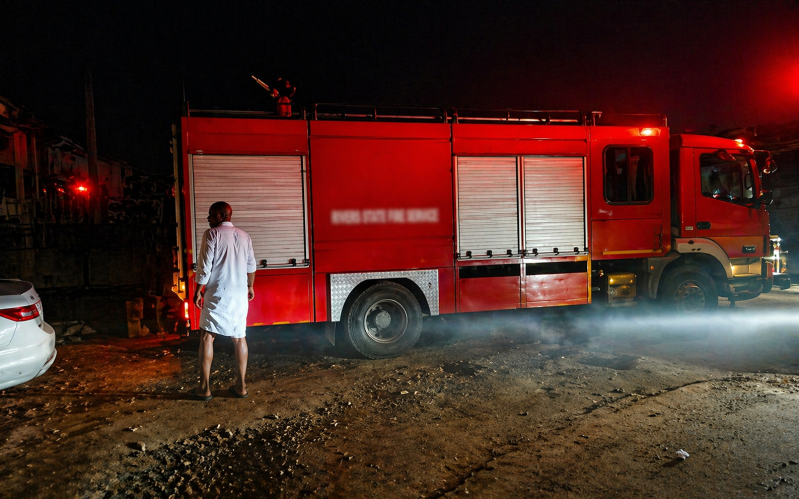
The Nigerian Navy has been praised for its swift and effective intervention in a late-night fire outbreak at the Nigerian Correctional Service Quarters in Kirikiri, Apapa, Lagos State, preventing what officials described as a potential catastrophe. The incident occurred around 11:00 p.m. on Wednesday, April 22, 2026, when a fire, believed to have been triggered by a gas cylinder explosion within a residential building, quickly spread to an adjacent structure. With the Lagos State Fire and Rescue Service yet to arrive on the scene, personnel from the Nigerian Navy Ship (NNS) WEY and the Naval Ordnance Depot (NOD) acted as first responders, mobilizing two fire trucks and successfully containing the blaze. In a statement issued by the Director of Naval Information, Navy Captain Abiodun Folorunsho, the Navy confirmed that while two buildings were damaged, no casualties were recorded. “Through a coordinated rapid firefighting effort, the naval team contained the blaze and prevented it from spreading further before the arrival of the Lagos State Fire and Rescue Service,” Folorunsho said. “Although two buildings in the vicinity got burnt and properties were lost, no casualties were recorded as of the time of this report.” The Navy High Command commended the professionalism and courage of its personnel, noting that their timely action averted what could have escalated into a wider disaster. “This incident underscores the importance of fire safety awareness and strict adherence to preventive measures,” Folorunsho added.
The fire outbreak at Kirikiri has once again raised questions about fire safety in custodial facilities across the country. While the incident did not directly affect the prison cells where inmates are held – the affected buildings were staff quarters – the rapid spread of the flames highlighted potential vulnerabilities in the layout and construction of the facility. The Nigerian Correctional Service (NCoS) has not yet issued an official statement on the incident, but sources within the agency confirmed that an internal review of fire safety protocols has been ordered for the Kirikiri complex. The correctional centre, one of the largest in Nigeria, houses thousands of inmates and staff, making fire prevention a critical concern. The Lagos State Fire and Rescue Service, which arrived after the Navy had already contained the blaze, praised the naval personnel for their quick response, which limited the scale of the incident and prevented any loss of life.
The prompt action by the Nigerian Navy underscores the importance of inter-agency cooperation in emergency situations. According to Navy Captain Folorunsho, the success of the operation was due in large part to the availability of firefighting equipment and the preparedness of NNS WEY personnel. The Navy has consistently maintained firefighting capabilities at its major formations, recognizing that its bases and facilities could face similar emergencies. In this case, those resources were deployed to assist a civilian facility, demonstrating the Navy’s commitment to supporting civil authorities in times of need. The Navy reaffirmed its readiness to provide logistical and emergency support to protect life and property across the country.
While the cause of the fire is still officially under investigation, preliminary reports have converged on a gas cylinder explosion as the likely trigger. Gas-related accidents have become a recurring feature of fire incidents in Nigerian cities, where the use of cooking gas is widespread but safety standards are often poorly enforced. In Lagos alone, multiple fires linked to gas explosions have been reported in residential and commercial areas over the past year. The Lagos State Government has responded by increasing the number of fire stations and firefighting vehicles, but incidents like the one at Kirikiri show that prevention remains a significant challenge. The state has also launched public awareness campaigns on gas cylinder safety, but enforcement of safety regulations, particularly in residential quarters attached to public institutions, remains inconsistent. The Kirikiri fire may prompt a review of safety measures in government quarters, especially those attached to sensitive facilities like prisons.
The Nigerian Navy’s ability to respond so swiftly to the Kirikiri fire is rooted in its long-standing commitment to emergency readiness. The NNS WEY formation, located in the Apapa area, has historically played a key role in port and coastal security. Over the years, it has built significant capacity in damage control and firefighting, skills that are directly transferable to land‑based emergencies. The collaboration with the Naval Ordnance Depot, which provides logistical and technical support, further enhanced the response. The two fire trucks deployed to the scene were part of the Navy’s dedicated fleet, maintained specifically for such contingencies. This level of preparedness is not accidental: the Navy views emergency response as an integral part of its mandate to protect national infrastructure.
The sealed‑off area around the affected buildings remained under security watch as of Thursday morning, with investigators combing through the debris to establish the exact sequence of events. The Lagos State Government has not yet announced any compensation for the affected families or a timeline for the rebuilding of the damaged quarters. However, the Nigerian Correctional Service is expected to relocate the displaced staff to temporary accommodation within the facility as repairs commence. Meanwhile, inmates and other operations within the prison were not affected by the fire, and the facility continues to function normally.
As the investigation continues, the Navy’s intervention at Kirikiri stands out as a model of inter‑agency collaboration and rapid emergency response. The incident serves as a sobering reminder that fire safety cannot be taken for granted, even within institutions of the state. It also highlights the value of maintaining well‑equipped and well‑trained emergency units across all security agencies. The Lagos State Government and the Nigerian Correctional Service would do well to learn from this close call and take proactive steps to prevent a future tragedy. For now, the immediate danger has passed, and thanks to the Navy’s quick action, no lives were lost. The midnight fire that threatened to consume a corner of Kirikiri will be remembered not for its devastation, but for the professionalism that stopped it in its tracks.
📩 Stone Reporters News | 🌍 stonereportersnews.com
✉️ info@stonereportersnews.com | 📘 Facebook: Stone Reporters News | 🐦 X (Twitter): @StoneReportNew | 📸 Instagram: @stonereportersnews
Add comment
Comments