

Reported by: Oahimire Omone Precious | Edited by: Pierre Antoine
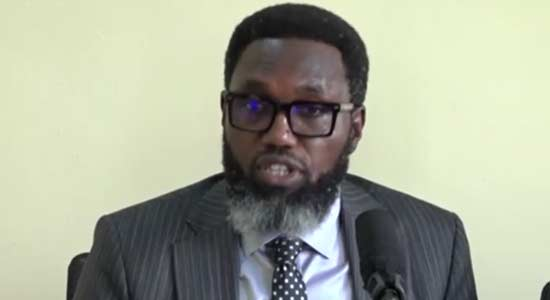
A Nigerian lawyer, Maxwell Opara, has filed a suit at the Federal High Court in Abuja seeking to stop the continued reintegration of more than 700 former insurgents processed under the Federal Government’s Operation Safe Corridor programme.
The suit, marked FHC/ABJ/CS/837/2026, was filed on April 23, 2026. The respondents are President Bola Tinubu, the Nigerian Army, and the Attorney-General of the Federation. Opara is asking the court to determine whether former insurgents can be returned to society without criminal prosecution, conviction, sentencing, or a formal legal process granting them amnesty.
The case follows the recent graduation of 744 former terrorists and victims of violent extremism from the De-radicalisation, Rehabilitation and Reintegration camp under Operation Safe Corridor in Gombe State. Defence authorities said the graduates had undergone a structured programme involving psychosocial support, vocational training, religious reorientation, civic education, educational reform, and behavioural transformation.
The Chief of Defence Staff, General Olufemi Oluyede, represented at the ceremony by Rear Admiral Kabiru Tanimu, said Operation Safe Corridor was not designed as a reward for violence. He described it as a non-kinetic security strategy aimed at reducing violence, weakening extremist recruitment, and promoting long-term stability. He also stated that the programme should not be mistaken for an amnesty scheme.
Opara’s position is different. He argues that persons linked to terrorism, killings, kidnapping, and destruction of communities should first face investigation and prosecution under Nigerian law. According to reports on the suit, he is relying on the 1999 Constitution, the Administration of Criminal Justice Act 2015, and the Terrorism Prevention and Prohibition Act 2022 to challenge what he describes as unlawful reintegration without judicial oversight.
The lawyer is seeking court orders restraining the authorities from further reintegrating the ex-insurgents and compelling the Attorney-General of the Federation to initiate criminal proceedings where evidence supports prosecution. His argument is that neither the military nor the executive arm of government has the power to grant what he calls “de facto immunity” to suspects accused of grave crimes without a lawful amnesty framework or court process.
The controversy intensified after the military announced the graduation of the 744 participants. A published breakdown said 597 were from Borno State, 58 from Yobe, 15 from Kano, 12 from Bauchi, 10 from Adamawa, and others from several states, including Abia, Anambra, Ebonyi, Enugu, Katsina, Kogi, Nasarawa, Niger, Plateau, Sokoto, Akwa Ibom, and Kebbi. Eight foreign nationals from Burkina Faso, Cameroon, Chad, and Niger Republic were also listed among the graduates.
Brigadier General Yusuf Ali, Coordinator of Operation Safe Corridor, said the programme was created as a strategic response to insurgency, combining military pressure with rehabilitation for those willing to renounce violence. He said reintegration would require support from state governments, communities, families, and institutions.
The legal challenge raises a central question in Nigeria’s counter-insurgency policy: whether rehabilitation can proceed before prosecution, or whether justice for victims must come first. Opara and other critics argue that victims of terrorism remain displaced, bereaved, and unsupported while former fighters receive rehabilitation and vocational training. Supporters of the programme argue that disengagement and deradicalisation are necessary tools in reducing recruitment and stabilising conflict-affected communities.
Operation Safe Corridor has operated for years as Nigeria’s main deradicalisation and reintegration platform for persons who surrender from Boko Haram and related extremist groups. The programme’s official description presents it as a multi-agency, non-kinetic intervention focused on rehabilitation, reintegration, and national security.
The matter is now before the Federal High Court. As of this report, no final ruling has been delivered on Opara’s application.
📩 Stone Reporters News | 🌍 stonereportersnews.com
✉️ info@stonereportersnews.com | 📘 Facebook: Stone Reporters News | 🐦 X (Twitter): @StoneReportNew | 📸 Instagram: @stonereportersnews
Add comment
Comments