

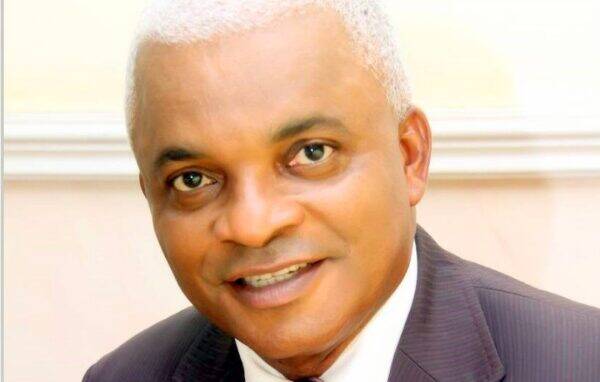
The All Progressives Congress (APC) in Akwa Ibom State has suspended Eseme Eyiboh, a spokesperson to Senate President Godswill Akpabio, following a dispute over what party officials described as an “unauthorised” political meeting held in Esit Eket Local Government Area.
The suspension, announced by executives of Ward 9 in Esit Eket, marks the latest escalation in a growing internal disagreement within the ruling party at the grassroots level. Party officials accused Eyiboh of actions deemed detrimental to party unity, citing allegations of anti-party conduct, insubordination, and failure to respect established party structures.
According to a formal letter dated April 22 and signed by more than 20 ward executives, the decision to suspend Eyiboh was based on a series of actions they said undermined the party’s cohesion. The letter accused him of negligence, refusal to acknowledge ward leadership, and conduct that allegedly encouraged division within the party.
At the centre of the controversy is a stakeholders’ meeting convened by Eyiboh earlier in the week, despite explicit warnings from the APC leadership in Esit Eket. The local chapter chairperson, Urua Akpe, had cautioned that any such gathering without prior approval from party authorities would attract disciplinary measures.
Despite the warning, the meeting proceeded as planned and drew attendance from several political figures, including former officeholders and community leaders. The gathering reportedly focused on political alignment ahead of the 2027 general elections and featured endorsements for President Bola Tinubu’s re-election bid as well as continued support for Senate President Akpabio and other elected representatives.
Participants at the meeting framed it as a forum aimed at fostering community development and political continuity. Some speakers emphasised the need for unity, transparency in governance, and sustained leadership to drive development in the region.
However, the APC leadership at the local level maintained that the meeting violated party procedures. In an earlier statement, the party warned that no individual, regardless of status, had the authority to convene such a gathering without the consent of the chapter leadership. The statement described the planned meeting as a “direct affront” to party authority and warned members against attending.
The suspension underscores the sensitivity surrounding internal party processes in Nigeria’s political landscape, particularly as parties begin to position themselves for future electoral contests. Disputes over authority, control of local structures, and the legitimacy of political gatherings are not uncommon, especially in states where political alignments are evolving.
Eyiboh has rejected the grounds for his suspension, insisting that the meeting in question was not a formal APC event and therefore did not require approval from party officials. He argued that the gathering was a stakeholders’ forum rather than a party meeting, drawing a distinction between community engagement and official party functions.
In his response, Eyiboh questioned the authority of ward executives to regulate meetings involving broader community stakeholders. He suggested that such forums fall outside the direct control of party structures, particularly when they are not explicitly organised as party activities.
The disagreement highlights a broader tension between formal party hierarchies and informal political networks that often play a significant role in Nigerian politics. Stakeholder meetings, while sometimes unofficial, can carry substantial political weight, especially when they involve endorsements and strategic discussions ahead of elections.
The situation may also be influenced by recent directives from higher political authorities in the state. Akwa Ibom State Governor Umo Eno had previously warned that no individual should convene APC meetings at either the state or local level without approval from party leadership. However, the governor reportedly made exceptions for himself and Senate President Akpabio, a factor that may have contributed to differing interpretations of authority within the party.
While the ward-level suspension has been formally announced, its final status remains uncertain. Party officials at the state level have indicated that further review may be required before a definitive position is reached. The APC’s state spokesperson, Patrick Edeke, suggested that the matter is still under consideration, signalling the possibility of either ratification or reversal of the decision.
Political observers note that such disputes, if not carefully managed, can have implications for party cohesion, particularly in regions where internal divisions may affect electoral performance. As Nigeria approaches another election cycle, maintaining unity within party ranks is expected to be a key priority for political leaders.
The incident also reflects the complex dynamics within the APC in Akwa Ibom, a state where the party continues to navigate internal alignments and consolidate its position. The involvement of high-profile figures, including a close aide to the Senate President, adds further significance to the development.
For now, the suspension of Eyiboh remains a localised disciplinary action, but its broader political implications could unfold in the coming weeks as party leadership at higher levels weighs in. The outcome may set a precedent for how similar disputes are handled within the APC and could influence the balance of power within the party’s state structure.
As both sides maintain their positions, the situation underscores the challenges of balancing internal party discipline with the realities of grassroots political engagement in Nigeria’s evolving democratic landscape.
📩 Stone Reporters News | 🌍 stonereportersnews.com
✉️ info@stonereportersnews.com | 📘 Facebook: Stone Reporters News | 🐦 X (Twitter): @StoneReportNew | 📸 Instagram: @stonereportersnews
Add comment
Comments