

Reported by: Oahimire Omone Precious | Edited by: Oravbiere Osayomore Promise.
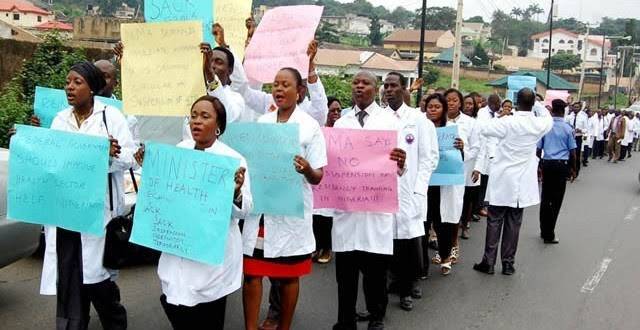
The Nigerian Association of Resident Doctors (NARD) has called off its planned indefinite nationwide strike, following a series of high-level government concessions and fresh financial commitments that averted a total shutdown of the country’s tertiary healthcare system. In a communiqué issued on Saturday, April 25, 2026, after an emergency virtual meeting of its National Executive Council (NEC), the association confirmed that the government had reversed its earlier decision to suspend a reviewed Professional Allowance Table (PAT). This reversal, coupled with pledges to clear salary arrears and fund residency training, led NARD to suspend the industrial action, which had been scheduled to begin on April 21, 2026.
NARD’s decision to step back from the brink came after what it described as intensive, multi-agency interventions involving the Office of the Vice President, the Coordinating Minister of Health and Social Welfare, the Minister of Labour and Employment, the Coordinating Minister of Finance, the Budget Office, the Office of the Accountant General, IPPIS, the Nigerian Medical Association (NMA), and even the Department of State Services (DSS). The association’s statement, signed by its President, Dr Mohammad Usman Suleiman; Secretary‑General, Dr Shuaibu Ibrahim; and Publicity and Social Secretary, Dr Abdulmajid Yahya Ibrahim, outlined a series of commitments that persuaded the NEC to rescind the strike order. Chief among these was the government’s about‑turn on the reviewed Professional Allowance Table, which the doctors say will now be reflected in the April salaries and continue in subsequent months.
The crisis had been simmering for weeks. NARD had initially resolved to go on a “total and indefinite” strike after the federal government halted the implementation of the reviewed PAT, a key component of an agreement reached in 2025 that ended a previous prolonged labour dispute. The association also complained about the non‑payment of promotion and salary arrears, the delay in releasing the Medical Residency Training Fund (MRTF), and the persistent hold‑up in the payment of house officers’ salaries. But on Saturday, the NEC noted that the government had offered more than just promises. Initial approval had been secured for the 2026 MRTF, with firm assurances that the disbursement process would be finalised without delay. Additionally, the Budget Office indicated that it was ready to begin clearing the outstanding 19 months of professional allowance arrears.
Despite this progress, the doctors did not conceal their dissatisfaction with one area: the continued delay in paying house officers’ salaries. “The NEC expressed deep concern over the continued delay in the payment of house officers’ salaries, describing the situation as persistent and requiring urgent attention,” the communiqué read. The association demanded an urgent stakeholders’ meeting to resolve that specific issue. Nevertheless, on balance, the NEC resolved to suspend the planned indefinite strike, while making it clear that the reprieve is conditional. The council will review the government’s compliance at its May Ordinary General Meeting in Kano, and should the commitments fail to materialise, the strike could be reactivated.
The suspension of the strike offers a temporary reprieve for Nigeria’s fragile public health sector, which has often been paralysed by industrial disputes. Resident doctors form the backbone of clinical services in most teaching hospitals and federal medical centres, and an indefinite withdrawal of their services would have crippled emergency care, surgical operations, and patient admissions. The government’s intervention, led by Vice President Kashim Shettima and backed by President Bola Ahmed Tinubu, appears to have recognised the strategic importance of avoiding a disruption in the middle of a fragile economic recovery. NARD itself acknowledged the roles played by the President, the Vice President, and several ministers, lawmakers, and other critical stakeholders whose efforts helped avert the industrial action.
The road to the suspension was not without last‑minute drama, as the NEC meeting stretched into the evening, with some members arguing that the government had reneged on too many past agreements and that only a strike would force lasting compliance. However, the majority of the council appears to have been persuaded by the specific and time‑bound nature of the latest pledges. The reversal of the PAT suspension was particularly significant because it allowed the government to claim that it was returning to the terms of a previously signed accord, rather than making entirely new promises.
In its communiqué, NARD listed five core demands: sustained implementation of the reviewed PAT as reflected in April salaries and subsequent months; prompt payment of all outstanding promotion and salary arrears; expedited conclusion and full disbursement of the 2026 MRTF; immediate commencement of the process for paying the outstanding 19 months of professional allowance arrears; and an urgent stakeholders’ meeting to resolve the persistent delays in house officers’ salaries. The government, for its part, has not issued a detailed official statement on the matter, but a source at the Ministry of Health confirmed that the Budget Office and the Office of the Accountant General had already begun updating their payment schedules to accommodate the required adjustments.
The suspension of the strike has been met with relief by patient groups and civil society organisations, many of whom had feared a repeat of the 2025 resident doctors’ walkout that lasted 27 days and led to thousands of postponed surgeries. The Nigerian Medical Association (NMA) praised the government’s responsiveness and urged the doctors to keep their word by giving the authorities a genuine chance to implement the agreements. However, the NMA also called for structural reforms to prevent recurring disputes, including fully funding residency training programmes and automating salary payments to eliminate arrears.
For now, the immediate crisis has passed. April salaries are expected to reflect the reinstated allowances, and the process of clearing the 19‑month arrears is slated to commence within weeks. NARD’s readiness to monitor compliance and reconvene in May ensures that the government cannot simply pocket the suspension and return to business as usual. The real test will be whether, for the first time in nearly a decade, both sides can fully implement what they have signed. If the pledges hold, Nigeria’s health system could enjoy an extended period of labour peace; if they fail, the country will once again face the spectre of empty wards and shuttered operating theatres. For now, patients can breathe a little easier, and the doctors can return to their wards – but the clock is already ticking towards May.
📩 Stone Reporters News | 🌍 stonereportersnews.com
✉️ info@stonereportersnews.com | 📘 Facebook: Stone Reporters News | 🐦 X (Twitter): @StoneReportNew | 📸 Instagram: @stonereportersnews
Add comment
Comments