

Reported by: Oahimire Omone Precious | Edited by: Oravbiere Osayomore Promise.
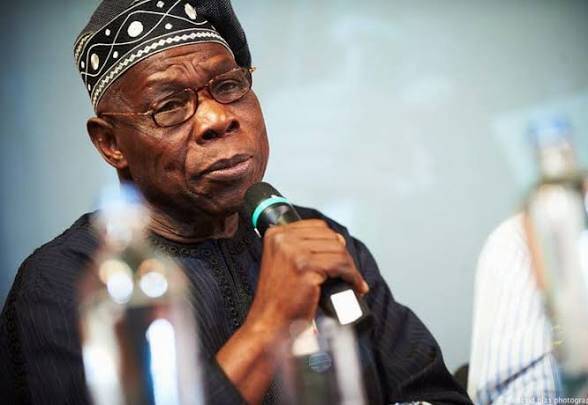
Former President Olusegun Obasanjo has stirred fresh controversy over the fate of Nigeria’s state-owned refineries, insisting that the facilities in Port Harcourt, Warri and Kaduna will never function optimally. The elder statesman made the declaration in a television interview that aired at the weekend, dismissing the current administration’s push to revive the plants as a futile exercise. His comments have reignited a long-running debate about the viability of government-run refining and the billions of dollars sunk into maintenance contracts that have yielded no lasting results.
Speaking on Sony Irabor Live on News Central, Obasanjo argued that only a well-structured public-private partnership can rescue the refineries, pointing to the Nigeria Liquefied Natural Gas (NLNG) project as a successful model. “Look, one project that has not been destroyed by the government in Nigeria is the NLNG, where the private sector has 51 per cent and the Nigerian government has 49 per cent,” he said. He contrasted this with the experience of the NNPC, which he said has failed because government control, poor maintenance and endemic corruption have condemned the refineries to perpetual dysfunction.
Obasanjo’s comments were a direct rebuttal to the optimism of President Bola Tinubu, who had earlier expressed confidence that the Port Harcourt refinery would start production by December 2023 after the completion of a rehabilitation contract with Italian firm Maire Tecnimont SpA. In a sharp retort, Obasanjo said, “Someone told me Tinubu said refineries would work by December. I told the person the refineries would not work.” The reaction from the presidency was swift. Tope Ajayi, Tinubu’s Senior Special Assistant on Media and Publicity, dismissed the former president’s remarks. “Obasanjo, with due respect to him, is not an engineer. He’s not the engineer working at the refineries. The engineers and the NNPC gave the president a report and they have said that it will work by December this year,” Ajayi said.
Undeterred by the criticism, Obasanjo reopened a chapter from his own presidency, revealing in detail why his desperate attempts to bring in Shell to manage the refineries failed. He said he personally called Shell, offering the energy giant a 10 per cent equity stake to take over the plants. “They said no. I said, ‘Okay, if you don’t want to take equity, don’t take equity. Come and run the refineries.’ They said no,” he recounted. Obasanjo then sought a one-on-one conversation with a senior Shell official to understand the refusal. The official gave him four reasons, beginning with the fact that Shell makes most of its profits from upstream operations, not downstream refining. “They run their downstream without making a loss, but they don’t make a lot of profit from it. It’s more of a service than a major profit-making,” the official explained.
The second reason was the small size of Nigeria’s refineries. At the time of Obasanjo’s presidency, the annual capacities were 60,000 and 100,000 barrels per day, far below the global benchmark of 250,000 to 300,000 barrels. “He said our refineries are too small,” Obasanjo said. The third reason was the deplorable state of maintenance. “We call quacks and amateurs to come and maintain our refineries. The refineries are not in good order,” the former president quoted the Shell official as saying. The fourth reason was the most explosive: too much corruption. “There’s too much corruption around our refineries, and they don’t want to be part of that,” Obasanjo said.
But the biggest missed opportunity, according to Obasanjo, came when Aliko Dangote offered to take over two of the refineries during his tenure. “Aliko came and offered $750 million to take two of the refineries; that will be 51 per cent. I said, ‘Wow, God, you are really a God of miracles.’ I told Aliko to bring the money quickly. They brought the money, and they paid,” Obasanjo said. However, his successor, the late President Umar Yar’Adua, reversed the deal after leaving office, claiming he was under too much pressure from the NNPC. Obasanjo said he personally confronted Yar’Adua about the reversal and was told that NNPC officials had convinced the new president they could run the refineries themselves. That decision, Obasanjo argued, has cost the country dearly.
Since then, Obasanjo claimed, approximately $16 billion has been spent rehabilitating the refineries, just $4 billion short of what Dangote invested in building Africa’s largest private refinery. Yet the state plants remain non‑functional. In November 2025, the NNPC announced a fresh project deadline of June 2026 to finalise the selection of technical partners for the refineries. NNPC Group Chief Executive Bayo Ojulari has acknowledged that the Port Harcourt and Warri refineries, which were briefly restarted in 2024, were operating well below international standards and could not compete commercially with the Dangote refinery. Obasanjo singled out Ojulari as the only NNPC chief who has been honest about the state of the facilities.
The former president’s latest intervention has drawn sharp reactions. While government officials and some analysts accuse him of peddling pessimism and undermining the country’s progress, others see his remarks as a painful but necessary admission of systemic failure. The debate cuts to the heart of Nigeria’s energy policy: whether the state should continue pouring money into refineries that have repeatedly failed or finally cede control to the private sector. As the June 2026 deadline approaches, the only certainty is that the battle over Nigeria’s refineries is far from over.
📩 Stone Reporters News | 🌍 stonereportersnews.com
✉️ info@stonereportersnews.com | 📘 Facebook: Stone Reporters News | 🐦 X (Twitter): @StoneReportNew | 📸 Instagram: @stonereportersnews
Add comment
Comments