

Reported by: Ijeoma G | Edited by: Oravbiere Osayomore Promise.
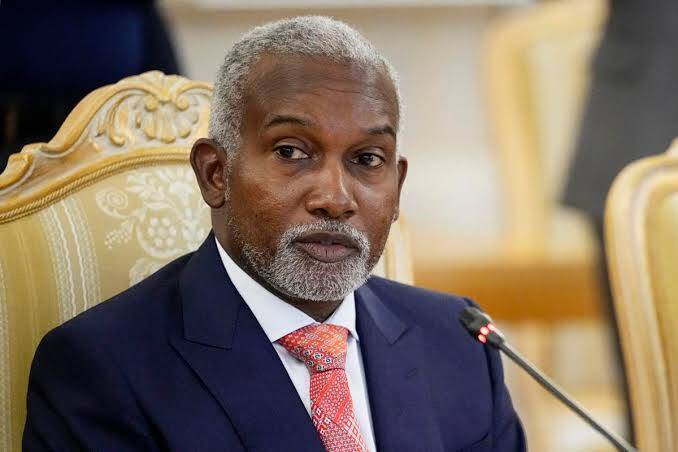
Former Minister of Foreign Affairs and frontline governorship aspirant in Bauchi State, Ambassador Yusuf Maitama Tuggar, has offered a novel explanation for the rising wave of banditry and kidnapping across northern Nigeria: the failure of state governments to honour pension and gratuity obligations to retired workers. Speaking to journalists on Sunday, 26 April 2026, shortly after formally declaring his intention to contest the 2027 Bauchi governorship election on the platform of the All Progressives Congress (APC), Tuggar argued that when retirees are unable to support their families, their dependents become vulnerable to criminal recruitment, including into kidnapping and armed banditry. “It is critical for the survival of individuals and for maintaining social stability,” he said. “When families are neglected, insecurity can grow.”
Tuggar, who resigned his ministerial position on 31 March 2026 following President Bola Tinubu’s directive that political appointees seeking elective office must step down, made the remarks at a press conference at the Tuggar Foundation in Bauchi, a day after his formal declaration at the Games Village in the state capital. The former diplomat, who served as Nigeria’s ambassador to Germany before being appointed Minister of Foreign Affairs, is making his third bid for the Bauchi governorship, having previously contested in 2011 and 2015. He faces a crowded field for the APC ticket that includes Senator Shehu Buba, Professor Ali Pate, and Bala Wunti, among others. However, his campaign has already attracted significant early momentum, with 174 political support groups endorsing his candidacy during his declaration event.
Tuggar’s decision to highlight unpaid pensions as a driver of insecurity is striking because it shifts the focus from the usual suspects – porous borders, inadequate military hardware, and intelligence failures – to a slow‑burning social crisis that has festered for years across several northern states. In Bauchi, as in many other states, retirees have waited years, sometimes over a decade, to collect their gratuities. The Bauchi State Contributory Pension Commission announced in January 2026 that it would begin paying gratuities for civil servants who retired as far back as March 2013 – a 13‑year backlog. Retirees have staged protests and issued open letters to Governor Bala Mohammed, demanding urgent clearance of outstanding entitlements. Tuggar argued that the hardship caused by these delays does not end with the pensioner. “When pensioners cannot cater for their families, dependents may be pushed into crime,” he said, pledging that prompt payment of pensions and gratuities would be among his priorities if elected.
Tuggar’s analysis, however, is not limited to pensions. He identified a broader set of drivers that he believes are fuelling banditry in Bauchi and beyond. Chief among them is the imbalance in land use between farmers and herders, which he described as a root cause of persistent conflict. “Transhumance is a way of life and is not incompatible with modern societies,” Tuggar said. “Pastoralists exist in advanced countries, so it is not a sign of backwardness.” He called for the modernisation of pastoral and agricultural systems, including the proper development and management of grazing routes and reserves, warning that population growth and encroachment on designated grazing areas have worsened tensions and led to recurring clashes. He also cautioned against the indiscriminate allocation of vast farmlands to individuals who fail to utilise them effectively, noting that such actions often displace subsistence farmers. “When people are disenfranchised and can no longer sustain themselves, they may resort to banditry or other criminal activities,” he said.
The security situation in Bauchi, while not as dire as in Zamfara or Katsina, has deteriorated significantly in recent months. In February 2026, the state police command ordered a massive deployment of security personnel to border communities after a spate of kidnappings and armed robberies. In April 2026, the state government opened a “surrender window” for bandits operating within and around the state, urging them to lay down their arms as part of efforts to consolidate recent security gains. That same month, the police command confirmed that 45 kidnap victims had been rescued in a joint operation supported by the federal government. Yet, attacks persist, and Tuggar’s diagnosis suggests that without addressing the socio‑economic grievances that fuel criminality, military solutions alone will not bring lasting peace.
Beyond security, Tuggar outlined a four‑pillar economic agenda aimed at tackling the root causes of poverty and joblessness. He identified agriculture, mining, business process outsourcing (BPO), and digital skills training as key sectors for job creation. Drawing on global examples, he noted that countries such as India have successfully leveraged BPO to generate employment for millions of young people, and he urged similar strategies to harness Nigeria’s youthful population. “Improving agricultural productivity and supporting pastoral systems would tackle unemployment, while investment in local processing and digital skills would create opportunities for educated youths,” he said. In the health sector, he pledged affordable primary healthcare services and stronger social protection for vulnerable groups.
Tuggar, who holds a bachelor’s degree in architecture and a master’s in development economics and regional planning, presented himself as a candidate who combines executive experience with a nuanced understanding of the structural flaws in Bauchi’s governance. During his tenure as Minister of Foreign Affairs, he was known for his advocacy of “economic diplomacy” as a tool for attracting foreign investment and technology transfer. Now, turning his attention home, he promised to apply that same pragmatism to the challenges of pension arrears, land disputes, and youth unemployment. “This is not just my ambition; it is a collective mission to move Bauchi State forward,” he said.
Tuggar’s campaign faces significant headwinds. The current governor, Bala Mohammed, who is completing his second term, is constitutionally barred from seeking re‑election, but his influence over the state’s political machinery remains formidable. The APC has not yet settled on a mode of primary for the governorship ticket, though Tuggar has pledged to abide by the outcome of any process, whether consensus or direct primaries, as long as it is conducted fairly and transparently. “Whichever method is adopted – consensus or direct primaries – I am ready and will abide by the outcome, provided it is conducted in line with party guidelines,” he said.
For the thousands of Bauchi retirees who have waited years for their gratuities, Tuggar’s message that unpaid pensions are not just a welfare issue but a security threat represents a significant shift in framing. Whether that message translates into votes will depend on whether voters believe his promises of prompt payment – promises that have been made by previous aspirants and broken. Tuggar’s challenge is to demonstrate not only that he understands the problem but that he has the political will and administrative competence to solve it. The APC governorship primary is expected to take place in May 2026, and Tuggar is widely tipped as one of the leading contenders. His ability to sustain this early momentum will be tested in the weeks ahead as the race for the Bauchi Government House intensifies.
📩 Stone Reporters News | 🌍 stonereportersnews.com
✉️ info@stonereportersnews.com | 📘 Facebook: Stone Reporters News | 🐦 X (Twitter): @StoneReportNew | 📸 Instagram: @stonereportersnews
Add comment
Comments