

Reported by: Ijeoma G | Edited by: Oravbiere Osayomore Promise.
The Nigerian Consulate in Johannesburg has demanded a thorough, transparent investigation into the deaths of two Nigerian nationals in separate incidents involving South African security personnel – killings that have sent shockwaves through the Nigerian community and reignited fears of escalating xenophobic violence. The victims were identified as Amaramiro Emmanuel, a 42‑year‑old businessman, and Ekpenyong Andrew, a 37‑year‑old motor mechanic and father of five. According to the Consul‑General, Ninikanwa Okey‑Uche, Emmanuel died on April 20, 2026, from injuries sustained after he was allegedly severely beaten by personnel of the South African National Defence Force (SANDF) in Port Elizabeth. Andrew was arrested by Tshwane Metro Police officers in the Booysens area of Pretoria on April 19, and his body was later found at the Pretoria Central Mortuary under circumstances that his family and community leaders have described as highly suspicious.
The killings have deepened a climate of fear among the estimated 300,000 Nigerians living in South Africa, many of whom already felt exposed after weeks of anti‑foreigner demonstrations and sporadic attacks. In a statement issued on Monday, April 27, Ms Okey‑Uche disclosed that the Nigerian mission had received preliminary reports of the two deaths and had opened formal cases with the South African Police Service. She called on the Independent Police Investigative Directorate (IPID) to investigate the two matters “in a thorough, transparent, and impartial manner” and to expeditiously establish the full facts surrounding each incident.
“On this, we are calling on South African authorities to thoroughly investigate the matter and bring the perpetrators of this gruesome act to justice,” the consul‑general said. “Our position is that no matter what the allegations may be, there are lawful processes and steps to justice. All should be presumed innocent and granted fair treatment and hearing in a court of law. No one should take laws into their own hands under any circumstances.” She also expressed concern over what she described as a growing tendency to profile Nigerians as criminals, warning that such generalisations are “dangerous” and could fuel further violence.
The killing of Ekpenyong Andrew has drawn particular outrage from the Nigerian Union South Africa (NUSA) and human‑rights advocates. According to NUSA President Smart Nwobi, Andrew was a motor mechanic who was arrested on Sunday, April 19, while returning home from work in the Booysens area of Pretoria. Earlier that same day, police officers had visited Andrew’s residence in search of drugs, but found nothing incriminating, his partner, Ms Kuma Kaku, told the union. The following day, Andrew’s body was discovered at the Pretoria Central Morgue.
“This incident is yet another disturbing case of alleged harassment and violation of Nigerian citizens by some members of the South African law enforcement,” NUSA said in a statement. The union called for the release of Andrew’s full autopsy report, the immediate suspension of the four Tshwane Metro Police officers allegedly involved, and a swift and transparent probe by IPID. A murder case has already been opened at the Hercules SAPS, Pretoria Police Station, under case number CAS 224/04/2026.
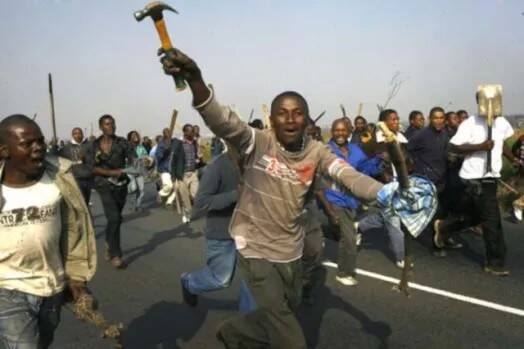
The deaths come amid a surge in anti‑foreigner sentiment in several South African provinces. The Nigerian Consulate in Johannesburg had issued a warning on April 22, 2026, that demonstrations in East London, Cape Town, Durban and parts of KwaZulu‑Natal had turned violent, leading to looting, property damage and injuries. The consulate further noted that protests were planned in Gauteng Province between April 27 and 29, with demonstrators demanding the removal of foreign nationals. In response, the Nigerians in Diaspora Commission (NiDCOM) appealed to Nigerian citizens to avoid protests, stay on the sidelines, and monitor local media for safety updates. Nigerian business owners were specifically advised to close their shops on Freedom Day, April 27, and to consider remaining closed on April 28 and 29, as foreign‑owned businesses have frequently been targeted during earlier waves of xenophobic violence.
The South African government has issued statements cautioning against xenophobic practices, but critics argue that law enforcement responses have been inconsistent. The Nigerian Citizens Association in South Africa (NICASA) has urged President Bola Tinubu and other African leaders to take urgent diplomatic action to protect Nigerians on the continent. NICASA President Frank Onyekwelu said the persistent harassment and killing of foreign nationals amount to a “direct contradiction of the vision of continental integration and shared prosperity”. He called for high‑level diplomatic engagement with South African authorities and the establishment of a transparent mechanism for reporting, documenting and addressing acts of xenophobic violence.
For the families of the two deceased men, however, diplomatic statements and safety advisories offer little solace. Family members of both victims have appealed to the Nigerian government to ensure that the independent investigations lead to arrests and prosecutions. “They beat him and left him to die,” a relative of Mr Emmanuel, who asked not to be identified for fear of reprisals, told local reporters. “We need justice, not just condolences.”
The Nigerian Consulate has pledged to provide consular support to the bereaved families and is actively engaging with South African authorities. Ms Okey‑Uche noted that the mission is “poised to assist the family of the deceased to provide necessary consular support and assistance” and is closely monitoring developments. She appealed to the Nigerian community in South Africa to remain calm and law‑abiding while investigations proceed, but also urged those who may feel unsafe to consider temporarily staying away from demonstration hotspots.
The two killings have deepened a sense of vulnerability among Nigerians who have built businesses, raised families, and contributed to South Africa’s economy for years. As the Independent Police Investigative Directorate begins its inquiries, the families of Amaramiro Emmanuel and Ekpenyong Andrew wait – hoping that this time, the promise of justice will not be another empty pledge.
📩 Stone Reporters News | 🌍 stonereportersnews.com
✉️ info@stonereportersnews.com | 📘 Facebook: Stone Reporters News | 🐦 X (Twitter): @StoneReportNew | 📸 Instagram: @stonereportersnews
Add comment
Comments