

Reported by: Oahimire Omone Precious | Edited by: Oravbiere Osayomore Promise.
Nearly six years after heavily armed jihadists stormed a military post in the country’s remote northeast, the anti‑terrorism section of the Abidjan Criminal Court has delivered a landmark verdict. Six of the 45 accused have been sentenced to life imprisonment for their role in the June 2020 Kafolo attack, which left 14 Ivorian soldiers dead. Seventeen others received 20‑year prison terms, one was given a five‑year sentence, and 21 defendants were acquitted.
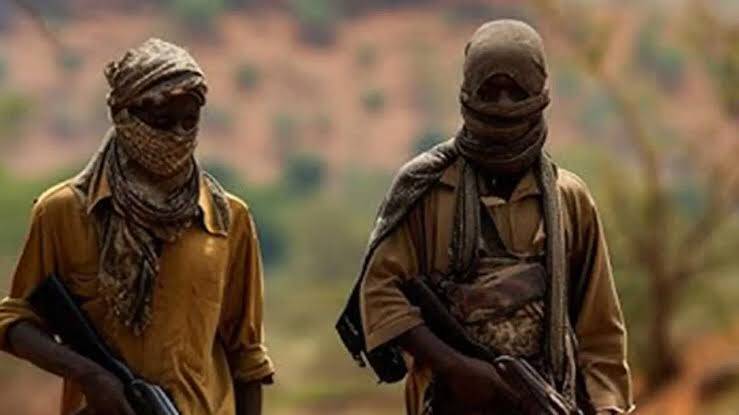
The carnage unfolded overnight on 10‑11 June 2020, when a commando of about 30 heavily armed men crossed from Burkina Faso into Ivory Coast and launched a pre‑dawn assault on the military post in Kafolo, a remote village in the northeast near the border. The attackers caught the garrison off guard, killing 14 soldiers before withdrawing across the frontier. Responsibility was later claimed by the al‑Qaeda‑linked Katiba Macina.
No single organisation formally claimed the attack at the time, but investigators quickly traced it to jihadist fighters operating from bases just across the border in Burkina Faso, which had already been ravaged by an expanding Islamist insurgency. The assault was seen as retaliation for “Operation Comoé” — a joint military operation carried out by Ivorian and Burkinabe forces in May 2020 that had destroyed several jihadist mobile bases along the shared border. At that time, Ivory Coast had largely escaped the jihadist violence that had turned its northern neighbours into war zones; Kafolo was a brutal awakening.
In the days following the massacre, security forces launched a sweeping manhunt. Nearly a hundred people were arrested nationwide. After years of investigation, 45 suspects were ultimately indicted on charges of terrorism and related offences. The trial opened more than a year ago with exceptional security measures: defendants were ferried to the court under heavy guard, and a specialised interpreter was brought in to translate testimony from Fulfulde, the language spoken by several suspects.
During the proceedings, two of the accused – Ali Sidibé, also known as “Sofiane”, and Hassane Diallo – admitted their participation in the assault. The prosecution argued that while some of the accused were the direct planners and executors of the attack, others had played supporting roles: providing logistical help, scouting the target, sheltering the attackers, or leaking strategic information. Counter‑terrorism prosecutors requested life sentences for five of the defendants and 20‑year terms for about twenty others. They also asked for the acquittal of 14 suspects for whom they said there was insufficient evidence.
The verdict, delivered on 27 April 2026, largely followed the prosecution’s line. The six convicted of the most serious roles – including the confessed attackers – were handed life imprisonment. Seventeen others, found guilty of providing material support to the terrorist network, were sentenced to 20 years in prison and each fined 50 million CFA francs (approximately $89,000). One minor participant received a five‑year jail term, and 21 defendants were freed. The convicted have 20 days to appeal the court’s decision.
The presiding judge described the judgment as a reaffirmation of the state’s resolve to confront the jihadist threat. The public prosecutor hailed the trial as a demonstration of the resilience of the rule of law and a tribute to the memory of the 14 fallen soldiers. Defence lawyers, however, argued that several accused had been caught up in the investigation without solid evidence, and many of their clients still insist they took no part in the attack.
The Kafolo attack had already reverberated far beyond its remote setting. It exposed the vulnerability of Ivory Coast’s northern frontier, where porous borders and vast, unpatrolled forests had become staging grounds for jihadist infiltration. Two subsequent attacks occurred near the same border region in March 2021, killing three more Ivorian soldiers. The verdict is only the second major terrorism trial in Ivory Coast’s history, after the 2022 trial of eleven people convicted for the 2016 Grand‑Bassam seaside resort attack, which killed 19 people.
In its ruling, the Abidjan court acknowledged that nearly six years of painstaking evidence‑gathering could not prove the involvement of every initial suspect. The acquittal of 21 defendants reflects the difficulty of building airtight cases in a region where combatants often cross borders without leaving a paper trail. Still, the court made clear that the plotters and fighters at the heart of the attack would not escape accountability.
For Ivory Coast, which has long prided itself on being a beacon of stability in a volatile region, the Kafolo trial marks a turning point. The verdict will not bring back the 14 soldiers, but it sends a powerful signal: the country is equipped not only with soldiers at the border but also with judges, investigators, and a legal system determined to pursue terrorists wherever they hide, whether in the Sahel’s vast deserts or in the mangrove creeks of the south. The courtroom doors may close, but the threat has not vanished. As security officials noted after the sentence was read, the case is now in the hands of the appeal courts – and the border remains as tense as ever.
📩 Stone Reporters News | 🌍 stonereportersnews.com
✉️ info@stonereportersnews.com | 📘 Facebook: Stone Reporters News | 🐦 X (Twitter): @StoneReportNew | 📸 Instagram: @stonereportersnews
Add comment
Comments