

Reported by: Ijeoma G | Edited by: Oravbiere Osayomore Promise.
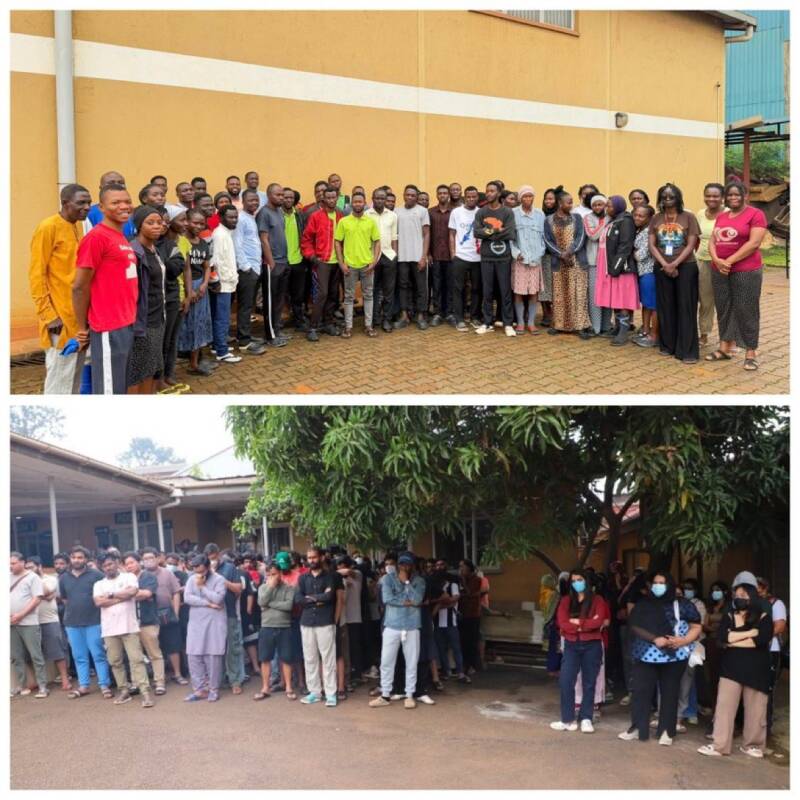
The Ugandan Ministry of Internal Affairs has confirmed the arrest of a total of 231 foreign nationals in two separate intelligence-led operations conducted on April 27, 2026, marking one of the country’s most expansive crackdowns on illegal immigration and transnational cybercrime. According to a statement from the Ministry’s spokesperson, Simon Peter Mundeyi, 62 Nigerian nationals were arrested in Adjumani District in the country’s north, while an additional 169 individuals from multiple countries were detained in a night raid in the Bukoto–Ntinda area of Kampala.
The operation in Adjumani District targeted a group of Nigerians who had been living and working in Uganda without valid work permits. Mundeyi told journalists that the arrests followed a tip-off from concerned residents, leading enforcement teams from the Directorate of Citizenship and Immigration Control (DCIC) to a location where the Nigerians were found operating a church as well as engaging in other activities without the required legal authorisation. “These people come under the guise of preaching the gospel and hide behind other irregular activities. So acting on that intelligence, we swung into action and were able to apprehend them,” Mundeyi was quoted as saying by local media outlets, including Daily Monitor and Nile Post. The suspects are currently being processed for prosecution under Uganda’s immigration laws. A separate raid in the Bukoto–Ntinda area of Kampala uncovered a far more complex operation. Immigration officers arrested 169 foreign nationals who were living in a tightly controlled, self-contained apartment complex equipped with its own restaurant and internal facilities designed to restrict movement. Among those detained, 36 were women. According to the Ministry, the majority of the 169 detainees came from Pakistan, India, Bangladesh, Ghana, Myanmar, Ethiopia, Sri Lanka, Cambodia, Thailand, Nepal, Indonesia and Malaysia. A search of the building led to the recovery of numerous computers and other IT equipment believed to have been used in illegal gaming, betting and organised online scams.
Speaking during a press briefing on Tuesday, April 28, 2026, Mundeyi detailed the findings and the links to human trafficking networks. “Inside the building we recovered a significant cache of computers of all types and IT equipment used to facilitate illegal gaming, betting and organised scamming,” he said, adding that the suspects lacked all forms of identification, including travel passports. He noted that upon interrogation, some of the detainees claimed that their passports were being held by their “bosses” who had not yet been apprehended. Preliminary investigations have revealed mixed accounts among the detainees, with some claiming they were trafficked into Uganda under false promises of employment, while others are suspected to have been directly involved in cybercrime activities.
Mundeyi explained to reporters that those found in violation of Uganda’s immigration laws will face prosecution in accordance with the country’s laws, while cases involving suspected trafficking or criminal activity will be referred to the appropriate law enforcement agencies for further investigation. “All 231 individuals arrested across these two operations are currently undergoing rigorous screening and processing,” he said. “Some individuals have claimed they were trafficked into Uganda with promises of employment. Others were engaged in cyber-scamming activities. A few were found in possession of materials suggesting involvement in other criminal activities.” He further categorised the detainees into three groups: suspected victims of trafficking, alleged perpetrators, and individuals who simply overstayed their visas but did not engage in criminal activities. The ministry said the trafficking victims and the overstayers would be helped to leave Uganda after purchasing their own tickets, while those identified as suspected ringleaders would be charged and could eventually face deportation.
This crackdown marks a significant escalation in the government’s efforts to combat irregular migration and transnational crime. According to Mundeyi, the Ministry of Internal Affairs and the National Citizenship and Immigration Control (NCIC) remain committed to ensuring that all foreign nationals residing or working within Ugandan borders are fully documented and compliant with national regulations. “We urge the public to continue supporting these efforts by reporting suspicious activities to the nearest immigration office or police station,” he added, also warning landlords to always verify the immigration status of foreign tenants before offering accommodation.
The operations have drawn attention to the risks of human trafficking and illegal migration networks operating across East Africa. Immigration officials noted that the Nigerian group apprehended in Adjumani was part of a broader trend of foreign nationals entering Uganda on tourist or religious visas and then remaining to work without the required permits. Some of the Nigerians claimed they were trafficked into the country under false promises of employment, while others were directly involved in cyber scamming and related offences. The DCIC stressed that even religious workers and church operators must obtain the correct immigration status before carrying out ministry work, in line with Uganda’s work permit regulations.
The arrested Nigerians are currently being held at the Ministry’s facility in Namanve, according to Mundeyi. The ministry has reaffirmed its commitment to continuing enforcement exercises across the country to ensure compliance with immigration requirements, including valid permits and proper documentation for all foreign nationals. As investigations continue, the 231 detained individuals face an uncertain future, caught between allegations of immigration violations, cybercrime and human trafficking. For now, the cells remain full, and the message from Kampala is clear: Uganda will no longer be a safe haven for undocumented foreign nationals or the criminal networks that exploit them.
📩 Stone Reporters News | 🌍 stonereportersnews.com
✉️ info@stonereportersnews.com | 📘 Facebook: Stone Reporters News | 🐦 X (Twitter): @StoneReportNew | 📸 Instagram: @stonereportersnews
Add comment
Comments