

Reported by: Ijeoma G | Edited by: Oravbiere Osayomore Promise.
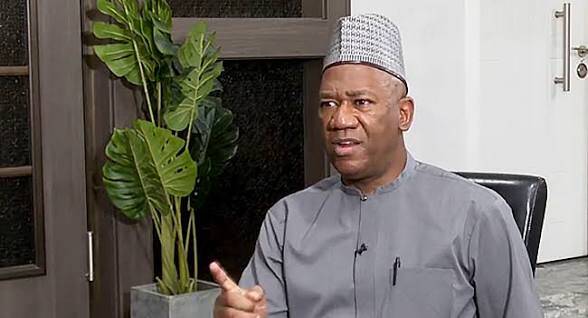
In a move that has sent ripples through Nigeria’s political landscape, former vice-presidential candidate Yusuf Datti Baba-Ahmed has formally announced his defection from the Labour Party to the Peoples Redemption Party, marking one of the most consequential political realignments since the 2023 general elections.
Baba-Ahmed disclosed his decision during a televised interview, confirming that his resignation from the Labour Party would take effect immediately and that he had resolved to continue his political journey under the banner of the PRP. His exit comes amid prolonged internal disputes within the Labour Party, which have increasingly exposed deep cracks in its leadership structure and ideological direction.
According to him, the Labour Party he joined ahead of the 2023 elections is no longer the same organization, citing internal conflicts, lack of cohesion, and what he described as deliberate marginalization by certain elements within the party. He indicated that these developments made it untenable for him to remain, especially as he seeks a platform aligned with his principles and political vision.
The former lawmaker’s departure highlights ongoing instability within the Labour Party, which rose to national prominence during the last election cycle on the back of a strong grassroots movement. That momentum, however, has been difficult to sustain, as leadership tussles and factional divisions have weakened the party’s internal unity.
Since the elections, the party has faced multiple crises involving competing claims to leadership, court cases, and disagreements over strategy and direction. These issues have raised concerns among supporters and political observers about the party’s long-term viability as a major opposition force.
Baba-Ahmed’s decision is widely seen as a direct response to these unresolved tensions. He suggested that the internal environment had become increasingly hostile, limiting his ability to contribute meaningfully to the party’s growth and national agenda. While he did not name specific individuals, his remarks pointed to systemic issues within the party’s leadership framework.
His choice of the Peoples Redemption Party is also significant. The PRP, one of Nigeria’s oldest political parties, has a longstanding reputation rooted in progressive and pro-people ideology. Founded in the late 1970s, the party has historically championed social justice, grassroots empowerment, and anti-elitist policies, although it has struggled in recent years to maintain national relevance.
Baba-Ahmed emphasized that his decision was driven by a desire to return to a platform with clear ideological foundations. He described the PRP as a party with enduring principles and consistency, contrasting it with what he portrayed as the Labour Party’s current lack of direction.
His move comes at a critical time as political actors begin positioning themselves ahead of the next general election cycle. Across the opposition spectrum, there have been ongoing discussions about forming alliances capable of challenging the dominance of the ruling party. These talks have included proposals for coalition platforms that would bring together various political figures under a single banner.
However, Baba-Ahmed had previously distanced himself from such coalition efforts. He openly rejected attempts to unite opposition forces under alternative platforms, arguing that many of the figures involved were part of the political establishment he believes has contributed to Nigeria’s current challenges. His refusal to participate in these arrangements signaled early on that he was considering a different political path.
By aligning with the PRP instead of joining a broader coalition, he appears to be pursuing a strategy focused on ideological clarity rather than political convenience. Analysts say this approach could either strengthen his credibility among certain voter groups or limit his reach in a political environment where alliances often determine electoral success.
The implications of his defection are likely to be far-reaching. For the Labour Party, the loss of a prominent figure who played a central role in its 2023 presidential campaign is a major setback. It raises questions about the party’s ability to retain key members and maintain the confidence of its supporters amid ongoing internal strife.
There is also the possibility that his exit could trigger further defections, particularly among members who share similar concerns about the party’s leadership and direction. While no immediate wave of resignations has been confirmed, political observers note that such high-profile moves often have a ripple effect.
For the PRP, on the other hand, Baba-Ahmed’s entry represents a potential turning point. His national recognition, political experience, and influence could help revitalize the party and expand its visibility beyond its traditional strongholds. Whether this translates into electoral gains remains uncertain, but it undoubtedly positions the party for greater attention in the coming years.
Baba-Ahmed’s political career spans several decades, during which he has served in both chambers of Nigeria’s National Assembly. He has also built a reputation outside politics as an academic and entrepreneur, further enhancing his profile as a public figure. His role in the 2023 elections significantly elevated his national standing, making his recent decision even more impactful.
Reactions to his defection have been measured so far, with many stakeholders adopting a wait-and-see approach. Some political analysts view the move as a principled stand against internal party dysfunction, while others interpret it as a strategic repositioning ahead of future contests.
Within the Labour Party, there has been no immediate official response detailing the party’s position on his departure. However, insiders acknowledge that the development adds to the growing list of challenges confronting the party’s leadership.
The broader political landscape in Nigeria continues to evolve, with shifting alliances and internal party dynamics playing a critical role in shaping future outcomes. Baba-Ahmed’s defection underscores the fluid nature of political affiliations and the ongoing search for platforms that align with individual ambitions and ideological beliefs.
As the country moves closer to another election cycle, such realignments are expected to intensify. Political parties will likely face increased pressure to address internal weaknesses, strengthen their structures, and present clear, cohesive visions to the electorate.
For now, Baba-Ahmed’s move stands as a defining moment, reflecting both the challenges within the Labour Party and the opportunities for alternative political platforms seeking to reassert themselves on the national stage. Whether this shift will ultimately alter the balance of power remains to be seen, but it has already added a new dimension to Nigeria’s unfolding political narrative.
📩 Stone Reporters News | 🌍 stonereportersnews.com
✉️ info@stonereportersnews.com | 📘 Facebook: Stone Reporters News | 🐦 X (Twitter): @StoneReportNew | 📸 Instagram: @stonereportersnews
Add comment
Comments