

Reported by: Ijeoma G | Edited by: Oravbiere Osayomore Promise.
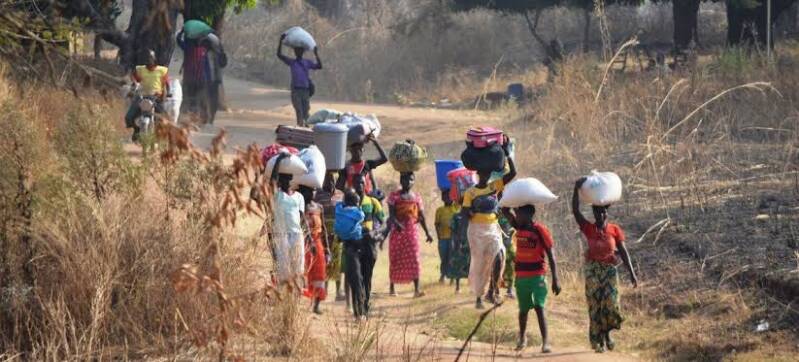
Chadian security forces have arrested and deported hundreds of Nigerian civilians who had sought refuge from Boko Haram and Islamic State-linked insurgents in the Lake Chad region, according to testimony collected by AFP. The coordinated, multi‑day roundup, which deportees say involved the seizure of biometric data and the destruction of their property, has drawn sharp criticism from human rights observers and raised urgent questions about the treatment of displaced populations by host governments struggling with regional insecurity.
Two Nigerians arrested in N’Djamena, the Chadian capital, told AFP that approximately 600 of their compatriots were swept up in mass arrests carried out between Wednesday 22 April and Friday 24 April 2026. The detainees were subsequently transported across the border and abandoned in the Cameroonian town of Kousseri, which lies directly opposite Chad’s capital. Some deportees were later moved further to Gamboru, a Nigerian border town, by Chadian customs officials. "On Friday security personnel raided our home," Kyari Musa, who had been living in N’Djamena, told AFP. "They said all Nigerian refugees are Boko Haram and should leave their country. They took our biometric data. They warned that whoever returns and is caught will spend 20 years in jail."
Ari Modu, a Nigerian who said he was bailed out of detention by his employer and remains in Chad, provided a detailed chronology of the crackdown. According to Modu, 227 people were arrested on the first day, and another 371 were picked up during subsequent raids. The operation, which Modu described as highly coordinated, targeted Nigerian civilians in their residences rather than at border checkpoints, suggesting a degree of prior intelligence gathering. Many of those affected had fled the Boko Haram insurgency – a jihadist uprising that began in 2009 – and had been living and working in Chad for years, seeking safety from a conflict that has killed tens of thousands and displaced millions across the Lake Chad basin.
Chadian authorities have defended the operation as a routine measure against undocumented migration. Deputy director general of Chad’s national police, Paul Manga, told AFP: "The police carried out a roundup of individuals in an irregular situation, regardless of nationality, who were subsequently escorted to the border. This is not a witch hunt." However, deportees' testimony directly contradicts the claim that the sweeps were not targeted. "They said all Nigerian refugees are Boko Haram," Musa insisted. Another deportee described being given neither food nor shelter before being forced onto trucks headed for the border. Witnesses say families, women and children were all caught up in the operation, and that personal belongings left behind in N’Djamena were destroyed or confiscated.
The deportations come at a time when security analysts have warned of a resurgence in jihadist activity in northeast Nigeria. The insurgency has not only destabilised Nigeria’s border states but has also strained the resources and patience of its neighbours. Chad, which itself has suffered attacks by Boko Haram and Islamic State West Africa Province (ISWAP), has grown increasingly wary of letting displaced populations linger on its territory. Yet humanitarian organisations argue that forced returns can expose vulnerable groups to renewed harm, particularly in conflict‑affected zones where the insurgents remain active.
According to a report published by BusinessDay on 29 April 2026, many of the deportees arrived in Nigeria without any means of subsistence: no shelter, no food, and no access to basic services. Local aid workers in border communities report that the sudden influx has overwhelmed already meagre resources. "We ran from violence thinking we would be safe," one deportee told AFP. "Instead, we were arrested and sent back with nothing." Some of those expelled from Chad had previously been part of a United Nations‑backed voluntary repatriation programme, but had later crossed back into Chad because they found themselves still trapped on the front lines of the conflict.
The Nigerian government has not yet issued a detailed statement on the deportation of its citizens from Chad. Officials have previously emphasised the need for regional cooperation to address both security threats and displacement. Meanwhile, the Chadian police have declined to release official figures on the number of persons deported, and Cameroonian authorities have not commented on the reception of the dumped Nigerians in Kousseri. International humanitarian agencies are calling for urgent assistance for those affected, as well as clearer coordination among countries in the Lake Chad region to ensure that security operations do not further endanger civilians already caught in crisis.
For the hundreds of Nigerians who had built lives in N’Djamena, the return is a painful reversal. Having risked everything to escape violence, they now find themselves back in conditions as dangerous as those they fled. "We don’t know where to go," another returnee said. "We are back to the same fear we tried to escape." The deportations have cast a harsh light on the fragile balance between host‑state security concerns and the protection of displaced populations – a balance that appears to have tipped decisively in favour of the former.
📩 Stone Reporters News | 🌍 stonereportersnews.com
✉️ info@stonereportersnews.com | 📘 Facebook: Stone Reporters News | 🐦 X (Twitter): @StoneReportNew | 📸 Instagram: @stonereportersnews
Add comment
Comments