

Reported by: Oahimire Omone Precious | Edited by: Oravbiere Osayomore Promise.
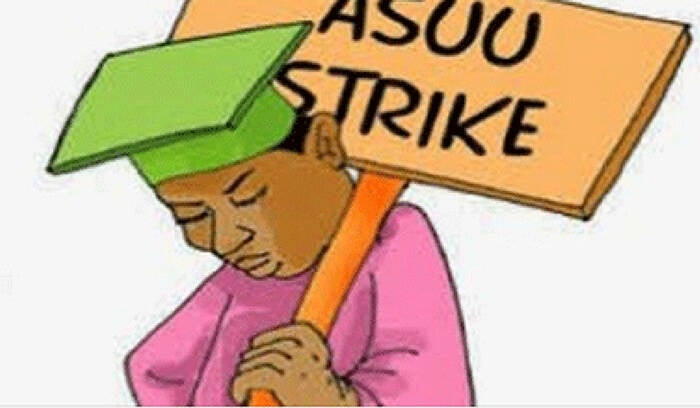
The Academic Staff Union of Universities has sounded a loud and unmistakable alarm, threatening a “total, comprehensive and indefinite” strike across four state‑owned universities in the South‑East and South‑South regions, citing years of chronic neglect, unpaid allowances, persistent salary delays and the systematic withholding of third‑party deductions.
The Calabar zone of ASUU, which represents academic staff in Abia, Akwa Ibom, Ebonyi and Cross River states, issued the stark warning on Tuesday, 28 April 2026, after a zonal congress held at the University of Cross River State (UNICROSS). In a statement signed by Zonal Coordinator Ikechuku Igwenyi, Dr. Happiness Uduk and eight branch chairmen, the union said it could no longer guarantee industrial harmony and should not be held responsible “when the internal mechanisms collapse.” The affected institutions are Abia State University (ABSU), Akwa Ibom State University (AKSU), Ebonyi State University (EBSU) and UNICROSS.
The grievances detailed by the Calabar zone paint a picture of systemic neglect that has festered for years. The union noted that since the 2009 Federal Government‑ASUU agreement, only UNICROSS has recorded partial implementation; the other three universities have implemented no component of the agreement, including the payment of Earned Academic Allowances (EAA).
Despite years of patience, the union said the university environment in these institutions has become untenable. Specific complaints include non‑payment of academic allowances, chronic salary delays, and the withholding of third‑party deductions such as union dues, cooperative savings, National Housing Fund contributions, and union welfare dues. At UNICROSS, the union claimed that 24 months of union dues, welfare and special support levy, ASUU deductions and National Housing Fund deductions have been deducted and withheld by the university administration since 2018.
The Calabar zone also lamented that the erosion of living standards amid record inflation has reduced university workers to the “ranks of the working poor,” making rent, hospital bills and children’s school fees “uphill tasks.” The statement warned that this is not merely a dispute over figures but “a fight for the survival of the university system and the dignity of the men and women who sustain the future.”
The union called on federal and state governments, traditional rulers, parents and other stakeholders to intervene immediately to avert a shutdown.
The crisis is not confined to the Calabar zone. In Sokoto State, the branches of ASUU at Sokoto State University (SSU) and Shehu Shagari University of Education (SSUE) issued a strong warning on 22 April 2026, stating that prolonged neglect of welfare conditions could soon cripple teaching and research. Their demands include immediate implementation of the 2025 FGN‑ASUU agreement, particularly the payment of peculiar allowances for teaching and research staff, which the federal government has already begun to implement at federal universities. They also demanded the payment of Earned Academic Allowances owed for the 2022/2023 and 2023/2024 academic sessions, insisting that lecturers in state‑owned institutions should not be sidelined, especially as salary structures are centrally negotiated under Nigeria’s constitutional framework.
Earlier in April, the ASUU branch at Abdullahi Fodio University of Science and Technology, Aliero (AFUSTA) in Kebbi State also raised the alarm over a slew of unresolved issues, including non‑implementation of the newly approved remuneration package for academic staff that took effect from 1 January 2026, non‑payment of Earned Academic Allowances dating back to 2014, accumulation of unpaid promotion arrears spanning several years (from 2016 to 2025), failure to implement annual salary increments, unpaid wage awards, partial implementation of the new minimum wage, and a backlog of salary consequential adjustments dating from April 2019 to June 2024.
The union warned that if the issues were not addressed, it might be forced to seek intervention from its national body, including the possibility of industrial action. A decision is expected at the National Executive Council meeting scheduled for 9‑10 May 2026.
The looming strike threat comes just weeks after the Federal Government announced the payment of four months of the 2025 wage award for university workers and pledged to release funds for the Earned Academic Allowances. However, many of the affected state universities have yet to see any real implementation. The Calabar zone’s warning is particularly significant because it suggests that if the demands remain unmet, a total and indefinite strike could be called, affecting thousands of students across four universities. Parents and guardians have already expressed anxiety, fearing that the academic calendar, which has only recently stabilised after years of disruptions, could be thrown into chaos again.
The Calabar zone’s statement also accused university administrations of withholding third‑party deductions, including check‑off dues, cooperative savings, pension contributions and union welfare dues. The union argued that such deductions, which are made from members’ salaries every month, are often not remitted to the designated funds, leaving lecturers without access to their own savings and contributions. “These branches incubate a catalogue of grievances that remain ‘refrigerated’ and unaddressed,” the statement added.
The cumulative effect of these grievances has been a steady erosion of morale and living standards. The union noted that record inflation has pushed university workers into deeper poverty, with many unable to afford basic necessities. “We can no longer be expected to maintain industrial peace while our members cannot afford the basic costs and needs of living,” the Calabar zone leadership stated. The union called on the federal and state governments to intervene immediately to avert the crisis, saying that traditional rulers, parents, students and the public should hold the various state governments responsible if a strike occurs.
The Academic Staff Union of Universities has a long history of prolonged strikes over funding and welfare issues. The last major nationwide strike, in 2022, lasted eight months and led to the eventual signing of a Memorandum of Action with the Federal Government. However, critics point out that many of the provisions of that agreement remain unimplemented, particularly at the state level, where universities are often starved of funds. The renewed threat of industrial action has once again put the spotlight on the fragility of Nigeria’s public university system and the urgent need for a sustainable funding framework.
As of Thursday, 30 April 2026, the federal and state governments had not issued any official statement in response to the latest strike threats. Negotiations at the state level, particularly in Abia, Akwa Ibom, Ebonyi and Cross River, are expected to intensify in the coming days. But with the memories of past strikes still fresh, students and parents are watching nervously, hoping that this time, the warnings will not turn into another prolonged shutdown of university campuses.
📩 Stone Reporters News | 🌍 stonereportersnews.com
✉️ info@stonereportersnews.com | 📘 Facebook: Stone Reporters News | 🐦 X (Twitter): @StoneReportNew | 📸 Instagram: @stonereportersnews
Add comment
Comments