

Reported by: Ijeoma G | Edited by: Oravbiere Osayomore Promise.
For nearly 20 months, the only son of an elderly, bedridden farmer and his wife has been missing. His 29‑year‑old mother, Monica Msonga, a poor and uneducated rural woman, has walked from one government office to another, from the police station to the State Criminal Investigation Department, from the Correctional Centre to the headquarters of Operation Zenda, a special police unit. She has spent money she could ill afford. She has been promised answers that never came. She has been warned that the facility where her son was last held was “too dangerous to visit”. And she still does not know whether Terkura Msonga is alive or dead.
The story of Terkura Msonga, a native of Zaki Biam in Benue State, is one of many that have emerged from Nigeria’s opaque police custody system. According to accounts compiled by human rights activist Ukan Kurugh, the 29‑year‑old relocated to Gboko in search of work, finding shelter in the home of a family friend, Aondongu Abuashe Abortaha, and later working on the farm of Achineku Jirbo Dugwei, another acquaintance from his hometown. On 27 August 2024, while returning from the farm on a motorcycle belonging to Achineku, alongside Achineku’s girlfriend, Terkura was intercepted by a group of youths said to be acting on Achineku’s instructions. He was arrested and taken first to the “A” Division Police Station in Gboko, then transferred to the Operation Zenda outpost at Kusaki in Yandev, Gboko Local Government Area. Achineku’s girlfriend and the motorcycle were reportedly released shortly after Achineku’s intervention. Terkura was not.
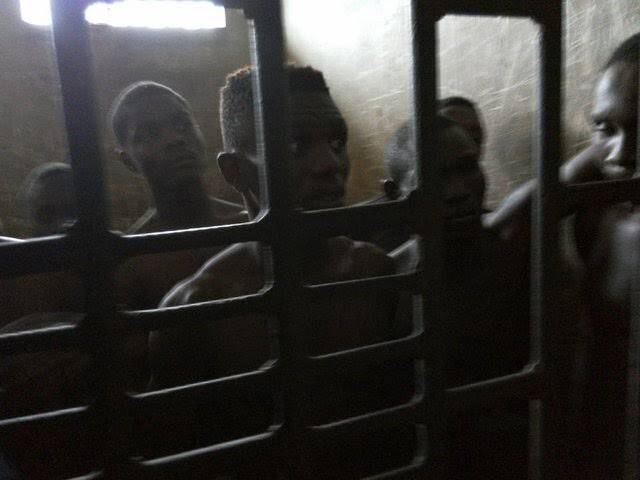
Operation Zenda is a joint task force of the Nigeria Police Force, formed to tackle banditry, kidnapping and armed robbery in Benue State. It has been credited with security successes, but it has also faced repeated allegations of heavy‑handed tactics, prolonged detentions and human rights violations, particularly at its Kusaki outpost. For Terkura Msonga, the transfer to that facility appears to have been the end of the road. Since August 2024, his family has not seen him, nor has any institution disclosed his whereabouts.
When Monica Msonga could no longer reach her son, she contacted Aondongu, who in turn contacted Achineku. It was Achineku who informed the family that Terkura was being held at Operation Zenda’s Kusaki facility. Desperate to secure her son’s release, Monica was allegedly asked to provide money. She was introduced to a lawyer, identified as Barrister Iordye of Ishorov, under circumstances the family has described as unusual. After parting with a substantial sum, her repeated requests to be taken to see her son were denied. Those involved reportedly warned her that the Kusaki facility was too dangerous to visit and that even the lawyer’s own visit had been difficult and risky.
Months passed. A nationwide strike by the Judiciary Staff Union of Nigeria stalled any legal efforts. Communication eventually broke down after Monica lost her phone and the contact numbers linked to those involved. Undeterred, she travelled to Makurdi in March 2026, visiting the Operation Zenda headquarters, the State Criminal Investigation Department and the Correctional Centre. None of these institutions could produce her son or any record of his whereabouts.
The family and activist Ukan Kurugh have raised a series of urgent questions: Why was Terkura arrested at the instance of a private individual? On what legal basis was he transferred to Operation Zenda? Why was he not released alongside Achineku’s girlfriend and the motorcycle? What roles did Aondongu Abuashe Abortaha and Achineku Jirbo Dugwei play in the sequence of events? And why have the two men remained silent on the matter?
The Benue State Police Command has not issued any official statement on Terkura Msonga’s disappearance. Calls to the Police Public Relations Officer for the state were not returned. Operation Zenda has also not responded to requests for comment. The National Human Rights Commission has been urged to launch an independent investigation, but as of Thursday, 30 April 2026, no such inquiry has been announced.
For Monica Msonga, the most painful part of the ordeal is not just the absence of her son, but the absence of any official communication. “I want to know where my son is,” she said in a statement relayed through Kurugh. “If he is alive, let them bring him out. If he is dead, let them tell me so I can mourn him properly. But the silence is killing me faster than anything else.”
The case has drawn attention on social media, with the hashtag #WhereIsTerkura gaining traction in Benue State. Civil society groups have called on the Inspector‑General of Police, Olatunji Disu, to order a high‑level inquiry into the disappearance. “No citizen should vanish into a police facility and never be accounted for,” said a representative of a local rights group. “This is not a matter of disciplinary procedure; it is a matter of life and death.”
As the hours turn into days and the days into months, the Msonga family continues to live in a state of unbearable uncertainty. Terkura’s father, elderly, seriously ill and largely bedridden, cannot travel. He relies on his wife’s fragmented reports. She returns home each time with no news, only the same haunting question: “Where is my son?”
The case of Terkura Msonga is not new. It echoes previous incidents in Benue State where persons detained by security forces have simply disappeared, without explanation, without prosecution, without burial. Yet, for each family, the pain is fresh. The tears are real. And the demand for justice is urgent.
Operation Zenda has in the past been part of successful anti‑crime operations. But the unit’s reputation has also been tarnished by allegations of illegal detention, torture and extrajudicial killings. Human rights organisations have repeatedly called for the demilitarisation of routine policing and the introduction of independent oversight mechanisms for police detention facilities. The disappearance of Terkura Msonga will almost certainly fuel those calls.
The Benue State Government, through its Ministry of Justice, has not commented on the case. Governor Hyacinth Alia, who has pledged to ensure the security of all citizens, has not addressed the matter publicly. The National Human Rights Commission has acknowledged receipt of a complaint but has not provided a timeline for action.
For now, the Msonga family waits. A mother who has already spent money she did not have, who has walked distances she could not afford, who has endured warnings and conditional threats, is left with nothing but a prayer. “I don’t have anyone to talk to,” she said. “I don’t have money to keep searching. But I cannot stop. He is my only son.”
The authorities have the power to answer the question that haunts the Msonga household. They have the power to confirm whether Terkura is in custody or whether he has been released or transferred, or to explain why he cannot be produced. What they have not yet demonstrated is the will.
As the sun set over Zaki Biam on Thursday, Monica Msonga sat by the roadside, her face buried in her hands. In her pocket was a worn‑out photograph of her son, taken years ago. In her mind was the image of him leaving home in 2024, full of hope, on his way to Gboko in search of a better life. She has not seen him since.
📩 Stone Reporters News | 🌍 stonereportersnews.com
✉️ info@stonereportersnews.com | 📘 Facebook: Stone Reporters News | 🐦 X (Twitter): @StoneReportNew | 📸 Instagram: @stonereportersnews
Reported by: Ijeoma G | Edited by: Oravbiere Osayomore Promise.
For nearly 20 months, the only son of an elderly, bedridden farmer and his wife has been missing. His 29‑year‑old mother, Monica Msonga, a poor and uneducated rural woman, has walked from one government office to another, from the police station to the State Criminal Investigation Department, from the Correctional Centre to the headquarters of Operation Zenda, a special police unit. She has spent money she could ill afford. She has been promised answers that never came. She has been warned that the facility where her son was last held was “too dangerous to visit”. And she still does not know whether Terkura Msonga is alive or dead.
The story of Terkura Msonga, a native of Zaki Biam in Benue State, is one of many that have emerged from Nigeria’s opaque police custody system. According to accounts compiled by human rights activist Ukan Kurugh, the 29‑year‑old relocated to Gboko in search of work, finding shelter in the home of a family friend, Aondongu Abuashe Abortaha, and later working on the farm of Achineku Jirbo Dugwei, another acquaintance from his hometown. On 27 August 2024, while returning from the farm on a motorcycle belonging to Achineku, alongside Achineku’s girlfriend, Terkura was intercepted by a group of youths said to be acting on Achineku’s instructions. He was arrested and taken first to the “A” Division Police Station in Gboko, then transferred to the Operation Zenda outpost at Kusaki in Yandev, Gboko Local Government Area. Achineku’s girlfriend and the motorcycle were reportedly released shortly after Achineku’s intervention. Terkura was not.
Operation Zenda is a joint task force of the Nigeria Police Force, formed to tackle banditry, kidnapping and armed robbery in Benue State. It has been credited with security successes, but it has also faced repeated allegations of heavy‑handed tactics, prolonged detentions and human rights violations, particularly at its Kusaki outpost. For Terkura Msonga, the transfer to that facility appears to have been the end of the road. Since August 2024, his family has not seen him, nor has any institution disclosed his whereabouts.
When Monica Msonga could no longer reach her son, she contacted Aondongu, who in turn contacted Achineku. It was Achineku who informed the family that Terkura was being held at Operation Zenda’s Kusaki facility. Desperate to secure her son’s release, Monica was allegedly asked to provide money. She was introduced to a lawyer, identified as Barrister Iordye of Ishorov, under circumstances the family has described as unusual. After parting with a substantial sum, her repeated requests to be taken to see her son were denied. Those involved reportedly warned her that the Kusaki facility was too dangerous to visit and that even the lawyer’s own visit had been difficult and risky.
Months passed. A nationwide strike by the Judiciary Staff Union of Nigeria stalled any legal efforts. Communication eventually broke down after Monica lost her phone and the contact numbers linked to those involved. Undeterred, she travelled to Makurdi in March 2026, visiting the Operation Zenda headquarters, the State Criminal Investigation Department and the Correctional Centre. None of these institutions could produce her son or any record of his whereabouts.
The family and activist Ukan Kurugh have raised a series of urgent questions: Why was Terkura arrested at the instance of a private individual? On what legal basis was he transferred to Operation Zenda? Why was he not released alongside Achineku’s girlfriend and the motorcycle? What roles did Aondongu Abuashe Abortaha and Achineku Jirbo Dugwei play in the sequence of events? And why have the two men remained silent on the matter?
The Benue State Police Command has not issued any official statement on Terkura Msonga’s disappearance. Calls to the Police Public Relations Officer for the state were not returned. Operation Zenda has also not responded to requests for comment. The National Human Rights Commission has been urged to launch an independent investigation, but as of Thursday, 30 April 2026, no such inquiry has been announced.
For Monica Msonga, the most painful part of the ordeal is not just the absence of her son, but the absence of any official communication. “I want to know where my son is,” she said in a statement relayed through Kurugh. “If he is alive, let them bring him out. If he is dead, let them tell me so I can mourn him properly. But the silence is killing me faster than anything else.”
The case has drawn attention on social media, with the hashtag #WhereIsTerkura gaining traction in Benue State. Civil society groups have called on the Inspector‑General of Police, Olatunji Disu, to order a high‑level inquiry into the disappearance. “No citizen should vanish into a police facility and never be accounted for,” said a representative of a local rights group. “This is not a matter of disciplinary procedure; it is a matter of life and death.”
As the hours turn into days and the days into months, the Msonga family continues to live in a state of unbearable uncertainty. Terkura’s father, elderly, seriously ill and largely bedridden, cannot travel. He relies on his wife’s fragmented reports. She returns home each time with no news, only the same haunting question: “Where is my son?”
The case of Terkura Msonga is not new. It echoes previous incidents in Benue State where persons detained by security forces have simply disappeared, without explanation, without prosecution, without burial. Yet, for each family, the pain is fresh. The tears are real. And the demand for justice is urgent.
Operation Zenda has in the past been part of successful anti‑crime operations. But the unit’s reputation has also been tarnished by allegations of illegal detention, torture and extrajudicial killings. Human rights organisations have repeatedly called for the demilitarisation of routine policing and the introduction of independent oversight mechanisms for police detention facilities. The disappearance of Terkura Msonga will almost certainly fuel those calls.
The Benue State Government, through its Ministry of Justice, has not commented on the case. Governor Hyacinth Alia, who has pledged to ensure the security of all citizens, has not addressed the matter publicly. The National Human Rights Commission has acknowledged receipt of a complaint but has not provided a timeline for action.
For now, the Msonga family waits. A mother who has already spent money she did not have, who has walked distances she could not afford, who has endured warnings and conditional threats, is left with nothing but a prayer. “I don’t have anyone to talk to,” she said. “I don’t have money to keep searching. But I cannot stop. He is my only son.”
The authorities have the power to answer the question that haunts the Msonga household. They have the power to confirm whether Terkura is in custody or whether he has been released or transferred, or to explain why he cannot be produced. What they have not yet demonstrated is the will.
As the sun set over Zaki Biam on Thursday, Monica Msonga sat by the roadside, her face buried in her hands. In her pocket was a worn‑out photograph of her son, taken years ago. In her mind was the image of him leaving home in 2024, full of hope, on his way to Gboko in search of a better life. She has not seen him since.
📩 Stone Reporters News | 🌍 stonereportersnews.com
✉️ info@stonereportersnews.com | 📘 Facebook: Stone Reporters News | 🐦 X (Twitter): @StoneReportNew | 📸 Instagram: @stonereportersnews
Add comment
Comments