

Reported by: Ijeoma G | Edited by: Oravbiere Osayomore Promise.
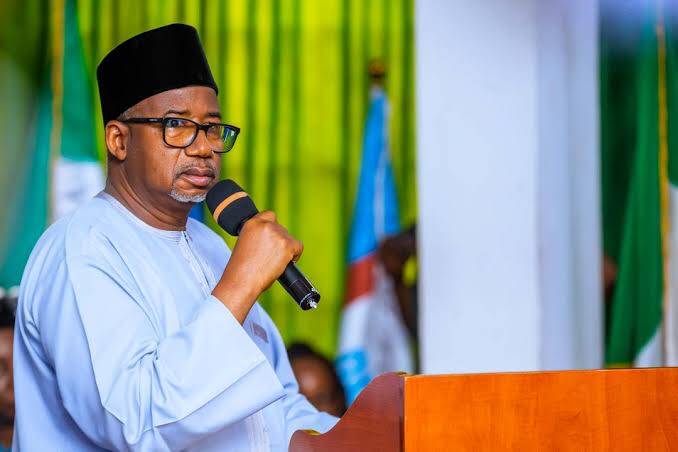
The Chairman of the PDP Governors’ Forum, Bala Mohammed, formally resigned his membership of the Peoples Democratic Party on Saturday, 2 May 2026, and joined the Allied Peoples Movement with his entire political structure from the ward level to the state level, a move that leaves Oyo State Governor Seyi Makinde as the only PDP governor in the federation.
The announcement, made at the Bauchi Government House after a closed‑door stakeholders’ meeting, ends months of speculation triggered by a Supreme Court judgment that nullified the PDP’s parallel conventions and left both warring factions without legal standing. “This decision is not a retreat but a strategic repositioning,” Mohammed told the gathering, which included the APM National Chairman, Yusuf Mamman Dantalle, the Speaker of the Bauchi State House of Assembly, Abubakar Suleiman, his deputy, Auwal Jatau, and members of the State Executive Council.
The governor traced his defection directly to the Supreme Court’s split judgment delivered on 30 April 2026, which voided the Ibadan convention of the Tanimu Turaki‑led faction as well as the parallel Abuja convention of the Nyesom Wike‑backed group. In a statement that captured the depth of the opposition’s despair, Mohammed explained that for eight days he had remained in Abuja, engaging “at the highest level” in a failed attempt to restore stability. “The outcome of the Supreme Court judgment has fundamentally altered our expectations,” he said. “It left both sides without legal standing, with the Board of Trustees temporarily assuming responsibility for the affairs of the party. We have witnessed actions that do not align with the spirit and letter of the judgment, causing definite uncertainty. After careful consideration and wide consultations, it has become clear that our efforts to restore stability have not yielded the desired results.”
Despite his departure, Mohammed was careful not to burn bridges with his former party. He expressed deep appreciation to the PDP, acknowledging the platform it provided for his political rise, including his election as governor in 2019 and his re‑election in 2023. “It has been a platform through which we have found and contributed to the development of our state and our nation,” he said. “We remain grateful for this history and the opportunities provided.” However, he stressed that “as responsible leaders, we cannot allow our people to be left without a viable and effective political platform.” The governor told the gathering that his duty was to provide “clarity, direction, and opportunity for our people and the next generation,” and that the decision to join the APM was guided by “one overriding objective – to secure victory in the state and continue to serve our people with strength and integrity.”
In a symbolic ceremony that many observers found unusual, APM National Chairman Yusuf Dantalle formally received the governor and his loyalists into the party.
Dantalle handed Mohammed a membership card, an APM‑branded cap and the party’s flag and logo – a tuber of cassava. “I welcome you into the party, and I will start by giving you what qualifies you to be a member of the party: your membership card,” Dantalle said, presenting him with the card before handing him the large flag of the APM and the tuber of cassava, all symbolising his official status as a confirmed member of the party ahead of the 2027 election.
Mohammed’s exit from the PDP had long been foreshadowed. In the weeks leading up to the defection, he had openly described the PDP as “headless” and signalled his openness to alternative political platforms. The ruling All Progressives Congress (APC) had approached him with a power‑sharing offer, but the talks collapsed over the formula. Overtures from the African Democratic Congress (ADC), which also actively wooed the governor, did not come to fruition because of legal issues still plaguing that party’s leadership. With those options exhausted, Mohammed chose the APM, a party that had not previously been seen as a major political force but that, in his view, offered a platform “free from legal encumbrances.”
The defection delivers a significant blow to the PDP ahead of the 2027 general elections. Until Saturday, Mohammed and his Oyo State counterpart, Seyi Makinde, were the only PDP governors remaining after a wave of defections that followed the Supreme Court judgment. With Mohammed’s departure, Makinde now stands alone as the party’s sole governor, a stark indicator of the opposition’s fragmentation. In addition to the governor, key party structures in Bauchi State, including the State PDP Chairman, Samaila Burga, the Speaker of the State House of Assembly, Abubakar Suleiman, and his deputy, also defected, confirming Mohammed’s claim that he left “with all our structure from ward, local government to state level.”
At the same gathering, the governor announced his intention to contest the Bauchi South Senatorial District seat in 2027, confirming plans that he had signalled earlier in BBC Hausa Service interviews. To ensure a smooth transition into the APM, he outlined a series of measures: the establishment of a compliance committee to oversee legal and structural alignment with the new party, the commencement of membership registration, engagement with APM leadership at the national level, and the constitution of a team to interface with the Independent National Electoral Commission (INEC). He also disclosed that members of the State Executive Council seeking elective offices had resigned in accordance with the law, and he urged his supporters to remain calm and united, describing the move as a deliberate political repositioning.
The APM national chairman, for his part, welcomed the governor warmly, describing the APM as a “clean, democratic party” built on the motto “Nigeria First.” “Bauchi is unique in its political culture where parties compete fairly,” Dantalle said. “We have no leadership crisis anywhere; we have no disagreements within the leadership, and we have no factions. We are a constitutional party, committed to discipline, transparency, and integrity.” His words stood in sharp contrast to the chaos that has engulfed the PDP for months, and they appeared to resonate with the governor and his supporters.
For the PDP, the defection is a jarring reminder of the deepening crisis that followed the Supreme Court’s judgment. On 30 April, the apex court nullified both the Ibadan and Abuja conventions, effectively stripping both the Turaki‑led executives and the Wike‑backed executive of any claim to legitimacy. The party was left with a caretaker arrangement under its Board of Trustees, but that arrangement has not been enough to stop the bleeding. Within 48 hours of the judgment, Bauchi’s governor had quit, and there were fears that more defections could follow – particularly from other PDP governors and legislators who were already shopping for new platforms.
As he took the APM’s membership card and held up the tuber of cassava, Bala Mohammed framed his decision not as a break with his past but as a necessary step to serve his people. “Our hearts remain with the PDP, but politically we must move forward,” he said. Whether his supporters will follow him as loyally as he hopes, and whether the APM can become a credible vehicle for his 2027 ambitions, will be tested in the months ahead. But for one Saturday in Bauchi, the political map of Nigeria shifted – and a cassava became the symbol of the opposition’s latest gamble.
📩 Stone Reporters News | 🌍 stonereportersnews.com
✉️ info@stonereportersnews.com | 📘 Facebook: Stone Reporters News | 🐦 X (Twitter): @StoneReportNew | 📸 Instagram: @stonereportersnews
Add comment
Comments