

Reported by: Oahimire Omone Precious | Edited by: Oravbiere Osayomore Promise.
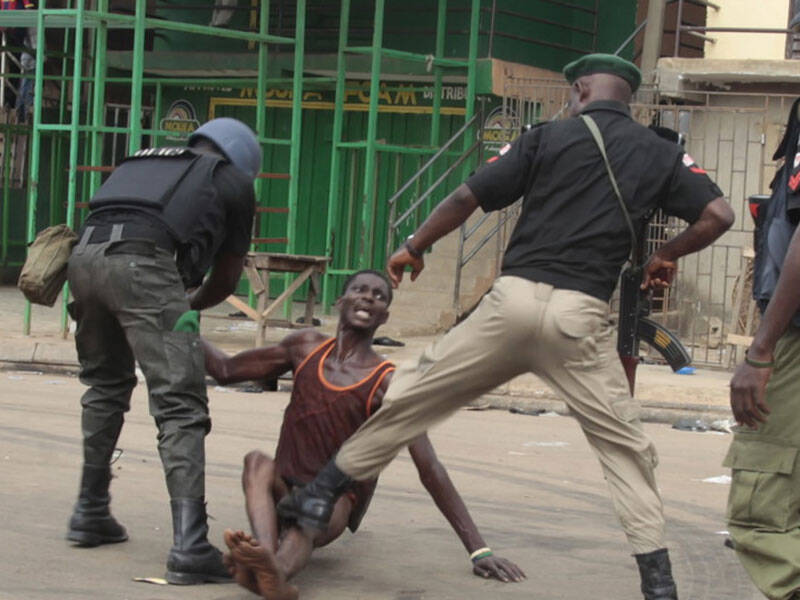
The Nigerian Guild of Editors and the Socio-Economic Rights and Accountability Project have issued a joint demand to President Bola Tinubu, state governors, and the Minister of the Federal Capital Territory, Nyesom Wike, to urgently guarantee press freedom, protect journalists, and end the escalating insecurity and widespread human rights violations across several northern states, including Benue, Borno, Kwara, Plateau, and Sokoto. The call came in a joint statement released on Sunday, May 3, 2026, as the international community marked World Press Freedom Day. The statement followed a conference and interactive session themed “The Role of the Media in Promoting People’s Rights, Accountability, and Access to Justice in the Context of Growing Insecurity in Nigeria,” held on Saturday at the Radisson Blu Hotel in Ikeja, Lagos, jointly organized by SERAP and the NGE.
The groups emphasized that protecting journalists and safeguarding information integrity are central drivers of peace, security, and democratic stability. In their statement, they argued that any credible peace, recovery, or security strategy in Nigeria must integrate support for free, independent, and pluralistic media alongside humanitarian, institutional, and economic responses. They expressed serious concerns about the scale and persistence of killings, abductions, sexual violence, forced displacement, and destruction of property across several parts of northern Nigeria, noting that thousands have reportedly been killed and millions displaced, with rural communities repeatedly targeted and women and children bearing the brunt of the violence. These patterns, they said, reflect systemic failures to prevent foreseeable harm, protect communities, investigate violations, prosecute perpetrators and their sponsors, and ensure access to justice and effective remedies for victims. The groups warned that such grave violations constitute serious breaches of Nigeria’s obligations under the Nigerian Constitution 1999 (as amended), the African Charter on Human and Peoples’ Rights, and the International Covenant on Civil and Political Rights. They noted that the humanitarian consequences remain severe, with communities destroyed, livelihoods lost, and victims left without effective remedies, while the persistence of impunity continues to erode public trust and weaken democratic governance.
SERAP and the NGE stressed that Nigerian authorities at all levels have binding constitutional and international human rights obligations to protect journalists and end insecurity and impunity in the country. They demanded that the Tinubu administration, state governors, and the FCT minister exercise due diligence to prevent, investigate, and remedy human rights violations, including by ensuring justice for victims and accountability for perpetrators and their sponsors. The groups also noted that the UNESCO theme for the 2026 World Press Freedom Day Conference, “Shaping a Future of Peace,” underscores the centrality of a free, independent, and viable media ecosystem to peace, security, and sustainable development. They warned that the erosion of independent journalism and civic information ecosystems directly contributes to governance breakdown. When journalists are targeted through intimidation, repression, or impunity for attacks, corruption thrives, accountability declines, and misinformation spreads. In such environments, information violence often precedes physical violence, deepening insecurity and undermining public trust in state institutions. Protecting journalists in Nigeria is therefore not a peripheral issue but a core requirement for addressing insecurity and advancing democratic governance.
The groups further called on the National Assembly to exercise its oversight powers by convening a public hearing on insecurity and attacks on journalists. They also urged the international community to intensify pressure on Nigerian authorities to take concrete steps to end insecurity and impunity. Speaking at the event, human rights lawyer Femi Falana, a Senior Advocate of Nigeria, warned that entire communities are being destroyed in several parts of the north while perpetrators operate with little or no consequences. Impunity, he said, is not just a failure of policy but an invitation to more violence. Falana also urged journalists to use their platforms to demand justice for victims of extrajudicial killings and other abuses, noting that several high-profile cases had been abandoned without accountability. He listed cases deserving reopening, including the alleged murder of 13-year-old Sylvester Oromoni, a student of Dowen College, Lagos, and the Offa bank robbery incident of 2018 in Kwara. He also included the murder of Kudirat Abiola, the wife of Chief MKO Abiola, and the murder of six traders at Owode Oninrin, Lagos State, last August.
Richard Akinnola, a legal scholar and Director of the Media Law Centre, also addressed the gathering, raising alarm over the Nigerian government’s refusal to enforce at least 44 judgments delivered by the ECOWAS Court of Justice. Highlighting the cases of tortured journalist Agba Jalingo and the #EndSARS victims, Akinnola noted that Nigeria’s non-compliance undermines the rule of law and encourages the repetition of serious crimes. He called for a coalition of civil society bodies to confront the Attorney-General of the Federation, insisting that the government must move beyond systemic failure and provide effective remedies for victims of state-sponsored violence and arbitrary detention. He pointed to the 2021 case of journalist Agba Jalingo, where the ECOWAS Court determined that Nigeria violated the African Charter on Human and Peoples’ Rights by subjecting the publisher to arbitrary detention for 34 days and acts of torture. Despite the court ordering a compensation payment of 30 million naira, the judgment remains unenforced. Akinnola also slammed the decision to shut the media out of the ongoing trial of former Kaduna State Governor, Nasir El-Rufai, labeling it patently wrong and unconstitutional.
The call from the NGE and SERAP is not new. In early April 2026, the same groups had condemned a reported threat by FCT Minister Nyesom Wike against Channels Television presenter Seun Okinbaloye. Wike, during a media chat in Abuja, had expressed anger over comments made by Okinbaloye on Politics Today, saying he was surprised and would have shot him if it were possible to break through the television screen. The groups warned that press freedom in Nigeria is in a downward spiral, marked by intimidation, harassment, threats, and attacks against journalists. They noted that at least 56 journalists were assaulted or arrested while covering demonstrations in August 2024 alone, and that Nigeria dropped 10 places to 122nd position in the 2025 World Press Freedom Index, according to Reporters Without Borders. The persistent failure of Nigerian authorities to investigate and prosecute these attacks, they said, has emboldened perpetrators and fostered a culture of impunity.
As World Press Freedom Day 2026 draws to a close, the message from Nigeria’s editors and civil society is clear: without a free press, security cannot hold, accountability will fail, and the cycle of violence will continue.
📩 Stone Reporters News | 🌍 stonereportersnews.com
✉️ info@stonereportersnews.com | 📘 Facebook: Stone Reporters News | 🐦 X (Twitter): @StoneReportNew | 📸 Instagram: @stonereportersnewsv
Add comment
Comments