

Published by Oravbiere Osayomore Promise.
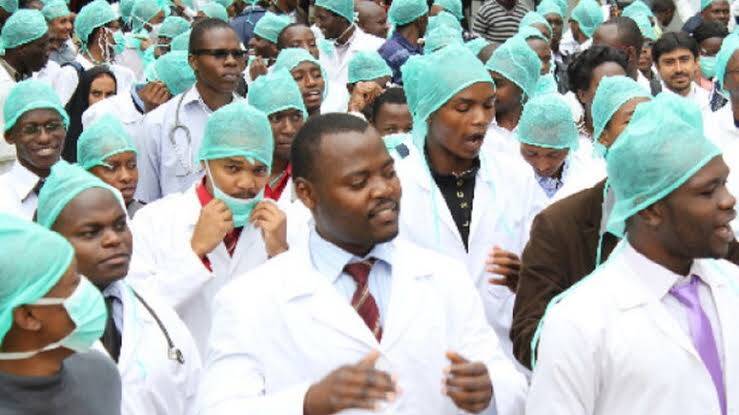
The United States has quietly reversed a controversial policy that had frozen visa processing for medical professionals from Nigeria and dozens of other countries, a move that ends months of uncertainty for foreign-trained doctors and offers relief to American hospitals grappling with a severe staffing crisis. The decision, which was first reported by The New York Times on Sunday and confirmed by the Department of Homeland Security, exempts physicians from the processing suspension that had been tied to a broader travel ban initiated in January. Under the original directive, U.S. Citizenship and Immigration Services had halted decisions on visa extensions, work permits and green cards for citizens of approximately 39 countries, leaving many foreign-trained doctors unable to continue their practices or complete their training. The policy sparked widespread alarm across the American healthcare system, where foreign-trained physicians account for about a quarter of the medical workforce, with many serving in primary care roles in rural and underserved communities.
The walk back was implemented without fanfare. U.S. Citizenship and Immigration Services updated its website late last week to indicate that physicians are no longer subject to the processing hold. When pressed for confirmation, the Department of Homeland Security issued a brief statement that left little room for ambiguity. “Applications associated with medical physicians will continue processing,” the agency said, effectively signalling that visa and work permit adjudications for doctors would immediately resume. For the Nigerian medical community, the news was met with widespread relief. According to a 2024 global health workforce database, Nigerians represent the sixth largest group of foreign doctors in the United States on the J-1 visa, a category designed for physicians who complete graduate medical training in underserved areas before returning to their home countries. Many of those doctors had been placed on administrative leave or faced the real risk of deportation and job loss due to the processing delays.
The reversal comes at a critical moment for the United States healthcare system. The Association of American Medical Colleges has estimated a deficit of about 65,000 physicians, a gap projected to widen significantly over the next decade as the population ages and older doctors retire. More than 60 percent of foreign-trained doctors work in primary care fields such as family medicine, internal medicine and pediatrics, areas that are often avoided by U.S.-trained physicians due to demanding workloads and comparatively lower pay. The freeze had threatened to worsen an already dire situation, particularly in rural hospitals and community health centres that depend heavily on international medical graduates. Dr. Rebecca Andrews, chair of the Board of Regents for the American College of Physicians, welcomed the administration’s decision. “I am glad that the administration took measures to ensure that we can keep our dedicated international physicians,” she told The New York Post. “We need to recruit the most skilled doctors no matter where they are from.”
The initial policy had drawn intense backlash from the medical community. On April 8, more than 20 medical associations, including the American academies of family physicians, neurology and pediatrics, sent a joint letter to the secretaries of state and homeland security expressing “urgent concern” about barriers preventing “qualified, vetted physicians” from entering and remaining in the United States. The groups called for a national-interest exemption and the expedited processing of affected cases. The pressure appears to have forced the administration’s hand, though officials have not framed the decision as a retreat. Some observers, however, have noted that the reversal was carried out with no formal announcement or press release, suggesting a desire to avoid drawing attention to a policy change that may be unpopular with the administration’s base.
The personal cost of the original freeze was already evident. One of those impacted was Ezequiel Veliz, a Venezuelan family doctor who lost legal status after delays in processing his new visa. He was detained by federal agents on April 6 at a checkpoint in Texas and held for 10 days before being released. His case became a symbol of the human toll of the administration’s immigration policies. While the exemption for physicians will prevent similar cases in the future, uncertainty remains for many doctors already caught in the system. Sebastian Arruarana, founder of Project IMG, which supports thousands of international medical graduates in the United States, noted that affected physicians have not yet been formally notified about any changes in their visa process. He warned that around 1,000 doctors completing residencies and fellowships in underserved areas could still face disruptions, alongside hundreds of others scheduled to begin training programs soon.
Legal experts and advocates have nonetheless welcomed the exemption as a necessary correction. Curtis Morrison, a lawyer involved in multiple lawsuits over delayed immigration processing, described the move as “a great development for physicians and health care in the U.S.” The policy shift follows a series of immigration restrictions introduced under President Trump, including a June travel ban covering 19 countries and a broader expansion to 39 nations in January. For Nigerian doctors who have built their lives and careers in the United States, the quiet update on the USCIS website brings a measure of certainty that many had feared might never come. For hospitals struggling to keep their wards staffed, it represents a lifeline. And for the patients who depend on them, it means that the doctors they trust will still be there when they are needed most.
The Nigerian government has not yet issued an official response to the development, but observers expect the news to be welcomed by a country that has long seen its medical professionals seek opportunities abroad due to poor working conditions and inadequate compensation at home. For now, thousands of Nigerian doctors across the United States will be watching their email inboxes closely, hoping that the policy shift will translate into tangible relief before the next residency cycle begins.
📩 Stone Reporters News | 🌍 stonereportersnews.com
✉️ info@stonereportersnews.com | 📘 Facebook: Stone Reporters News | 🐦 X (Twitter): @StoneReportNew | 📸 Instagram: @stonereportersnews
Add comment
Comments