

Published by Oravbiere Osayomore Promise.
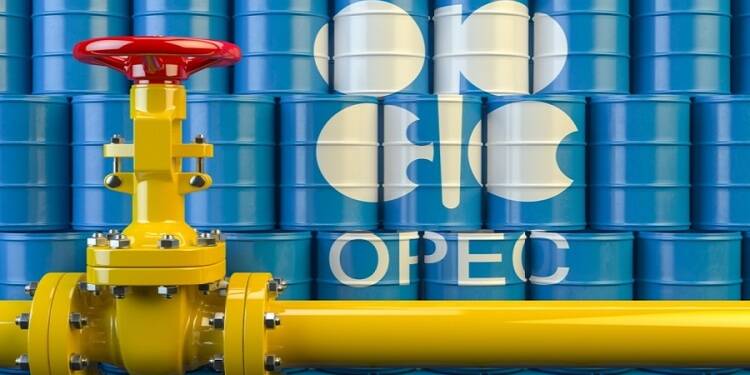
The Organisation of the Petroleum Exporting Countries and its allies has agreed to increase oil production by 188,000 barrels per day for June 2026, marking the third consecutive monthly output hike since the outbreak of the US-Israeli war on Iran triggered the closure of the Strait of Hormuz. The decision, reached during a virtual meeting of seven core OPEC+ members on Sunday, May 3, was described by analysts as a largely symbolic gesture aimed at projecting market stability and policy continuity rather than delivering immediate physical relief to a global economy already buckling under four-year-high crude prices. The seven participating countries—Saudi Arabia, Russia, Iraq, Kuwait, Algeria, Kazakhstan and Oman—said the adjustment forms part of a gradual rollback of the voluntary production cuts first announced in April 2023. In a statement issued after the meeting, the group reaffirmed its collective commitment to support oil market stability while adopting a cautious and flexible approach that could see future output increases paused, reversed or accelerated depending on evolving market conditions. The decision came just days after the United Arab Emirates, one of the world's top producers and a longstanding pillar of OPEC's surplus capacity, formally withdrew from both OPEC and OPEC+ on May 1, marking the most significant structural shake-up of the oil cartel in decades.
On paper, the June increase represents a continuation of the group's gradual supply restoration strategy. The 188,000 barrel‑per‑day hike closely mirrors the May adjustment of 206,000 bpd, with the only difference being the removal of the UAE's share following its departure. Under the new quotas, Saudi Arabia's June production target rises to 10.291 million bpd, far above its actual March production of just 7.76 million bpd. Russia's quota increases to 9.762 million bpd, Iraq's target climbs to 4.352 million bpd, Kuwait's reaches 2.628 million bpd, Kazakhstan's stands at 1.599 million bpd, Algeria's hits 989,000 bpd, and Oman's target is set at 826,000 bpd. But these numbers, according to multiple OPEC+ sources and market analysts, tell only a fraction of the story. The brutal reality is that the bulk of these extra barrels cannot reach international markets. Since the war began on February 28, the Strait of Hormuz, a vital chokepoint through which nearly one-fifth of global oil supply normally passes, has been effectively closed. The disruption has throttled exports from Saudi Arabia, Iraq, Kuwait, and the UAE, four of the alliance's most capable producers, leaving their increased quotas as nothing more than accounting entries. According to OPEC's own data, total crude output from all OPEC+ members averaged just 35.06 million bpd in March, a staggering drop of 7.70 million bpd from February, with Iraq and Saudi Arabia recording the steepest declines due to constrained exports.
Rystad Energy analyst Jorge Leon, a former OPEC official, captured the essence of the decision when he described the group as sending a two‑layer message to the market: continuity despite the UAE's exit, and control despite limited physical impact. "While output is increasing on paper, the real impact on physical supply remains very limited given the Strait of Hormuz constraints," Leon told Reuters. "This is less about adding barrels and more about signaling that OPEC+ still calls the shots." The messaging is particularly critical following the UAE's unexpected departure, which had raised questions about the cohesion and relevance of the broader alliance. By proceeding with the planned hike and making no mention of the UAE in its official statement, OPEC+ is attempting to project an image of business‑as‑usual, even as its two most consequential members, Saudi Arabia and Russia, now face the task of coordinating global oil policy without the flexibility that Emirati spare capacity once provided. The deep rift was further highlighted by reports that the UAE's exit was prompted by long‑standing frustration with production quotas that Abu Dhabi considered outdated and restrictive.
The supply disruption has already inflicted severe damage on global energy markets. Crude prices surged past $125 per barrel in recent weeks, a four‑year high that has ignited fears of a repeat of the 2008 oil shock. Analysts are now warning of widespread jet fuel shortages within one to two months, a development that would severely disrupt air travel and freight logistics worldwide. Even if the Strait of Hormuz were to reopen tomorrow, oil executives and global traders caution that it would take several weeks, if not months, for shipping flows to normalize, as tankers remain stranded and insurance terms are reassessed for a conflict zone. The impact has rippled across continents. In Europe, manufacturers are already reducing output as energy bills soar, while in Asia, governments are scrambling to secure alternative supply routes and tapping emergency reserves. The Biden administration, along with European allies, has pressed Saudi Arabia to open its taps, but the kingdom remains constrained by the physical realities of the Hormuz closure, which has made even its own exports inaccessible.
For Nigeria, Africa's largest oil producer and a member of OPEC, the June increase carries a particular sting. The country was conspicuously excluded from the list of seven nations raising their production quotas, despite recent claims by the Nigerian Upstream Petroleum Regulatory Commission that the nation's crude output had reached 1.84 million bpd. The exclusion underscores Nigeria's longstanding struggle to meet its OPEC production targets, a challenge rooted in chronic oil theft, pipeline vandalism, underinvestment, and operational inefficiencies that have left the country unable to scale up output even when global prices provide every incentive to do so. As other OPEC+ members move to capture market share with higher quotas, Nigeria risks being left behind, watching from the sidelines as its peers lock in revenues that could have helped stabilize its fragile economy.
The seven OPEC+ members are scheduled to meet again on June 7 to reassess market conditions and adjust policy accordingly. In the meantime, market participants are closely watching diplomatic efforts to end the conflict. On Monday, oil prices fell modestly after US President Donald Trump announced that the United States would begin efforts to free ships stranded in the strait, but the pullback was limited as traders remain skeptical that a lasting resolution is imminent. Brent crude futures traded around $107.50 per barrel on Monday, down from recent highs but still far above the $70‑$80 range that most major economies consider manageable. As long as the Strait of Hormuz remains blocked, OPEC+'s paper increases will do little to cool inflation, lower pump prices, or ease the growing anxiety in boardrooms and living rooms across the globe.
📩 Stone Reporters News | 🌍 stonereportersnews.com
✉️ info@stonereportersnews.com | 📘 Facebook: Stone Reporters News | 🐦 X (Twitter): @StoneReportNew | 📸 Instagram: @stonereportersnews
Add comment
Comments