

Reported by: Oahimire Omone Precious | Edited by: Oravbiere Osayomore Promise.
The Komati River meanders through the lowveld of South Africa, a world of reeds and rapids where crocodiles outnumber people and the border with Mozambique is little more than a line on a map. For most visitors, it is a place of beauty. For Gabriel Batista, it became a watery grave. On the afternoon of Monday April 27 2026, the 59-year-old hotelier and father of four attempted to cross the flooded low-level bridge at Komatipoort, a plunge pool town east of the Kruger National Park. He was at the wheel of his Ford Ranger, heading to his establishment the Border Country Inn to open for the evening. The bridge was under fast-moving chocolate water, brown with runoff from heavy storms upstream. Batista drove anyway. His truck was flung off the concrete apron, slammed against rocks, and tipped. By the time first responders reached the scene, the vehicle was found lodged against the downstream railing. The driver’s side door was open. The water was empty.
What followed was the most extraordinary police operation in recent South African memory: a week-long aerial hunt for a single crocodile, ending with a police captain being lowered by rope onto the snout of a 4.5‑metre, 500‑kilogram Nile crocodile, which was then airlifted, dissected, and found to contain human arms, a rib cage, and a gold ring that once belonged to the missing businessman. It is a story of modern policing colliding with ancient predation, of drones and helicopters arrayed against the oldest apex predator on the continent.
The search began with a drone. Mpumalanga police spokesperson Colonel Mavela Masondo later told SABC that after Batista's vehicle was recovered on April 28, the search shifted immediatly downstream. “We deployed everything, helicopters, ground teams, drones,” Masondo said. Captain Johan Potgieter, commander of the police dive unit, took charge of the aerial surveillance. For four days, drones buzzed up and down the Komati River at dawn and dusk. The helicopter made passes at 300 feet, looking for anything unusual. On the third day, an EMS spotter called Potgieter with a report: a crocodile basking on a small island near the river’s northern bend had a massively swollen belly and was not moving even as the chopper passed low overhead. “Besides having a massively full tummy, he didn’t move around or try to slip into the river despite the noise of the drones and the chopper,” Potgieter later told News24. “With our training, we were basically 100 percent sure it had eaten the man we were looking for.”
The decision to kill the animal was taken on the horns of a legal and ethical dilemma. Nile crocodiles are protected in South Africa, but the South African National Parks (SANParks) granted permission for a euthanasia, citing the need to recover human remains. On May 2, a police marksman aboard the helicopter shot the reptile with a single round. The animal slumped instantly, its snout resting on the muddy bank. Then came the hard part: retrieval. Potgieter volunteered. “The sharp end of a crocodile is not the best place to approach it,” he later told BBC. “There were so many things that could go wrong.” Harnessed to a cable lowered from a SANParks helicopter, he was dropped directly onto the dead crocodile’s snout. “I was kind of hoping it really was properly dead,” he told the New York Post. As he cinched a harness around the reptile’s chest, he noticed two other crocodiles watching from the water, no more than 15 meters away.
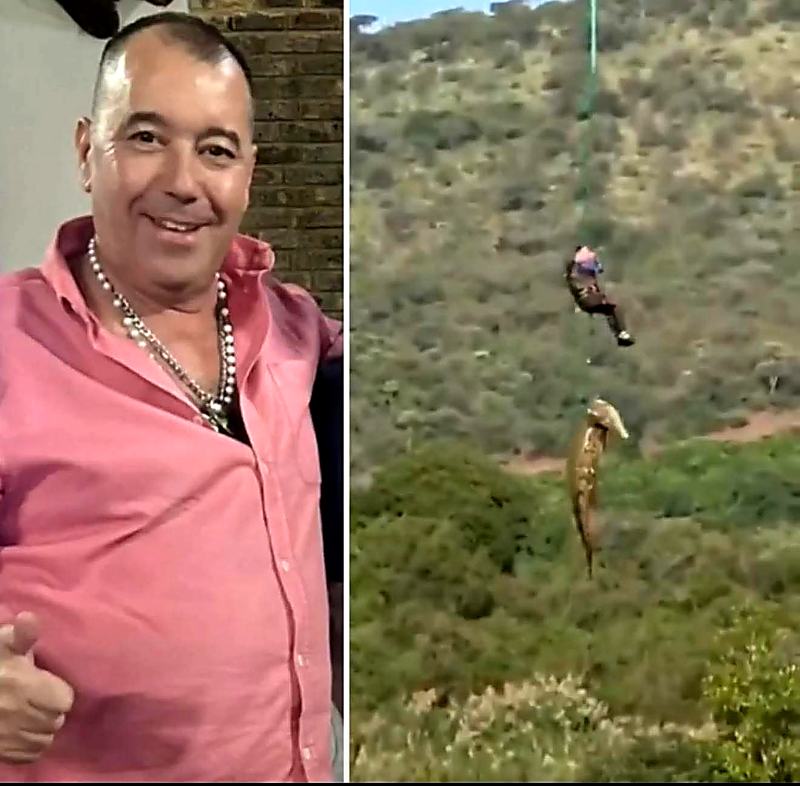
The helicopter lifted. The 500‑kilogram animal spun slowly on the line, its tail trailing through the treetops. Video of the operation, released by the South African Police Service, shows Potgieter gripping the harness, legs wrapped around the dead predator’s back as they ascended over the river canopy. The carcass was flown to a clearing in the Kruger National Park, where a multi-agency team including pathologists, police search and rescue, and forensic specialists stood ready.
What they found when the crocodile was sliced open was both definitive and haunting. Inside the stomach were two severed arms with hands still attached, half a rib cage, and pieces of chest flesh. On one of the fingers, a gold ring. Batista’s wife confirmed from photographs that it matched the wedding band her husband had worn for 28 years. “There was enough inside the stomach to lead us to believe the crocodile ate the missing man,” Potgieter told News24. “But we will have to wait until the DNA results come back to confirm it.”
The team also recovered six different pairs of shoes from inside the same crocodile’s intestines. They included Crocs, flip‑flops, and sandals. None belonged to Batista. Potgieter told the African News Agency that the shoes could indicate the animal had killed other people, but not necessarily. “A crocodile will eat or swallow anything,” he said. “Plastic items like shoes do not digest. They remain inside the stomach.” Investigators are now examining missing persons' records in the Komatipoort area stretching back five years, trying to determine if the footwear belonged to other victims swept off the same low‑water bridge during past floods.
Gabriel Batista was not a typical bush lodge operator. He commuted weekly from his home in Johannesburg, leaving his wife and children to run the Border Country Inn, a sprawling sports bar and guesthouse popular with hunters and overlanders. Staff described him as a “lovely guy” and “a family man.” A spokesman told the NZ Herald: “He spent a lot of time up here and customers loved him. He was on his way to work on Monday when he was just swept away. The family do not want to say anything until the DNA results have been done. It is just terrible.” Batista’s widow has been at the police dive unit’s field headquarters every day since the disappearance, waiting for word.
Where the multiple pairs of shoes found inside the crocodile came from remains an open question. The reptile was large, but not exceptionally so for a Nile crocodile. The species is Africa’s largest freshwater predator, with some individuals growing to over six metres and weighing 700 kilograms. They are responsible for several hundred documented human deaths each year across sub‑Saharan Africa, though the actual number is believed to be higher due to underreporting in remote areas. “These crocodiles are very active in this area and will eat anything that passes through,” Potgieter said.
For the SAPS, the operation has become a case study in inter‑agency coordination and personal courage. Acting National Commissioner Lieutenant General Puleng Dimpane praised Potgieter’s actions as “beyond the call of duty” and “an example of the highest standards of service.” A formal commendation is under consideration. Potgieter, for his part, was characteristically laconic. “I don’t want to go into too much detail,” he said told reporters. “But it was tense.”
The mystery of the six shoes may never be solved. The crocodile’s other prey remain silent, their stories locked in plastic and bone. But for one family, the Komati River surrendered what it owed. A ring, a ridgeback, and the remains of a father, pulled from the belly of a reptile older than the nation that hunted it. DNA confirmation is expected within the next week. The crocodile’s carcass will be preserved for further forensic study before disposal.
📩 Stone Reporters News | 🌍 stonereportersnews.com
✉️ info@stonereportersnews.com | 📘 Facebook: Stone Reporters News | 🐦 X (Twitter): @StoneReportNew | 📸 Instagram: @stonereportersnews
Add comment
Comments