

Reported by: Oahimire Omone Precious | Edited by: Oravbiere Osayomore Promise.
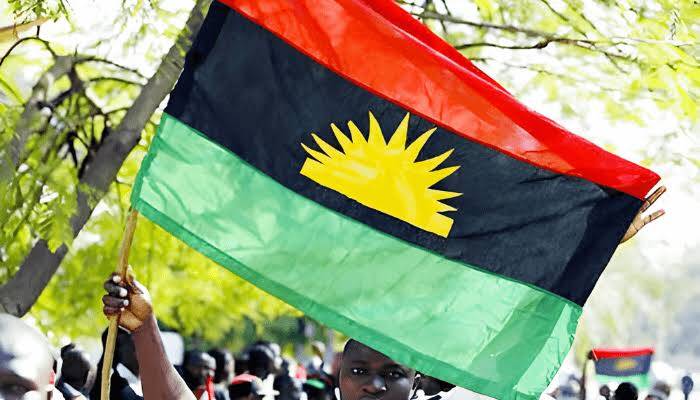
The Indigenous People of Biafra (IPOB), under the leadership of Mazi Nnamdi Kanu, has issued a directive declaring a total lockdown across the entire Biafra territory on Saturday, May 30, 2026, to honour what the group calls Biafra Fallen Heroes and Heroines Remembrance Day. In a statement released by the organisation’s Directorate of States (DOS) on Tuesday, May 5, IPOB ordered a complete halt to all movement, commercial activities, and social gatherings from midnight on Friday, May 29, to midnight on Saturday, May 30. The group said the sacred day is set aside to remember millions of ethnic Igbo who were killed during the Nigerian Civil War (1967-1970) and what it described as decades of continued marginalisation and oppression by the Nigerian state. “Their blood continues to cry out for justice and freedom,” the statement read.
The lockdown directive is sweeping and unambiguous. According to IPOB, there shall be no movement of any kind across Biafra land for the entire 24-hour period. All markets, shops, banks, offices, schools, motor parks, airports, and business premises must remain completely closed. Public and private transportation, including keke, okada, buses, cars, and tricycles, is strictly prohibited. All forms of commercial activities, farming, and social gatherings are suspended. Only essential medical emergencies will be allowed, and such movements must be coordinated. The group declared that the lockdown is not optional but a collective duty and a mark of respect to fallen heroes and heroines. It called on Biafran youths, elders, traditional rulers, town unions, market women, traders associations, religious leaders, transport companies, and students to ensure compliance peacefully and orderly.
The May 30 date is symbolically charged. It marks the anniversary of the declaration of the Republic of Biafra by late Colonel Odumegwu Ojukwu on May 30, 1967, an act that triggered a brutal 30-month civil war that claimed an estimated one to three million lives, mostly Igbo civilians who died from starvation and military attacks. Since the war ended in January 1970, secessionist sentiment has persisted in parts of the South-East, but it gained renewed intensity with the emergence of IPOB under Nnamdi Kanu in the 2010s. The Nigerian government designates IPOB as a terrorist organisation, a label the group rejects. Kanu has been in detention since 2021, facing treason charges, although his trial has been repeatedly adjourned. Despite his incarceration, IPOB continues to issue directives and enforce periodic sit-at-home orders across the South-East, often through the threat of violence against non-compliant residents.
Previous lockdowns ordered by IPOB have been met with mixed compliance. In some areas, markets and schools have shut down entirely out of fear of attacks by IPOB’s militant wing, the Eastern Security Network (ESN). In other cases, residents have ignored the orders, leading to clashes and reported incidents of arson, shootings, and the assassination of those accused of defying the group. Nigerian security forces have repeatedly raided IPOB and ESN hideouts, arresting dozens of suspects and recovering arms and ammunition. The federal government has also imposed travel restrictions and curfews in parts of the South-East to counter the group’s influence. As of this report, no official response has been issued by the Nigerian military or police to IPOB’s latest lockdown declaration, but past practice suggests that security agencies will deploy heavily to prevent the order from being enforced through violence or intimidation.
The IPOB statement was copied to all Biafran media outlets, radio stations, social media platforms, governors, political leaders, and notably, to the Nigerian President. The inclusion of the presidency suggests that the group is not merely speaking to its followers but is also deliberately signalling its defiance to the federal government. The statement ends with the declaration, “No amount of intimidation or blackmail will stop us!” and the slogan “Biafra will surely come!” It is unclear whether the group intends to enforce the lockdown through physical patrols by its members or whether it is relying on voluntary compliance. In recent years, IPOB has been operating under a reduced public profile due to sustained security crackdowns, but its online influence remains strong, particularly among the diaspora population.
The announcement has already generated significant anxiety among business owners and residents across the South-East. Many traders in Onitsha, Aba, Enugu, and Owerri told Stone Reporters News that they would likely comply out of fear for their safety, even if the lockdown is not legally binding. “We have no choice. If we open our shops and IPOB people come, they will burn everything. The government cannot protect us,” said a textile merchant in Onitsha who spoke on condition of anonymity. Others expressed frustration, arguing that the repeated shutdowns are destroying the already fragile economy of the region. “How can we recover when every month we are forced to stay indoors? Our customers go elsewhere. Our children miss school. This is not freedom; this is captivity,” said a teacher in Owerri.
The Nigerian government has consistently urged citizens to ignore IPOB’s sit-at-home orders, but the fear of attack often outweighs official assurances. In response to previous lockdowns, the military has conducted show-of-force patrols, but those have sometimes resulted in fatal confrontations. Civil society groups in the South-East have called for dialogue between the federal government and IPOB leaders to end the cycle of violence and economic disruption. However, the government has repeatedly ruled out negotiations with what it calls a terrorist group, insisting that Kanu must face trial for his alleged crimes. Kanu’s legal team has maintained that his detention is unlawful and has called for his release on bail, but the courts have yet to grant that request.
As May 30 approaches, the situation in the South-East is likely to become increasingly tense. The IPOB directive applies to “the entire Biafra Land,” which the group defines as the five South-Eastern states of Abia, Anambra, Ebonyi, Enugu, and Imo, as well as parts of Rivers, Delta, and Benue states where the group claims historical Biafran territory. The Nigerian government views this as an illegal claim. Whether the lockdown will be total or merely symbolic, whether security forces will intervene, and whether there will be violence remain open questions. For millions of residents, however, the immediate concern is survival: the choice between staying home to honour fallen heroes or venturing out to feed their families, with the constant fear that one wrong decision could be fatal.
📩 Stone Reporters News | 🌍 stonereportersnews.com
✉️ info@stonereportersnews.com | 📘 Facebook: Stone Reporters News | 🐦 X (Twitter): @StoneReportNew | 📸 Instagram: @stonereportersnews
Add comment
Comments