

Reported by: Oahimire Omone Precious | Edited by: Oravbiere Osayomore Promise.
A methane gas explosion tore through a coal mine in central Colombia on Monday, killing nine workers and leaving six others injured before rescue teams could extract them from a subterranean chamber 600 metres below the earth. The blast, which occurred at approximately 2:30 p.m. local time at Peñas de Boquerón in the municipality of Sutatausa, Cundinamarca department, triggered an immediate emergency response that lasted well into the night.
The Colombian National Mining Agency confirmed the final death toll on Tuesday morning after hours of painstaking recovery operations. The six survivors, all miners who had been trapped alongside their deceased colleagues, were rushed to the Regional Hospital of Ubaté, a medical facility roughly 20 kilometres from the disaster zone. Medical staff described their conditions as stable but requiring close observation for respiratory injuries caused by the gas explosion.
Governor of Cundinamarca, Jorge Emilio Rey, who flew over the accident site in a helicopter shortly after the explosion, praised the swift activation of the Unified Command Post and the deployment of the National Mining Agency´s mine rescue protocols. “Immediately after the explosion, our priority was gas monitoring. We needed to determine if it was safe for rescue teams to enter the mine shaft. The risk of a secondary explosion was very real,” Rey told reporters from the disaster coordination centre.
Those trapped in the mine after the blast were part of a 15‑man crew working the afternoon shift when the gas buildup ignited. Three managed to escape the initial blast on their own. One of them, identified only as a 33‑year‑old lead driller, was extracted by emergency responders after he located an emergency air pocket and guided rescuers to his position using tapping signals on the rock face.
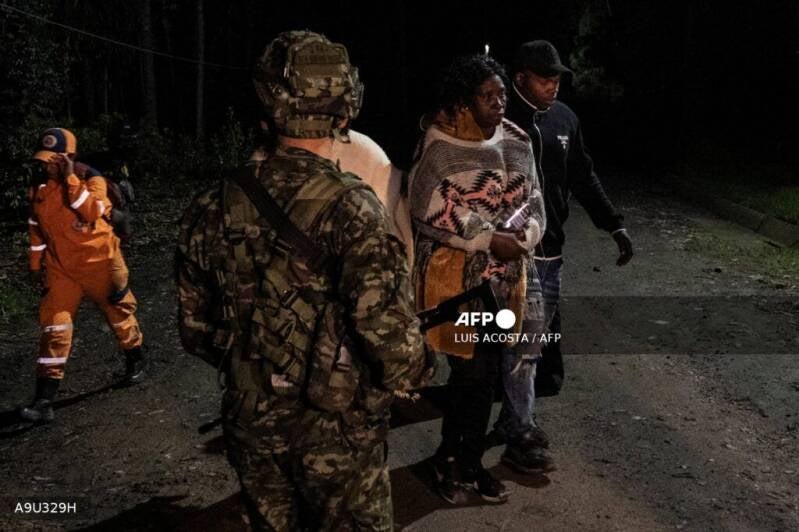
Families of the missing miners gathered at the Ciscuda mine mouth throughout the night, clutching photographs and praying. “My brother called me from inside. He said the air was bad, that he couldn't breathe. Then the line went dead,” a woman who identified herself as a sister of one of the trapped workers told local media. “I have been here every minute since.”
This is not Sutatausa’s first mining disaster. In 2023, an explosion in interconnected mines in the same municipality killed 21 workers in one of Colombia’s deadliest industrial accidents. The 2026 blast appears to have followed a similar pattern: a buildup of methane gas in poorly ventilated underground tunnels leading to a catastrophic ignition. Local miners who spoke to reporters on condition of anonymity said that the mines in the region are often small-scale operations that struggle to finance adequate gas monitoring equipment.
The National Mining Agency disclosed on Tuesday that it had issued safety recommendations for the La Ciscuda mine following a technical visit on April 9. The agency identified excessive coal dust accumulation and inadequate sealing of abandoned tunnels as primary risks. The recommendations included upgrading inertisation work, tightening ventilation protocols, and installing additional gas barriers. It remains unclear whether these measures were fully implemented before Monday’s deadly event. The operator of the mine, Carbonera Los Pinos S.A.S., could not be reached for comment despite multiple attempts.
Colombian President Gustavo Petro, who was in the capital overseeing a security cabinet meeting, was briefed on the accident and dispatched the Minister of Mines, Andrés Camacho, to the scene. “Every workplace death is not only a failure of companies, but also of society and the government,” Petro wrote in a social media post that drew thousands of responses demanding stricter mining regulations.
Units of the Colombian Red Cross have deployed psychosocial support teams to Sutatausa to assist families of the deceased and survivors suffering from trauma. Governor Rey announced that the deceased workers would receive government assistance for funeral expenses and that injured survivors would have their medical bills fully covered.
The tragedy renews focus on Colombia’s underground coal mining safety record, particularly in Cundinamarca’s Sutatausa and Cucunubá regions where the mountainous terrain and methane‑prone coal seams create high‑risk conditions. Six workers died in February after an explosion in an illegal coal mine in Guachetá, another Cundinamarca municipality less than 30 kilometres from Sutatausa. In 2017, a similar accident in Cucunubá claimed 13 lives.
The National Mining Agency has pledged to conduct an intensive audit of all active coal mines in the region, but mining unions say that promises of stricter oversight have not resulted in meaningful change. “We are burying workers every few years in the same place. How many more warnings do the authorities need?” asked Julio Mariño, a spokesperson for the National Federation of Mining Workers.
As the rescue operation wound down and heavy machinery was removed from the La Ciscuda mine entrance, workers and residents of Sutatausa held a silent vigil. For the nine families who will never see their loved ones again, the industrial tragedy is a deeply personal one.
The six survivors remain under medical observation at the Regional Hospital of Ubaté. Their identities have not been released as doctors continue to assess the extent of their injuries. An official investigation into the explosion has been opened by the Attorney General’s Office.
📩 Stone Reporters News | 🌍 stonereportersnews.com
✉️ info@stonereportersnews.com | 📘 Facebook: Stone Reporters News | 🐦 X (Twitter): @StoneReportNew | 📸 Instagram: @stonereportersnews
Add comment
Comments