

Reported by: Oahimire Omone Precious | Edited by: Oravbiere Osayomore Promise.
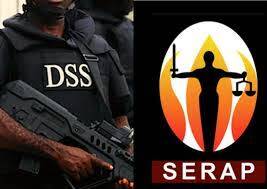
The Federal Capital Territory High Court in Abuja has ordered the Socio-Economic Rights and Accountability Project (SERAP) to pay N100 million in damages to two operatives of the Department of State Services (DSS) for defamation, in a landmark judgment that has sent shockwaves through Nigeria's civil society community. Justice Halilu Yusuf, who delivered the ruling on Tuesday, May 5, 2026, also directed SERAP to publish a public apology to the affected DSS operatives in two national newspapers and broadcast it on two television stations, as well as on its X handle and website. The court further awarded N1 million as litigation costs and imposed a ten percent annual interest on the N100 million damages from the date of judgment until the sum is fully paid. The suit, filed by DSS operatives Sarah John and Gabriel Ogundele, arose from a statement SERAP made on September 9, 2024, in which the anti-corruption organization accused unnamed DSS officials of unlawfully invading its Abuja office to harass and intimidate its staff following the organization’s call on President Bola Tinubu to investigate corruption allegations in the Nigerian National Petroleum Company Limited (NNPCL) and reverse fuel price hikes.
Justice Yusuf held that SERAP did not deny publishing the offending statement, which the court found to be defamatory. “The contention that the 1st Claimant signed her Witness Statement on Oath in the office of her lawyer is of no moment,” the judge ruled, while noting that the claimants had established that they had a dispute with SERAP. He stated that defamation remains a distinct legal wrong that exposes a person to hatred, ridicule, or contempt, covering both libel (written) and slander (spoken). The judge noted that although SERAP did not expressly mention the names of Sarah John and Gabriel Ogundele, the physical descriptions contained in the publication clearly identified them. “I have taken judicial notice of their features, and all suit the claimants in this case,” Justice Halilu stated. He ruled that the publication conveyed the impression that the DSS officers unlawfully occupied SERAP’s office and intimidated its staff, thereby injuring their professional reputation. “Allegations of intimidation and harassment should not be attributed to DSS officers as in this case,” the judge held, adding that the publication was capable of damaging the officers both professionally and psychologically. The claimants had originally sought N5.5 billion in damages, but the court awarded N100 million.
The DSS operatives had been suspended by their agency and made to face a disciplinary panel following SERAP’s allegations. However, the DSS later stated that the panel it set up to investigate the matter exonerated the operatives. Shortly thereafter, the officers sued SERAP for defamation. The court dismissed two preliminary objections raised by SERAP, which had argued that the judge should recuse himself and that the claimants lacked the locus standi to bring the suit. In its judgment, the court held that the claimants were able to prove that the publication injured their reputation in their professional capacity. “From the context of the documents before the court, it is settled there was a publication,” the judge said while referring to exhibits tendered on March 21, 2025. The judge further noted that the defendants failed to challenge the oath evidence presented by the claimants.
SERAP has reacted with fury to the judgment, describing it as “a travesty” and “a dangerous precedent” for civic space in Nigeria. In a statement, the organization said the ruling reflects a troubling pattern under the government of President Bola Ahmed Tinubu of using defamation laws to punish legitimate criticism and suppress accountability. “This judgment is totally unacceptable to us,” SERAP declared, announcing that it has instructed its lawyers, Tayo Oyetibo, SAN, and Ebun-Olu Adegboruwa, SAN, to immediately appeal. The organization characterized the case as a “textbook example of judicial harassment and a strategic lawsuit against public participation (SLAPP), designed to intimidate civil society and deter legitimate human rights advocacy.” SERAP alleged that “the Tinubu government is misusing both the DSS and the judicial system to target activists, journalists, and ordinary Nigerians who are peacefully exercising their fundamental human rights.” It called on Nigerian authorities to uphold their constitutional and international human rights obligations, including the duty to protect human rights defenders and ensure that security agencies operate lawfully, transparently, and accountably. “Courts have a duty to prevent the misuse of legal proceedings and to safeguard the rights to freedom of expression and association,” the statement added.
The judgment has sharply divided legal experts and activists. Some have welcomed the ruling as a necessary check on the excesses of civil society organizations, arguing that while accountability is crucial, it must be pursued without defaming individuals with false or unsubstantiated allegations. Others, however, view it as a chilling attack on the right to criticize state security apparatus and a sign of the shrinking civic space in Nigeria. The DSS has not issued a separate statement on the judgment, but the agency’s legal team was represented throughout the proceedings.
With the appeal process looming, the political and legal implications of the ruling are far-reaching. The case raises fundamental questions about the balance between freedom of expression and the right to reputation, the role of the judiciary in mediating state-civil society conflicts, and the financial risks that human rights organizations now face for their advocacy work. As SERAP prepares to appeal, the initial award of N100 million stands, and the organization must comply with the court’s orders or risk further legal action. The judgment also sends a signal to other civil society organizations that defamation lawsuits can carry severe financial consequences, potentially slowing down future efforts to hold security agencies publicly accountable. In the court’s view, however, the ruling was not about suppressing dissent but about remedying a specific wrong: the unjust defamation of two individuals who were caught in the crossfire of a high‑stakes political battle. Justice Halilu’s award of ten percent annual interest on the damages ensures that SERAP has a strong incentive to pay promptly, while the order to publish apologies in national media ensures that the reputation of the two operatives is publicly restored.
📩 Stone Reporters News | 🌍 stonereportersnews.com
✉️ info@stonereportersnews.com | 📘 Facebook: Stone Reporters News | 🐦 X (Twitter): @StoneReportNew | 📸 Instagram: @stonereportersnews
Add comment
Comments