

Reported by: Ijeoma G | Edited by: Oravbiere Osayomore Promise.
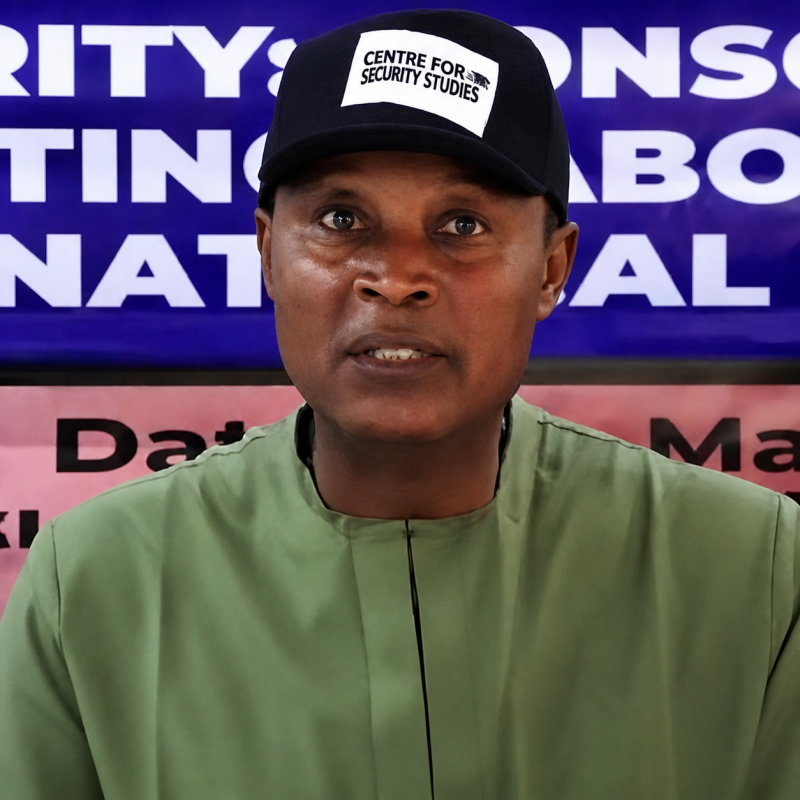
A civil society coalition has thrown its weight behind the Federal Government’s deradicalisation program Operation Safe Corridor, asking Nigerians to see repentant terrorists as "one of us" who were led astray by circumstance and are now being given a second chance under close watch. Speaking at a press conference monitored by Stone Reporters News, the leader of a coalition of civil society organisations argued that the reintegration of low-risk former insurgents is a strategic necessity rather than an act of impunity, adding that the controversial program has been running for years but has recently come under intense scrutiny due to the sheer volume of beneficiaries graduations and the nation’s escalating cost-of-living crisis.
"We are ready to reintegrate them into the society, they just need monitoring", the CSO leader said, adding that many individuals involved in terrorism were once ordinary members of the community before being influenced by difficult conditions such as poverty, lack of education, and extremist propaganda. According to the civil society leader, rehabilitation and reintegration remain a more sustainable path to peace than continued isolation or indefinite detention, and he stressed that Operation Safe Corridor provides deradicalisation, counselling, and vocational training to help former insurgents rebuild their lives. The coalition further explained that with thousands of fighters having surrendered en masse between 2024 and 2025, no state has the capacity to prosecute or incarcerate every single low-level combatant without risk of overwhelming the judicial system. 'Terrorists were one of us before they got confused because of the situations and circumstances around us. It is very ok to reintegrate them back into society for adequate monitoring of their movement and activities', the CSO leader stated.
The Civil Society Organisations' support comes on the heels of the most significant wave of graduations from Nigeria’s premier deradicalisation camp in Gombe State. In mid-April 2026, no fewer than 744 former Boko Haram insurgents and victims of violent extremism completed a 24-week comprehensive course of psychosocial therapy, religious re-orientation, and vocational skills acquisition, including tailoring, shoemaking, and farming. The event was attended by the Chief of Defence Staff, General Olufemi Oluyede, who described the programme as a "statement of progress" while stressing it is "not a reward but a deliberate strategy to reduce re-offending". The overwhelming number of beneficiaries, 597, hailed from Borno State, the epicentre of the 15-year insurgency, which has left tens of thousands dead and millions displaced. Foreign nationals from neighbouring countries, including 4 from the Niger Republic, 2 from Chad, 1 from Cameroon and 1 from Burkina Faso, were also released, signalling the transnational nature of the crisis.
While the civil society groups support the pathway to peace, the policy has met with fierce resistance across multiple sectors of the Nigerian populace and security analysis circles. Retired Rear Admiral Dickson Olisemelogor led the charge by drawing a sharp distinction between "disengagement" and true "de-radicalisation", warning that the military’s strategy might simply be creating a soft landing for criminals whose grievances remain unaddressed while real victims remain neglected. "What I see in our own case is disengagement rather than deradicalization. The boys are pulled out of their groups and given some soft landing by engaging them in various government agencies without addressing the causes of their anger. To me, this is a big mistake", the retired naval officer told reporters. Human rights lawyer Maxwell Opara has also filed a suit before the Federal High Court, Abuja, seeking to halt the reintegration program, arguing that releasing 700 suspected terrorists without criminal prosecution violates the separation of powers and the rule of law.
The government, however, has been adamant that the reintegration scheme is watertight. In response to viral videos accusing the military of enlisting ex-terrorists back into the army, the Coordinator of Operation Safe Corridor, Brigadier General Yusuf Ali, dismissed the footage as "false and misleading", clarifying that the facility shown was not the official camp located in Mallam Sidi, Gombe State. He insisted that participants in the programme are never armed and that they undergo strict psychological screening using the National Identity Number (NIN) system to monitor their movements after reintegration. "At no point are participants armed, mobilized, or deployed for combat operations", General Ali said, adding that the initiative operates with support from international partners like the European Union, ensuring adherence to global best practices.
The debate over reintegration has become a national flashpoint, pitting humanitarian pragmatism against grief-stricken victim communities. The policy of rehabilitation is not exclusive to Nigeria, security expert Ambassador Abayomi Nurain Mumuni reminded the press, citing programmes in Saudi Arabia, Indonesia and Norway that have recorded high rates of non-reoffending. However, in Borno State where the brutality of the insurgency has run deepest, survivors remain unconvinced. Many residents argue that accepting former fighters into communities while mothers who lost children to Boko Haram languish in internally displaced persons camps constitutes a moral and political betrayal. 'If they are truly repentant, why aren’t they being used as assets to dismantle the networks they left behind?' a social media user commenting on the controversy asked, capturing the sentiment shared by many.
Signs of potential recidivism have already manifested, threatening to undermine the entire program. On April 14, 2026, the military found itself fighting claims that some of those who passed through previous reintegration attempts were actively involved in the attack on Jilli market in Sokoto State, where a military airstrike infamously killed dozens of innocent civilians while chasing bandits. It also faces the persistent allegation that some rehabilitated insurgents serve as informants for active terror cells. In response, the military has stressed that the reintegration programme is not a blanket pardon. "It is a structured pathway for disengagement", General Yusuf Ali reiterated, adding: "Some were abducted; others were forced; many were drawn into the conflict due to circumstances beyond their control. The programme is about rebuilding identity, not rewarding killers."
As the CSO leader told the press that "they have no other home than Nigeria" and that monitoring is just a matter of digital oversight, the political environment remains dangerously divided. The coordination of the reintegration of such a large number of people, some of whom may never be fully accepted by their own families, makes this policy the most significant test of the non-kinetic strand of Nigeria’s counterinsurgency doctrine. For now, the 744 graduates have been handed starter packs of relief materials by NEMA and returned to their communities under the watchful eye of state governments and the security apparatus. However, with the speed of judicial convictions lagging behind the pace of rehabilitation, the controversy is unlikely to fade anytime soon.
📩 Stone Reporters News | 🌍 stonereportersnews.com
✉️ info@stonereportersnews.com | 📘 Facebook: Stone Reporters News | 🐦 X (Twitter): @StoneReportNew | 📸 Instagram: @stonereportersnews
Add comment
Comments