

Reported by: Ijeoma G | Edited by: Oravbiere Osayomore Promise.
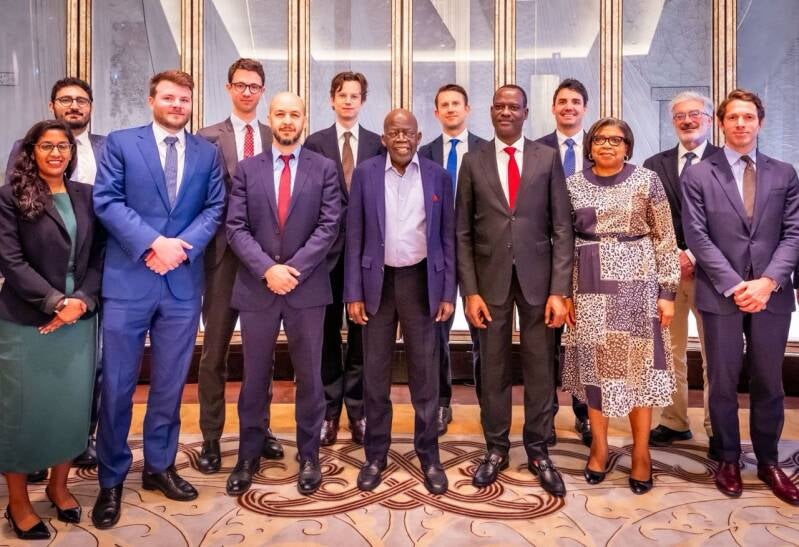
The Federal Government has definitively ruled out any return to the fuel subsidy regime, with the Minister of Finance and Coordinating Minister of the Economy, Taiwo Oyedele, declaring that such a policy would only bring destruction to the nation’s economy and that the government remains committed to market‑driven pricing without any form of price control. Speaking on Tuesday, May 5, 2026, during a media briefing in Abuja, Oyedele delivered a clear and unambiguous message to Nigerians who have been hoping for a reversal of the unpopular policy that has led to soaring petrol prices and widespread hardship. “We will not bring back subsidy because it creates destruction for the economy,” the minister stated firmly, putting to rest speculations that the government might bow to pressure from labour unions and civil society groups that have been agitating for a return to the old regime.
The minister’s declaration comes exactly three years after President Bola Tinubu announced the removal of fuel subsidy on May 29, 2023, a move that triggered an immediate spike in petrol prices from around N200 per litre to over N600, and eventually to current levels exceeding N1,400 per litre in many parts of the country. The removal, while praised by international financial institutions, has imposed severe economic pain on ordinary Nigerians, leading to inflation rates above 30 percent and pushing millions into deeper poverty. Calls for the government to reverse the policy have grown louder in recent weeks, especially after the Dangote Refinery and the Nigerian National Petroleum Company Limited (NNPCL) raised their gantry prices in April, citing global crude oil volatility.
Oyedel however insisted that the government would not reverse course, arguing that the subsidy regime was a massive drain on public finances that benefited mostly the wealthy and smugglers while doing little to alleviate poverty. “We will not bring back subsidy. It destroys the economy. It is a regressive policy that enriched a few at the expense of the majority,” he said. The minister emphasized that the funds previously used for subsidy are now being channeled into infrastructure, healthcare, education, and social safety nets, including the conditional cash transfer programme that reaches millions of vulnerable households. He pointed to the recent rollout of a student loan scheme and investments in public transportation as evidence that the government is using the savings productively.
Reinforcing his commitment to free‑market principles, Oyedele also ruled out the introduction of price controls, a measure that some economists and opposition politicians have proposed as a short‑term solution to curb arbitrary price hikes by marketers. “And we won’t introduce price control because we believe in the market,” the minister declared. He argued that price controls have historically led to shortages, hoarding, and black markets, and that the government’s role should be to ensure a competitive environment rather than dictate prices. The minister’s stance aligns with the broader economic philosophy of the Tinubu administration, which has pursued a series of bold reforms including the unification of exchange rates and the removal of electricity subsidies.
Shifting focus to the global stage, Oyedele highlighted emerging opportunities arising from the ongoing conflict in the Middle East, particularly the tensions involving Iran. The minister noted that as world powers impose sanctions and seek to diversify their energy sources away from the Gulf region, Nigeria stands to benefit from increased investment and demand. “The situation in Iran presents new opportunities for us as the world looks to diversify sources of energy and invest in new markets,” he said. He called on local and international investors to take advantage of Nigeria’s vast oil and gas reserves, as well as its growing renewable energy sector. The minister also disclosed that the government is in advanced talks with several European and Asian countries to increase crude oil and liquefied natural gas exports, leveraging the supply gaps created by the Iran crisis.
Oyedele’s remarks come against the backdrop of a global energy market in turmoil. The closure of the Strait of Hormuz following the escalation of the US‑Israeli war on Iran has disrupted oil flows from the Gulf, pushing Brent crude prices above $125 per barrel at one point and creating supply shortages in key markets. Nigeria, as a member of OPEC, has seen its export earnings rise, though domestic refining capacity remains a challenge despite the coming online of the Dangote Refinery. The minister expressed optimism that the combination of subsidy savings, increased oil revenues, and strategic investments would eventually ease the economic pressure on Nigerians.
However, the government’s position has drawn sharp criticism from opposition figures and labour leaders. The Nigeria Labour Congress (NLC) and Trade Union Congress (TUC) have repeatedly called for a reversal of the subsidy removal, arguing that the resulting hardships have made life unbearable for workers and the poor. In an interview with journalists, the NLC President described the minister’s statement as “tone‑deaf” and accused the government of insensitivity. Meanwhile, the Peoples Democratic Party (PDP) has promised that if elected in 2027, it would consider a return to a properly managed subsidy regime.
Despite the political pressure, Oyedele remained resolute. He argued that the long‑term benefits of subsidy removal, including fiscal discipline, increased investment in public goods, and a more efficient petroleum downstream sector, would eventually outweigh the short‑term pains. He urged Nigerians to be patient and to support the government’s reforms, noting that countries like India and Indonesia had successfully undergone similar transitions after initial hardships.
As the debate over fuel subsidy continues to divide public opinion, the minister’s latest pronouncement makes it clear that the Tinubu administration is determined to stay the course. For millions of Nigerians who had hoped for a reversal, the message is stark: the subsidy era is over, and there is no going back. For the global energy market watching the Iran crisis unfold, the minister’s appeal for diversified investment presents a window of opportunity that Nigeria is keen to seize.
📩 Stone Reporters News | 🌍 stonereportersnews.com
✉️ info@stonereportersnews.com | 📘 Facebook: Stone Reporters News | 🐦 X (Twitter): @StoneReportNew | 📸 Instagram: @stonereportersnews
Add comment
Comments