

Reported by: Ijeoma G | Edited by: Oravbiere Osayomore Promise.
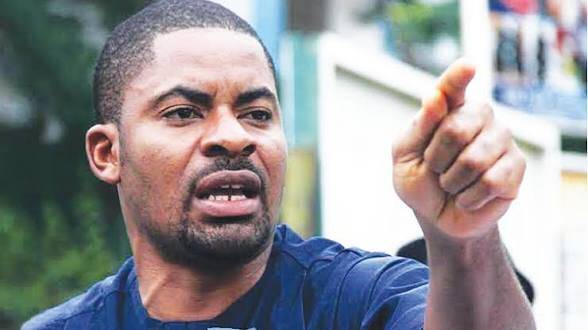
Activist lawyer Deji Adeyanju has accused former Labour Party presidential candidate Peter Obi of secretly working to help President Bola Tinubu secure re‑election in 2027, describing Nigeria's opposition leaders as "the most useless and irresponsible in Africa" for failing to unite against the ruling All Progressives Congress. In a post on his social media handle on Tuesday, May 5, 2026, Adeyanju did not hold back. “Peter Obi is working for Tinubu. The opposition leaders in Nigeria are the most useless in Africa. They are too irresponsible. For Nigeria to still have a divided opposition in 2026 after what happened to this country in the last 3 years is a huge shame. These guys are sworn enemies of Nigeria. Tinubu is not even playing at all. Can you imagine,” he wrote. The outburst came just days after Obi and his ally, former Kano State governor Rabiu Kwankwaso, formally abandoned the African Democratic Congress (ADC) to join the Nigeria Democratic Congress (NDC), a move that has sent shockwaves through the country’s opposition camp. Adeyanju, a human rights lawyer who has been a consistent critic of Obi, argued that the defection is not a genuine attempt to build a stronger coalition but rather a calculated maneuver to splinter opposition forces and hand Tinubu an easy victory. His allegations have reignited a long‑running feud with Obi, who has previously taken Adeyanju to court over defamatory statements.
The timing of Adeyanju’s accusation is significant. Only days earlier, Obi had announced his resignation from the ADC, citing "endless court cases, internal battles, suspicion, and division" that he claimed were being orchestrated by state agents to cripple the opposition. His former party, the ADC, responded with fury, accusing Obi and Kwankwaso of executing a "premeditated" exit strategy. In a blistering television interview, the ADC’s National Publicity Secretary, Mallam Bolaji Abdullahi, suggested that the defectors had used the ADC as a "Trojan horse" to sabotage rival challengers to President Tinubu. “They used us as a political Uber,” Abdullahi declared, claiming that Obi had been offered unprecedented concessions, including the position of National Organising Secretary for his nominee, yet still walked away. Abdullahi also disclosed a clandestine meeting held two months ago in Kano between Obi, Kwankwaso, and former Bayelsa Governor Seriake Dickson, hinting that the move to the NDC had been planned long before Obi publicly complained about internal party crises. The ADC’s anger reflects a broader frustration within opposition circles, where hopes of forming a united front against Tinubu have now crumbled.
Adeyanju’s own history with Obi adds a layer of personal animosity to the political storm. In October 2025, Obi filed a ₦1.5 billion defamation lawsuit against the activist lawyer, accusing him of making false and malicious statements on social media. The suit, filed before the Anambra State High Court in Onitsha, sought a declaration that Adeyanju’s posts calling Obi a "religious bigot," "fraud," "scum," and "political prostitute" were defamatory. Obi also demanded a public apology, retraction, and ₦500 million in aggravated damages plus ₦1 billion in general damages. Adeyanju responded with characteristic defiance, posting: “Finally, Peter Obi has sued me. I am actually happy and relieved that he didn’t chicken out in the end. Interestingly, he dragged me all the way to Anambra State, even though he is almost always in Abuja where I reside. But no shaking, we move.” Adeyanju had previously threatened to prove in court that Obi is “corrupt” and “a fraud,” though the case is yet to be concluded. The ongoing legal battle has made Adeyanju one of Obi’s most prominent and persistent critics in the digital space.
Beyond the personal feud, Adeyanju’s broadside reflects a deepening crisis within Nigeria’s opposition. The coalition formed under the ADC, which once included Atiku Abubakar, Peter Obi, Rabiu Kwankwaso, Nasir El‑Rufai, Rotimi Amaechi, and other heavyweight politicians, has effectively collapsed. The alliance was built on the promise of challenging President Tinubu in 2027, but internal disputes over the presidential ticket and leadership structures quickly tore it apart. In April 2026, the Supreme Court restored a leadership crisis within the ADC, leaving the party in legal limbo. Shortly thereafter, Obi and Kwankwaso made their move. On May 3, they were formally received into the NDC by Senator Seriake Dickson, who declared that the party had "no factions and no litigation," a pointed jab at the ADC’s troubles. The defection was a severe blow to opposition unity, effectively scattering the anti‑APC vote across multiple platforms.
Adeyanju has not been alone in raising suspicions. The Presidency itself has welcomed the opposition’s implosion, with a special adviser to the President declaring that Obi’s defection had "vindicated" Tinubu. Obi, for his part, has denied the allegations and insisted that his moves are aimed at building a credible platform to rescue Nigeria. In a statement, he reiterated that he is "not desperate to be President, Vice President, or Senate President," but is "desperate to see a functional Nigeria." He urged members of his new party, the NDC, to avoid litigation and internal disputes, warning that court battles could weaken efforts to build a credible opposition. However, his plea has not stopped the wave of counter‑allegations. The ADC continues to accuse Obi of sabotage, and Adeyanju has now added his voice to the chorus, claiming that the former Anambra governor has a track record of deliberately splintering opposition ranks to benefit the ruling party.
The stakes for 2027 are enormous. President Tinubu, who has survived a series of political and legal challenges since taking office, is widely seen as a formidable opponent. According to Reuters, the collapse of the opposition alliance has significantly reduced the chances of a competitive election. International observers have expressed concern that a fragmented opposition could lead to voter apathy and a lower turnout, which historically favours the incumbent. The United States Institute for Peace has warned that Nigeria’s political elite appear more focused on personal rivalries than policy platforms, a trend that plays directly into the hands of the ruling APC. Meanwhile, the NDC faces its own internal tensions, with supporters of Obi and Kwankwaso already clashing over who will lead the ticket. Political analysts in Abuja and Lagos agree that the window for building a unified opposition before the primaries in mid‑2026 is rapidly closing. For ordinary Nigerians, who have endured years of economic hardship and insecurity, the spectacle of their leaders fighting among themselves is a source of deep frustration. "We are tired of watching them struggle for power while we struggle to survive," a Lagos resident told Stone Reporters News. "If they can't come together, they should just leave us alone."
As the war of words intensifies, Adeyanju’s explosive accusation has added a new dimension to an already chaotic political season. Whether his claims have merit or are simply the product of a long‑standing personal grievance, they have resonated with a public that has grown cynical about the opposition’s ability to provide a credible alternative. For Peter Obi, the path to 2027 has just become significantly more treacherous. He now faces not only the might of a well‑funded incumbent but also a growing chorus of voices within his own political camp who suspect that he may not be the champion they hoped for. For Nigerians, the question remains: is the opposition truly fighting for change, or are they, as Adeyanju suggests, simply playing a game that only the ruling party can win?
📩 Stone Reporters News | 🌍 stonereportersnews.com
✉️ info@stonereportersnews.com | 📘 Facebook: Stone Reporters News | 🐦 X (Twitter): @StoneReportNew | 📸 Instagram: @stonereportersnews
Add comment
Comments