

Reported by: Oahimire Omone Precious | Edited by: Oravbiere Osayomore Promise.
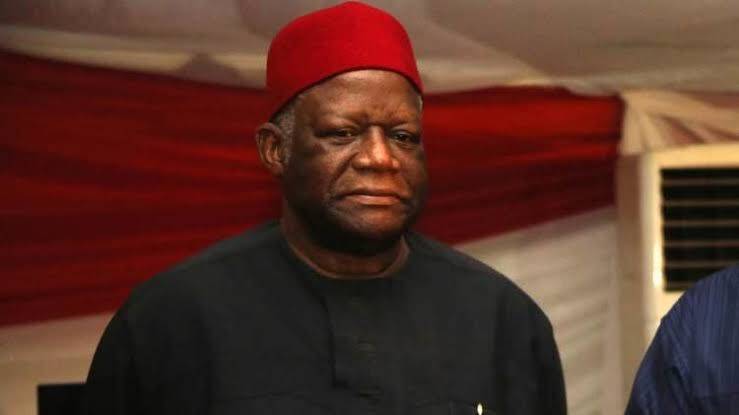
A former military general turned top diplomat has fired a rare public warning at President Bola Tinubu, accusing him of suffocating the ambitions of Nigeria’s career diplomats by handing the country’s most sensitive foreign posts to political loyalists. Major General Ike Nwachukwu, a former Minister of Foreign Affairs who once governed a state and later represented Nigeria abroad, said the current administration has abandoned the unwritten rule that reserved seventy percent of ambassadorial slots for professional foreign service officers. Speaking at a book launch in Abuja on Tuesday, the retired general said the lopsided appointments had created a bottleneck that is crushing the morale of young diplomats and denying them the chance to ever become ambassadors. “In my time, we had a 70:30 ratio. That is 70 per cent of career ambassadors and 30 per cent for non-career ambassadors. We must go back to that,” Nwachukwu declared to a room packed with serving and retired senior diplomats. “It is frustrating for young men and women to enter service aiming to become an ambassador but failing to do so because there are no available slots.”
Nwachukwu was the chairman at the public presentation of ‘Fragments of Time: My Foreign Service Years,’ a memoir by veteran diplomat Eineje Onobu. The event, held at the Rotunda Hall of the Ministry of Foreign Affairs, brought together the creme of Nigeria’s diplomatic community. But the veteran soldier and former governor of old Imo State did not hide his displeasure. He said the growing reliance on political appointees, many of whom have no formal training or experience in international relations, was eroding the morale of career officers who spend decades in the trenches. “From my background as a soldier, the aim is to be a general. So, let us plead with the government of the day, going forward, to the 70 – 30 ratio or even an 80 – 20 ratio so that these young men and women who put their lives in service reach the top of their career,” he said.
Nwachukwu’s warning is not about nostalgia; it is about a real and present structural crisis. For decades, Nigeria’s foreign ministry operated under a clear career path whereby a young officer could enter the service, train in diplomatic protocol, and rise through the ranks to eventually become an ambassador at retirement. That path was designed to ensure that the country’s representatives abroad possessed institutional memory, professional leverage, and the discreet negotiating skills built over a lifetime of service. But that ladder is now broken. Data from the recent ambassadorial postings confirm Nwachukwu’s fears. In December 2025, the Senate confirmed 65 ambassadorial nominees sent by President Tinubu. Of those, only 34 were career ambassadors. The remaining 31 slots went to non-career appointments, including high-profile political figures such as former Aviation Minister Femi Fani-Kayode, former presidential aide Reno Omokri, former Katsina State Governor Abdulrahman Dambazau, and former Imo First Lady Chioma Ohakim.
The ratio of 31 non-career to 34 career is significantly higher than the 30 percent ceiling that Nwachukwu defended as the acceptable limit for political appointees. The former minister did not pull his punches. “I like to say that I am a bit unhappy to see that the government’s preference for political appointees has made it almost impossible for young men and women who put their lives into training to become career ambassadors on their retirement. This is not right,” he said. His plea was not an abstract lecture. The audience comprised diplomats who had personally experienced the stagnation. Many have watched junior officers abandon the service mid-career because the prospect of advancement had become an illusion. At the same event, another former Foreign Affairs Minister, Sule Lamido, acknowledged the disconnect between political appointees and career officers, recalling how he had to “bridge that gap” when he entered the ministry as an outsider.
The consequences of sidelining professional officers extend beyond personal career frustrations. Ambassadors who lack training in protocol, negotiation, and the subtle arts of diplomatic engagement can inadvertently damage Nigeria’s international standing. They may misunderstand bilateral protocols, mishandle sensitive negotiations, or fail to detect shifts in host-country policies. In extreme cases, poorly prepared envoys have embarrassed the country by making off-the-cuff remarks that contradicted official foreign policy. The politicisation of ambassadorial posts also sends a signal to foreign governments that Nigeria does not take its diplomatic obligations seriously, potentially weakening the country’s leverage in multilateral forums such as the United Nations, the African Union, and ECOWAS.
Nwachukwu escalated his criticism into a full-blown reform demand, urging President Tinubu to consider establishing a Foreign Service Commission. Such a body would shield appointments and promotions from political interference, ensuring that only qualified career officers ascend to the top of the service. Nwachukwu warned that without institutional protection, Nigeria’s diplomacy risks becoming inconsistent, vulnerable, and detached from professional standards. “Our missions must be properly funded,” he also said, pointing to chronic underfunding as the silent accelerator of decline. Underfunded missions lack the resources to maintain visibility, gather intelligence, or even attend critical functions, further diminishing Nigeria’s diplomatic footprint.
The former minister’s warning has been echoed by other voices. Former Minister of Aviation Osita Chidoka, who reviewed the memoir at the event, set a reflective but piercing tone, describing Ambassador Onobu as an embodiment of civility and discipline and framing the memoir as a mirror of a system that once worked better than it does now. Veteran diplomats at the event revisited the architecture of Nigeria’s foreign service, recalling foundational reforms under Ambassador Remy Hanson and foreign policy breakthroughs under Bolaji Akinyemi, whose Medium Powers doctrine and Technical Aid Corps remain among Nigeria’s most enduring diplomatic exports.
The timing of Nwachukwu’s intervention is critical. With the 2027 general elections on the horizon, and the opposition fragmenting, the Tinubu administration appears comfortable with rewarding political loyalists with ambassadorial postings. But the cost is not just a demoralised foreign service; it is the steady erosion of Nigeria’s ability to navigate an increasingly complex world. The career versus political ambassador debate is older than the Fourth Republic, but Nwachukwu’s warning suggests that the balance has now tilted decisively against the professionals. Whether President Tinubu heeds the call or continues the pattern of patronage will determine not just the careers of individual diplomats but the future of Nigeria’s engagement with the world.
📩 Stone Reporters News | 🌍 stonereportersnews.com
✉️ info@stonereportersnews.com | 📘 Facebook: Stone Reporters News | 🐦 X (Twitter): @StoneReportNew | 📸 Instagram: @stonereportersnews
Add comment
Comments