

Reported by: Oahimire Omone Precious | Edited by: Oravbiere Osayomore Promise.
A routine refill gone wrong, a neighbouring shop reduced to rubble, and the smell of smoke still thick in the air: Orile-Iganmu is counting its blessings after a massive gas explosion left a young attendant fighting for his life and a community asking the same painful question that echoes through Lagos with sickening regularity: when will the bloodshed from gas accidents finally end?
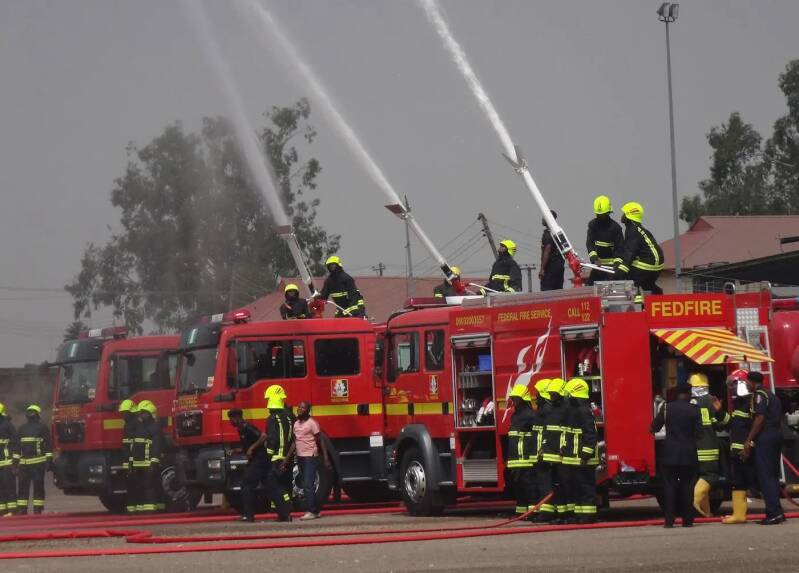
The injured attendant is currently in intensive care at an undisclosed hospital, his condition described as "critical" by health officials. The Lagos State Fire and Rescue Service (LSFRS) has confirmed that the explosion occurred around 12:23 p.m. on Tuesday, May 5, 2026, on Adeleye Street in the Doyin area of Orile-Iganmu. Deputy Controller General Ogabi Olajide stated that fire crews from Sari Iganmu and Ajegunle were promptly deployed, arriving at the scene by 12:34 p.m., and brought the blaze under control to prevent further catastrophe. The force of the blast was so severe that it caused significant material damage, gutting two shops within the premises immediately and spreading to the neighbouring commercial unit, destroying property worth millions of naira.
Authorities have attributed the incident to a gas leak that occurred while the shop attendant was refilling a cylinder in one of two shops on the frontage of a demolished building. However, community members have raised a troubling question: Why is a gas retail point operating in such a cramped and visibly dangerous space in the first place? The site is a densely built residential and commercial strip, essentially a structure cobbled together on a half‑plot of land. Lagos has stringent guidelines that explicitly prohibit retail gas outlets from operating within such confined spaces, calling for a clear separation between the gas point, residential buildings, and other combustible commercial activity.
The Orile‑Iganmu inferno is the fourth major gas-related incident in Lagos in just as many months, revealing a terrifying trend of bureaucratic failure and blatant safety violations. In April 2026, a devastating explosion at the Ladipo area of Mushin killed at least 14 people and left dozens injured after a truck collided with gas bottles stacked in a processing plant. In March 2026, a collision between a gas tanker and a tipper truck on the Lekki‑Epe Expressway in Sangotedo claimed two lives and razed warehouses and roadside shops. Experts have repeatedly warned that the market is flooded with expired, rusty, and substandard cylinders, turning neighbourhoods into ticking time bombs.
The people of Orile‑Iganmu, many of whom witnessed the explosion from a few feet away, expressed anger on Tuesday at the seeming helplessness of the regulatory bodies. The Lagos State Safety Commission has recently been training Vehicle Inspection Officers on CNG vehicle safety. The commission has also issued safety standards for retail gas operators and has pursued sensitisation campaigns in markets. However, the sheer scale of unregulated gas points operating illegally outside these structures suggests a massive gap between paper directives and ground enforcement.
The Lagos State Government responded to the incident by ordering a full investigation into the exact cause of the explosion, with a directive that any culpable negligence that led to this accident would face the full wrath of the law. As of the time of this report, the critically injured gas attendant remains in an intensive care unit, fighting for his life. For the people of Orile‑Iganmu, the sirens have faded, but the fear has not. There is only the grim realisation that unless the rule of law is applied to every single gas point, the next explosion is not a matter of "if," but a matter of "when."
📩 Stone Reporters News | 🌍 stonereportersnews.com
✉️ info@stonereportersnews.com | 📘 Facebook: Stone Reporters News | 🐦 X (Twitter): @StoneReportNew | 📸 Instagram: @stonereportersnews
Add comment
Comments