

Reported by: Ijeoma G | Edited by: Oravbiere Osayomore Promise.
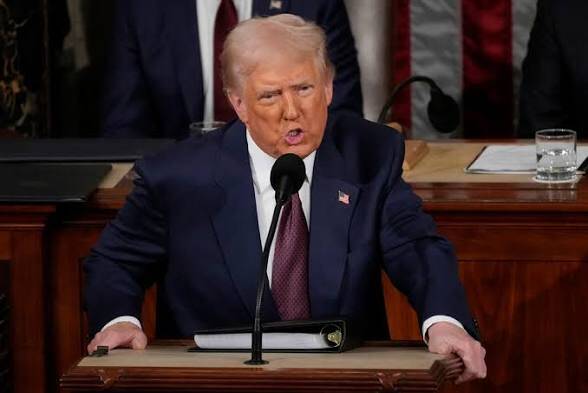
Hours after Tehran delivered its formal response to Washington's peace proposal, US President Donald Trump issued an all‑caps broadside, accusing Iran of “playing games” for nearly five decades and denouncing the terms as “TOTALLY UNACCEPTABLE.” In a series of Truth Social posts on the night of May 10, 2026, the president cut through the careful language of diplomacy to argue that the Islamic Republic had systematically exploited a string of American presidents, singling out Barack Obama for having “given Iran a major and very powerful new lease on life.”
The diplomatic back‑and‑forth unfolded through Pakistani mediators. Iran’s state television said Tehran’s response sought to end the war on all fronts – including Lebanon, where Israel is fighting Hezbollah – and to secure the safety of shipping in the Gulf. But Trump did not wait for an official readout. “Iran has been playing games with the United States, and the rest of the World, for 47 years (delay, delay, delay!),” he wrote. “They will be laughing no longer!”
Trump’s Truth Social blast was remarkable for its historical sweep. The 47‑year timeline appeared to reach back to the 1979 Islamic Revolution, when Iranian militants seized the US embassy in Tehran. In the president’s telling, Iran had never abandoned its strategy of deception, using each round of talks to buy time while secretly advancing its nuclear and missile programmes. “For 47 years the Iranians have been ‘tapping’ us along, keeping us waiting, killing our people with their roadside bombs, destroying protests, and recently wiping out 42,000 innocent, unarmed protestors, and laughing at our now GREAT AGAIN Country,” he wrote.
But the sharpest arrows were aimed at his immediate predecessors, especially Barack Obama. Trump accused the 44th president of not merely failing to contain Iran but of actively empowering it. “He was not only good to them, he was great, actually going to their side, jettisoning Israel, and all other Allies, and giving Iran a major and very powerful new lease on life,” Trump alleged. He returned repeatedly to the 2015 nuclear deal, the Joint Comprehensive Plan of Action (JCPOA), which Obama negotiated and which Trump withdrew from in 2018. In the president’s view, the deal had been a catastrophe, providing Iran with sanctions relief and access to frozen assets that fuelled its regional proxies.
To drive the point home, Trump zeroed in on a specific episode that has long animated conservative criticism of Obama – the delivery of $1.7 billion in cash to Tehran as part of a settlement of a long‑standing dispute at the Iran‑US Claims Tribunal. “Hundreds of Billions of Dollars, and 1.7 Billion Dollars in green cash, flown into Tehran, was handed to them on a silver platter,” Trump wrote. “Every Bank in D.C., Virginia, and Maryland was emptied out – it was so much money that when it arrived, the Iranian Thugs had no idea what to do with it.” He added that Iran had “finally found the greatest SUCKER of them all, in the form of a weak and stupid American President,” a reference to Obama.
Iran’s response, while not addressing Trump’s personal accusations, laid out a counter‑proposal that directly challenged Washington’s preferred sequencing. The US proposal had insisted that any agreement must address Iran’s nuclear programme, its missile capabilities and its role in the Strait of Hormuz. Tehran instead sought to focus on an immediate end to hostilities, the gradual reopening of the strait, and only later – possibly after 30 days – a discussion of nuclear issues. Iranian officials also insisted that any transfer of enriched uranium to a third party would require “return guarantees” if the US failed to comply with its obligations. The gap between the two positions appeared unbridgeable.
The Iranian mission in Ghana, which has been a vocal outlet for Tehran’s messaging, fired back at Trump in a separate social media post. “Every regional base reduced to smoldering ash … the Strait gift‑wrapped and surrendered to Iran,” the account wrote, listing a series of alleged US setbacks. The exchange illustrated how the war of words had become as intense as the military confrontation, with neither side willing to cede the narrative.
Trump’s posts were not merely rhetorical. At the same time, he reiterated that the US military maintained “very well surveilled” oversight of Iran’s enriched uranium stockpiles. In an interview with independent journalist Sharyl Attkisson that aired on the same day, he warned that if any unauthorised person approached the sites, “we will know about it, and we’ll blow them up.” The threat underscored the fragile nature of the ceasefire: while the guns had been quieter for weeks, the underlying conflict remained unresolved.
Israel’s Prime Minister, Benjamin Netanyahu, immediately aligned himself with Trump’s stance. “It’s not over because there’s still nuclear material – enriched uranium – that has to be taken out of Iran,” Netanyahu told CBS News’ “60 Minutes.” He argued that the defeat of Iran’s air defences and the degradation of its military did not negate the need to physically remove the nuclear stockpile. The phone call between Trump and Netanyahu that day confirmed that the two allies would maintain a unified position as diplomatic efforts staggered forward.
The immediate effect of Trump’s intervention was to lock the US into a maximalist posture. “We are giving diplomacy every chance we possibly can before going back to hostilities,” US Ambassador to the UN Mike Waltz told ABC, but the ‘totally unacceptable’ assessment left little room for negotiation. Iran’s response had already rejected the US demand for a 20‑year moratorium on enrichment, and Tehran insisted on the right to repatriate its uranium if an agreement collapsed. The chasm was not just technical but political: each side had staked its credibility on a narrative of resistance and resolve.
For Trump, the dispute over the nuclear programme is also a dispute about the competence and patriotism of his predecessors. By blaming Obama and Biden for what he calls a 47‑year pattern of Iranian duplicity, he is constructing a story in which the Islamic Republic took advantage of weak American leadership and only his administration – which withdrew from the JCPOA in 2018 – was willing to confront Tehran. The current talks are not merely about centrifuges and sanctions, but about whose version of US foreign policy will be vindicated.
As the sun rose over Washington on Monday, the US president had not retreated from his position. There was no sign that he would accept less than the full surrender of Iran’s nuclear infrastructure, and no sign that Tehran would hand over its most valuable strategic asset. The peace proposal that had promised to end the war now seemed an instrument for a final, decisive showdown – or for the collapse of diplomacy and a return to bombing. For the moment, the world waited to see which side would blink.
📩 Stone Reporters News | 🌍 stonereportersnews.com
✉️ info@stonereportersnews.com | 📘 Facebook: Stone Reporters News | 🐦 X (Twitter): @StoneReportNew | 📸 Instagram: @stonereportersnews
Add comment
Comments