

Reported by: Ijeoma G | Edited by: Oravbiere Osayomore Promise.
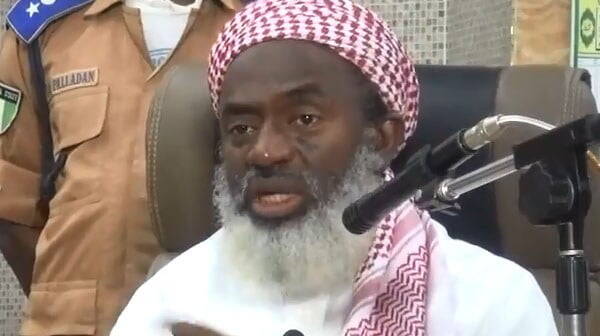
Kaduna-based Islamic cleric Sheikh Ahmad Gumi has made an explosive allegation, claiming that American intelligence agencies are behind the persistent banditry and Boko Haram terrorism plaguing Nigeria’s northern region. The controversial religious leader, who has long advocated for dialogue with criminal gangs, levelled the accusation in a lengthy Facebook post on Saturday, May 9, 2026, while responding to comments made by Mike Arnold, a former Texas mayor who has spoken publicly about alleged persecution of Christians in Nigeria.
Arnold had shared photographs of himself with several prominent Nigerians, including former Cross River State Governor Donald Duke and Nigeria’s Minister of Information Mohammed Idris. “These are a few of the people I’ve met and places I’ve been to in Nigeria over the years,” Arnold wrote. In his response, Gumi accused Arnold of spreading what he called a false narrative about the killing of Christians, while pointing out that the American had failed to visit northern states that have borne the brunt of the country’s security crisis. “After all the barking about ‘fake Christian genocide’, it is shameful to realise that this man has been almost everywhere where Christians are prosperous, yet he has not visited Zamfara, Katsina and other northern states suffering from the activities of bandits and Boko Haram allegedly sponsored by the same American intelligence,” Gumi wrote.
The cleric’s posting quickly circulated on social media, triggering a flood of reactions from Nigerians already frustrated with the government’s inability to stem the tide of violence. By framing the conflict as a foreign‑orchestrated scheme, Gumi appeared to be recasting the central fault line of Nigeria’s insecurity. “One of the things Islam abhors is lies and liars,” he added, dismissing narratives of targeted Christian persecution as a pretext for a hidden agenda.
Gumi’s latest outburst fits a pattern of deepening hostility toward the United States. In December 2025, following airstrikes reportedly ordered by President Donald Trump that targeted suspected terrorist hideouts in Sokoto State, Gumi condemned the action, calling it an attack on Islam. He also urged the Nigerian government to halt all military cooperation with Washington. On Friday, May 8, just a day before his Facebook post, presidential spokesman Bayo Onanuga announced that National Security Adviser Nuhu Ribadu had met with US Vice President JD Vance and other American officials to discuss deeper cooperation on Nigeria’s security challenges. The timing of Gumi’s allegation appeared designed to undercut that growing partnership.
The cleric has a history of provocative security commentary. Over the years, he has positioned himself as an intermediary between the state and armed bandits, a role that has earned him both supporters and fierce critics. In 2021, he led what he claimed were 600 bandits to surrender. He has consistently argued that negotiation, not military force, is the only sustainable path to peace, and at one point even described mass school abductions as a “lesser evil”. In November 2025, he faced mounting calls for his arrest over his open‑door meetings with bandit leaders, a pressure he dismissed by branding his critics “spineless, irresponsible and unpatriotic imbecilic people”.
The fresh allegation that American intelligence is sponsoring terror has drawn a sharp divide. Some commentators noted that Gumi’s attack on the US came just as American security assistance was scaling up, calling into question the cleric’s political motives. Others argued that while Gumi had offered no evidence to substantiate the conspiracy theory, his comments tapped into a reservoir of anti‑Western sentiment among Nigerians who feel abandoned by the global community. The state of insecurity in the North‑West remains dire, with armed groups operating with a level of audacity that mocks official claims of progress. Yet, the notion that the United States would actively sponsor violence against a country it has invested heavily in stabilising struck many as far‑fetched.
As of Monday evening, the United States government had not responded to Sheikh Gumi’s allegations. The Nigerian authorities also remained silent, though security analysts suggest the claim may be difficult to ignore entirely. For now, the cleric’s words have already done their work, casting a shadow over a security relationship that both Abuja and Washington have been eager to deepen. And for ordinary Nigerians trapped between the guns of bandits and the confusion of conspiracy theories, the difference between a foreign plot and home‑grown failure may matter less than the simple, brutal arithmetic of another person killed, another family displaced, another night without sleep.
📩 Stone Reporters News | 🌍 stonereportersnews.com
✉️ info@stonereportersnews.com | 📘 Facebook: Stone Reporters News | 🐦 X (Twitter): @StoneReportNew | 📸 Instagram: @stonereportersnews
Add comment
Comments