

Reported by: Ijeoma G | Edited by: Oravbiere Osayomore Promise.
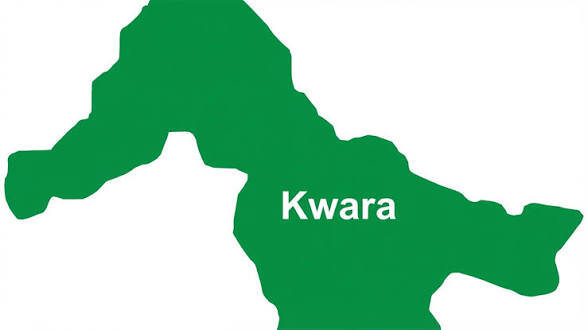
The people of Kwara South have firmly rejected claims that banditry and kidnapping have rendered large parts of the senatorial district uninhabitable and drastically reduced its voter population, insisting that the narrative is a deliberate political weapon being deployed ahead of the 2027 elections. In a statement issued on Sunday, May 10, 2026, the Joint Security Watch Kwara South, a community‑led security advocacy group, described the assertions as “misleading” and politically motivated, aimed at marginalising the zone within the ruling All Progressives Congress (APC) as the party prepares for its governorship contest.
Speaking on behalf of the group, its Coordinator, Elder Olaitan Oyin‑Zubair, acknowledged that criminal incidents have occurred in parts of Kwara State but stressed that these are not unique to Kwara South and do not reflect the character of its people. “Banditry and kidnapping in Kwara entered through ungoverned forests and weak border points. They are not indigenous to Kwara South and do not define our people,” Oyin‑Zubair said. He explained that attacks have been concentrated along isolated routes and in remote settlements with minimal security presence, not in the main population centres that drive the zone’s economic and political life. He added that in areas where joint security operations and community intelligence were swiftly deployed, attacks were repelled and displaced families have since returned to their farms and normal economic activities.
The group also mounted a strong defence of Kwara South’s electoral relevance, citing voting records from the 2019 and 2023 general elections to demonstrate that the zone remains one of the APC’s most reliable strongholds. According to Oyin‑Zubair, the APC recorded about 68 percent electoral success in Kwara South in those elections, compared to only 35 percent in Kwara Central, the very senatorial district that, he alleged, is promoting the narrative that insecurity has weakened the south’s voter base. “Kwara South is securing its land, protecting its people, and restoring normal life and economic activity. We will not accept the use of insecurity as a tool for political exclusion,” Oyin‑Zubair emphasised.
To further counter the claim of depopulation, the Joint Security Watch outlined ongoing security measures now active across the zone. These include community‑led patrols, an early warning system in every ward, aerial surveillance over identified hotspots, and coordinated joint operations involving the Nigeria Police, the Nigeria Security and Civil Defence Corps (NSCDC), and local vigilante groups. The operations currently cover the local government areas of Irepodun, Ekiti, Oke‑Ero, Isin, and Offa. Oyin‑Zubair said these initiatives are already yielding results, with improved safety, a gradual return of displaced residents, and the resumption of farming and trading activities in previously affected areas.
The security group’s strong rebuttal comes just two weeks after a very different picture of Kwara South was painted by residents themselves. On April 25, 2026, hundreds of protesters under the aegis of the Kwara South Development Forum took to the streets, raising alarm over what they described as a worsening security crisis overwhelming indigenous Yoruba communities in the region. Protesters alleged that armed groups were gradually taking control of several communities, carrying out killings, kidnappings, and displacing entire populations, and that vigilante groups that once served as the first line of defence had been systematically weakened. They demanded urgent intervention from President Bola Tinubu and Kwara State Governor AbdulRahman AbdulRazaq.
Some protesters provided chilling testimonies. Adebisi Jimoh said repeated attacks had forced residents of Babanla and surrounding settlements to flee, leaving the community deserted. Sodiq Amidu alleged that two victims, Abdullah Issa and Yusuf Ibrahim, were freed only after ransoms of N10 million and N5 million were paid. Others claimed that schools had been shut down, farmlands abandoned, and traditional rulers driven out of their domains due to safety concerns. The protest underscored that insecurity in parts of Kwara South remains a lived reality for some communities, even as the Joint Security Watch insists the situation is localised and should not be used to define the entire zone.
Into this volatile mix steps the political contest for the APC governorship ticket. At least 16 aspirants are jostling for the party’s nomination, including three serving senators: Saliu Mustapha (Kwara Central), Lola Ashiru (Kwara South), and Sadiq Umar (Kwara North). Other prominent contenders include former state APC chairman Bashir Omolaja Bolarinwa, Speaker of the Kwara State House of Assembly Yakubu Salihu‑Danladi, and several federal appointees. The race has become increasingly tense amid allegations that the party leadership is considering zoning the governorship slot to Kwara South, a move that has sparked fierce resistance from Kwara Central and Kwara North. On April 7, 2026, the Kwara Central Elders’ Caucus issued a communique warning that zoning the governorship to Kwara South would be “crude injustice”, noting that Kwara South already holds plum federal appointments, including the Attorney General of the Federation and Minister of Justice, the Group Managing Director of the NNPCL, and other key positions.
The brewing conflict over zoning adds a powerful motive to the insecurity narrative. If Kwara Central or Kwara North can successfully cast Kwara South as too unsafe to host the governorship, they would strengthen their own case for the ticket, regardless of the election results. The Joint Security Watch’s forceful rejection of that narrative, backed by electoral statistics and a detailed outline of security measures, appears aimed at neutralising that political tactic before it gains traction.
For now, the people of Kwara South find themselves caught between two conflicting realities: the genuine security challenges faced by some rural communities along border forests, and a political battle in which their safety and electoral strength are being weaponised. The Joint Security Watch has urged the public to rely on verified information and has declared that the zone remains safe for living, farming, trading, and voting. As the APC governorship primaries draw closer, the struggle over who speaks for Kwara South—and who benefits from what is said about it—will only intensify.
📩 Stone Reporters News | 🌍 stonereportersnews.com
✉️ info@stonereportersnews.com | 📘 Facebook: Stone Reporters News | 🐦 X (Twitter): @StoneReportNew | 📸 Instagram: @stonereportersnews
Add comment
Comments