

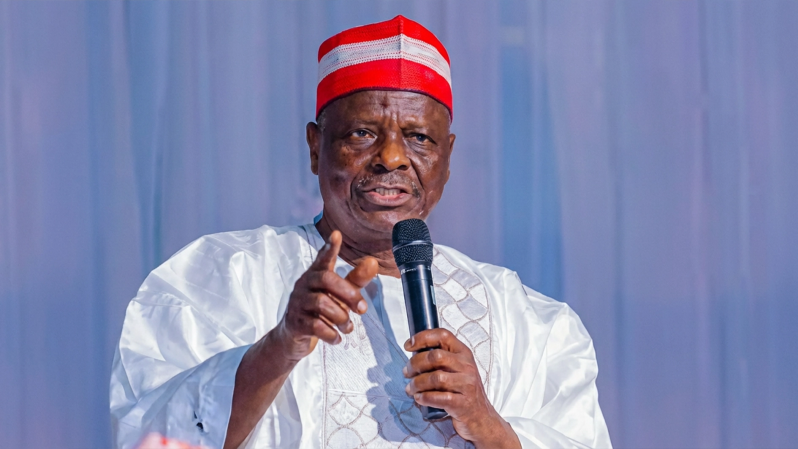
Former Kano State governor and New Nigeria Peoples Party leader, Rabiu Musa Kwankwaso, has said Nigeria’s younger generation is increasingly looking beyond religion and ethnicity in the search for credible leadership.
Kwankwaso made the remark while reflecting on the 2023 presidential election and the influence of Peter Obi’s Labour Party campaign among young Nigerians. According to him, even within his own family, younger people openly preferred political cooperation with Obi.
“You will be surprised, even during the 2023 election, in my own house, my own daughter was telling me to go and work with Peter Obi,” Kwankwaso was quoted as saying. “People are talking about religion and ethnicity, especially those of our age, but younger people are looking for the right leadership for this country.”
The statement is significant because Kwankwaso and Obi were both presidential candidates in 2023, with Kwankwaso running under the NNPP and Obi under the Labour Party. Bola Tinubu of the APC won the election, while Atiku Abubakar of the PDP came second, Obi came third, and Kwankwaso placed fourth.
Obi’s 2023 campaign drew strong support from young voters, urban professionals and citizens dissatisfied with Nigeria’s established political blocs. Reuters recently described Obi as a candidate who “energised young voters” in the 2023 election, while also noting that Obi and Kwankwaso later became central figures in opposition realignment talks ahead of 2027.
Kwankwaso’s comment also reflects one of the biggest lessons from the 2023 election: religion and ethnicity remained powerful, but they were not the only forces shaping voter behaviour. Obi, a Christian from the South-East, won support in several areas outside his immediate ethnic base, including Lagos and the Federal Capital Territory. Kwankwaso, a Muslim northerner with a strong Kano base, dominated Kano State but did not break through nationally at the same level.
The election itself was deeply contested. Tinubu was declared winner by the Independent National Electoral Commission, but opposition parties challenged the outcome, alleging flaws in the process. The Supreme Court later dismissed the challenges and upheld Tinubu’s victory in October 2023.
The broader political story around Kwankwaso’s latest statement is the continuing discussion about whether Obi and Kwankwaso can work together in future elections. Before the 2023 polls, there were talks about a possible alliance between both men, but no agreement emerged. Since then, supporters of both politicians have repeatedly argued that a combined Obi-Kwankwaso ticket or broader opposition coalition could challenge the ruling APC more effectively.
However, recent opposition coalition efforts have shown how difficult that project remains. Reuters reported that Obi and Kwankwaso both exited an ADC-led opposition alliance after internal disputes and mistrust, later joining another opposition platform, the Nigeria Democratic Congress.
For Kwankwaso, the statement about his daughter appears to be both personal and political. It acknowledges that younger Nigerians may not always follow the political choices of their parents, regions or religious communities. It also signals that the pressure for opposition cooperation is not only coming from politicians but from ordinary citizens who want a stronger challenge to Nigeria’s current political order.
The real fact is that Kwankwaso confirmed that even his daughter urged him to work with Peter Obi during the 2023 election. His wider message is that younger Nigerians are increasingly demanding leadership based on competence, credibility and national progress, rather than the older political habits of religion, ethnicity and regional loyalty.
📩 Stone Reporters News | 🌍 stonereportersnews.com
✉️ info@stonereportersnews.com | 📘 Facebook: Stone Reporters News | 🐦 X (Twitter): @StoneReportNew | 📸 Instagram: @stonereportersnews
Add comment
Comments