

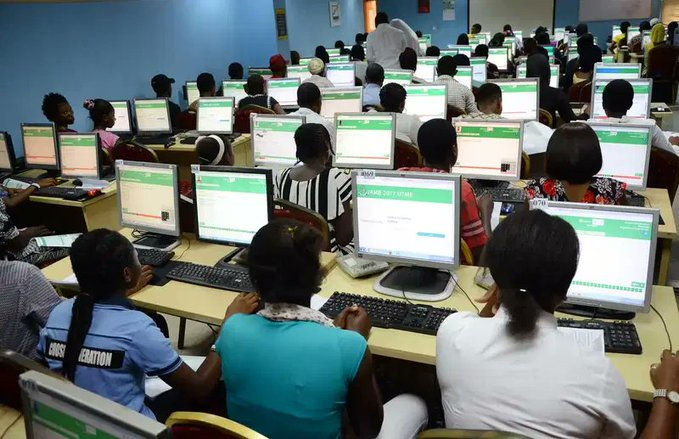
The Joint Admissions and Matriculation Board has announced plans to introduce a “Bring Your Own Computer” option for candidates sitting for the Unified Tertiary Matriculation Examination beginning from 2027.
According to JAMB Registrar Ishaq Oloyede, the initiative is part of efforts aimed at expanding the use of technology, improving examination flexibility, and reducing pressure on computer-based test centres during the annual nationwide examination.
Under the proposed arrangement, candidates who possess compatible laptops may be allowed to come to examination centres with their personal computers to write the UTME, while those without devices would still be able to use computers provided at accredited CBT centres.
The announcement comes as JAMB continues broader reforms surrounding Nigeria’s computer-based examination system. Since transitioning fully to CBT examinations years ago, the examination body has repeatedly emphasized the use of technology to reduce malpractice, improve transparency, and speed up result processing.
JAMB officials explained that the proposed policy remains under development and would require extensive testing, cybersecurity protections, compatibility checks, and strict technical standards before implementation.
The examination body stated that the plan is not intended to replace existing CBT centres but rather to provide additional flexibility for candidates and strengthen examination logistics as the number of UTME applicants continues to rise yearly.
Nigeria records millions of UTME applications annually, with candidates competing for admission into universities, polytechnics and colleges of education across the country. The growing number of applicants has often placed pressure on available examination infrastructure, particularly in densely populated urban areas.
The proposal has already generated mixed reactions among education stakeholders, students and parents.
Supporters argue that allowing candidates to use familiar personal devices could improve confidence, reduce anxiety associated with unfamiliar systems, and potentially shorten waiting times at examination centres.
However, critics have raised concerns regarding fairness, cybersecurity, device standardization, internet security, software manipulation and the possibility of widening inequality between students from wealthy and low-income backgrounds.
Education analysts note that any successful implementation would require strong encryption systems, secure examination software, offline protection mechanisms and rigorous accreditation procedures to prevent examination malpractice or technical breaches.
There are also concerns about electricity reliability, device compatibility, technical support, and how JAMB would monitor uniformity across thousands of privately owned laptops used simultaneously nationwide.
JAMB has not yet released detailed operational guidelines regarding minimum device specifications, security protocols, approved operating systems, or whether internet connectivity would be restricted during the examination process.
The announcement forms part of broader modernization efforts by the examination body, which has increasingly introduced biometric verification, computer-based testing, automated result processing and digital monitoring systems over the years.
Observers say the proposed reform could significantly reshape Nigeria’s examination landscape if successfully implemented, especially as digital education and technology-driven assessments continue to expand globally.
At the time of reporting, JAMB emphasized that the initiative remains a future plan scheduled for gradual implementation beginning in 2027, subject to technical preparedness and stakeholder engagement.
📩 Stone Reporters News | 🌍 stonereportersnews.com
✉️ info@stonereportersnews.com | 📘 Facebook: Stone Reporters News | 🐦 X (Twitter): @StoneReportNew | 📸 Instagram: @stonereportersnews
Add comment
Comments